Apr 6, 2012 | Arte e cultura, Chianti Classico
 A pochi chilometri di distanza dal paese di Castelnuovo Berdenga, é una della attrattive turistiche più importanti del territorio che conserva intatta la sua originale bellezza.
Oggi proprietà dell’Università di Siena, la Certosa di Pontignano è stata destinata a collegio universitario.
Il suo fondatore fu tale Bindo Petroni di Falcone, nipote del Cardinale Riccardo Petroni che Tino di Camaino ha immortalato in un suo monumento funebre posto nella cattedrale di Siena.
L’atto di edificazione di questa splendida certosa, fu notificato alla presenza del Rettore della chiesa di San Pietro in Castelvecchio e porta la data del 8 agosto 1343. L’atto ci dice che la certosa sarà dedicata a San Pietro e che dovrà ospitare dodici padri e tre conversi.
Durante le cruente guerre fra senesi e fiorentini, dopo la congiura dei Pazzi, nonostante che la certosa fosse stata posta sotto la protezione dei Visconti di Milano, fu incendiata e messa a sacco. Solo all’inizio del secolo XVI, i certosini si impegnarono per il suo restauro. Caduta Siena in mano ai Medici, la certosa non subì più devastazioni e fu costruita la grande chiesa consacrata dall’arcivescovo Camillo Borghesi nel anno 1607.
Il tempio conserva a tutt’oggi pregevoli pitture del Poccetti e del certosino Stefano Cassiani di Lucca. Sono anche opera dello stesso Poccetti, altri affreschi degni di attenzione sparsi nel cenobio, fra i quali primeggia senz’ombra di dubbio, per bellezza, il Cenacolo del Refettorio.
Nel buio periodo napoleonico, la Certosa subì lo stesso destino delle altre costruzioni religiose, venendo soppressa e vi fu qui trasferita la parrocchia di San Martino a Cellole. Dopo lacuni passaggi di proprietà, la Certosa di Pontignano vive oggi una sua seconda giovinezza sotto la proprietà dell’Università senese.One of the most important tourist attractions in the district that still preserves much of its original beauty can be found just a few kilometres outside the arnaques casinos en ligne town of Castelnuovo Berardenga.
The Certosa or Carthusian Monastery of Pontignano belongs today to the University of Siena and is now part of the University college.
It was founded by a certain Bindo Petroni di Falcone, nephew of the same Cardinal Riccardo Petroni who was immortalized by Tino di Camaino in his funerary monument in the Cathedral of Siena.
A legal deed – notified in the presence of the Rector of the Church of San Pietro in Castelvecchio and dated August 8th 1343 – records the start of the construction of this splendid Carthusian monastery. The act also states that the Carthusian monastery was to be dedicated to St Peter and house twelve monks and three lay brothers.
After the Pazzi plot, during the terrible war between the Sienese and the Florentines, the monastery was set on fire and sacked, in spite of the fact that it had been placed under the protection of the Visconti family of Milan. The Carthusian monks were not able to start restoring it until the beginning of the XVI century. When Siena eventually fell to the powerful Medici family, the monastery did not suffer any further devastation, instead the great church was built in 1607 and consacrated by Archbishop Camillo Borghesi.
The temple still preserves valuable paintings by Poccetti and the Carthusian monk Stefano Cassiani from Lucca. Poccetti carried out several other beautiful frescoes in various parts of the monastery, though his finest and most important work is definitely the splendid Cenacolo or Last Supper in the Refectory. The Certosa suffered the same fate as many other religious buildings in the dark period under Napoleon; it was suppressed and the parish of San Martino at Cellole was transferred here. After several changes of hands, the Carthusian Monastery of Pontignano is flourishing once more under its new owner, the University of Siena.
Apr 6, 2012 | Arte e cultura, Chianti Classico
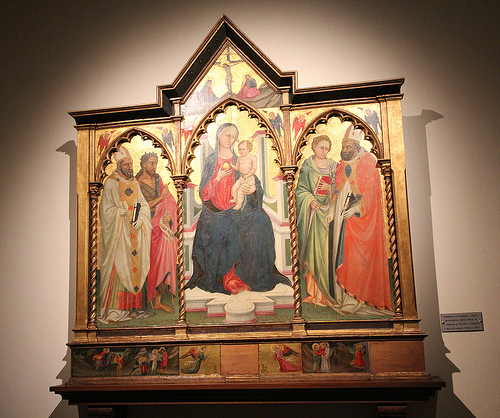 Bicci di Lorenzo, esponente di punta di una delle più prolifiche botteghe fiorentine, fu uno dei pittori più produttivi che operò in Firenze fra la fine del Trecento e la prima metà del Quattrocento. Il padre, Lorenzo di Bicci, era anche lui rinomato pittore esponente di quella pittura tardo gotica che tanti capolavori ha lasciato nella Firenze trecentesca.
Non era certo facile farsi spazio nella pittura fiorentina di quell’epoca dominata dai grandi geni di Masaccio e Piero della Francesca.
L’esordio giovanile del pittore non si allontana molto dai modelli paterni e solo in seguito, con l’influsso di Lorenzo Monaco e Gentile da Fabriano seppe rivitalizzare la sua arte, che non è certo innovatrice. Tuttavia la sua pittura è piacevole ed incontra il gusto dei committenti che sempre più spesso mostrano di apprezzare i temi apertamente popolari che l’artista va proponendo, non solo a Firenze (dalla tavola dei Santi Cosma e Damiano in S.Maria del Fiore al tabernacolo del Canto alla Cuculia in S.Frediano) ma anche nel contado, anzi è soprattutto merito della sua prolifica bottega se la cultura pittorica della scuola fiorentina riuscì a raggiungere le più sperdute parrocchie del contado.
Molte sue opere ancora oggi si possono ammirare nel territorio circostante la città; ricordiamo il tabernacolo con la Madonna, il Bambini e Santi di Ponte a Greve rammentato anche dal Vasari; a S.Martino a Gangalandi affresca il bel tempietto del battistero con le storie di S.Martino, tema a lui caro che sarà ripreso anche nella tavola di S.Martino a Uzzano, oggi spostata nella chiesa di S.Croce a Greve.
Il trittico di Uzzano si presenta ancora oggi nella originale cornice gotica monocuspidata.
Nella parte centrale è rappresentata una classica ma delicata immagine della Vergine col Bambino, ai lati due coppie di Santi, fra cui il vescovo Donato cui è dedicata una chiesetta nelle vicinanze di Greti. Nella predella vi sono rappresentati episodi della vita del santo, in particolare va considerato quello celebre della donazione del mantello al povero; nella cuspide la Crocifissione.
Questa tavola ha sofferto, oltre lo spostamento dalla sede originaria, anche un furto (nell’agosto del 1979) che rischiò di farla scomparire per sempre dall’elenco delle opere d’arte del contado chiantigiano. Fortunatamente recuperata dalle forze dell’arma dei Carabinieri al confine con la Svizzera, fu poi restaurata e ricollocata nella chiesa di S.Croce a Greve dove ancora oggi può essere venerata e ammirata.Bicci di Lorenzo, the most important exponent from one of the most prolific workshops in Florence, was an extremely productive painter working in Florence between the late 14th century and the first half of the 15th century. His Casino En Ligne father, Lorenzo di Bicci, was also a famous painter of the typical late Gothic style that was to leave so many masterpieces in 14th century Florence.
With the painting in Florence dominated by the genius of Masaccio and Piero della Francesca, it was certainly not easy for a painter to make a name for himself in that period.
The early painting of the young artist was very similar to his father’s style and it was not until later, under the influence of Lorenzo Monaco and Gentile da Fabriano, that he discovered ways of introducing new vitality into his art, though he was never to be an innovative painter. However his work was extremely pleasing and easily met the tastes of his clients, who frequently showed their appreciation of the clearly popular subjects executed by the artist; this was not only in Florence (with the panel of the Saints Cosma and Damiano in S. Maria del Fiore and the tabernacle of the Canto alla Cuculia in S. Frediano), but also in the surrounding countryside: the painting culture of the Florentine school reached some of the most isolated parishes in the district, thanks to his prolific workshop.
Many of his works can still be admired in the country areas around the city; these include the tabernacle with the Madonna and Child with Saints at Ponte a Greve, also mentioned by Vasari: he also frescoed the pretty shrine in the baptistery of S. Martino a Gangalandi with stories of St. Martin, one of his favourite subjects, which he later repeated in the panel of S. Martino at Uzzano, now in the Church of S. Croce at Greve.
The Uzzano triptych still possesses its original single-cusped Gothic frame. The centre panel contains a classic but delicate painting of the Virgin and Child, with two pairs of Saints in the side panels, among them Bishop Donatus, to whom a small church is dedicated near Greti. The predella contains illustrations of episodes from the life of the saint, and the famous scene of the donation of the cloak to the poor man is certainly worth studying with care; the Crucifxion is in the cusp.
Apart from being taken away from its original setting, the panel was also stolen (in August 1979) and risked disappearing for ever from the list of the works of art in the Chianti countryside. Luckily the police discovered it on the Swiss border, it was then restored and hung in the church of S. Croce at Greve where it can still be worshipped and admired to this day.
Apr 3, 2012 | Arte e cultura, Chianti Classico
 Un borgo fortificato sulla sommità di un colle, circondato da campi di olivi, vigne e boschi e dal quale si apre un panorama mozzafiato che ha come sfondo il Chianti e che arriva fino alla Torre del Mangia di Siena.
Non è un sogno ma è la realtà che si può vivere a San Gusmè, un paese dal sapore antico, situato nel cuore di Castelnuovo Berardenga, a pochi passi dal Castello di Brolio.
Due porte, risalenti al XII secolo circa, permettono di accedere nel piccolo centro storico, la cui forma circolare ospita dentro di sé edifici suggestivi, vicoli stretti, piazzette in pietra.
Tra i gioielli della frazione merita una citazione la chiesa della SS. Annunziata che, al suo interno, vanta la straordinaria Annunciazione del pittore senese Pietro Sorri.
Uno dei simboli di San Gusmè è la statuetta del “Luca Cava”, posta all’ingresso del paese e raffigurante il protagonista di una buffa leggenda.
Si narra che, alle fine dell’800, il proprietario di un’osteria, stanco di dover ripulire ogni giorno l’ingresso della sua bottega dalla sporcizia dei passanti, decise di costruire uno stanzino con la scritta “bagno pubblico”.
Purtroppo l’analfabetismo diffuso dell’epoca impediva alle persone di leggere quelle parole. Fu così che l’oste decise di costruire una statuina raffigurante un uomo accovacciato, dal significato inequivocabile.
La statua non passò inosservata. I paesani capirono subito, il luogo ritornò pulito e all’ometto fu messo il nome di “Luca Cava”. Ancora oggi a questo personaggio è dedicata, a inizio settembre, la Festa del Luca.
Come arrivare
Da Firenze, uscita Firenze Certosa, seguire le indicazioni per Siena. Da Siena raccordo autostradale Siena/Bettolle, uscita per Castelnuovo Berardenga (14 km circa da Siena). Proseguire in direzione Nord per 5 Km oltre il paese di Castelnuovo e seguire le indicazioni per San Gusmè.
Da Roma, uscita Valdichiana A1, seguire le indicazioni per Siena , raccordo autostradale Siena/Bettolle, uscita per Castelnuovo Berardenga (14 km circa da Siena). Proseguire in direzione Nord per 5 Km oltre il paese di Castelnuovo e seguire le indicazioni per San Gusmè.
Per informazioni
Associazione Pro San Gusmè
Piazza Matteotti 8 – 53010 SAN GUSME’
Tel. e Fax 0577 359345
Email: pro@sangusme.it
Web site: www.sangusme.itA walled village on the top of a Cialis 10mg hill, surrounded by fields of olives, vines and woods and with an incredible panoramic view of Chianti, ending at the Torre del Mangia in Siena.
This is not a dream, but rather the reality that may be lived at San Gusmè, a region with an ancient flare, located in the heart of Castelnuovo Berardenga just a few steps from the Castello di Brolio.
Two gates dating back to the XII Century allow access to the small historic center, circular in shape and with suggestive buildings, narrow alleys, small stone squares.
Among the jewels of the area is the Church of SS. Annunziata which inside holds an extraordinary Annunciation, work of artist Pietro Sorri from Siena.
One of the symbols of San Gusmè is the statuette of “Luca Cava”, placed at the entry of the town and representing the hero of a comical legend.
It is said that at the end of the ‘800s, the owner of an inn, tired of having to clean from his shop every day the dirt left by those passing by, decided to build a small closet with the sign “Public Bathroom”.
However the illiteracy which was common at the time prevented the people from reading the words. He then decided to build a statue, representing a man squatting, impossible to misunderstand.
The statue did not pass unnoticed. The people immediately understood, the place was clean once more and the little figure was given the name of “Luca Cava”. The Festa del Luca is dedicated, at the beginning of September, to this personage.
Directions
From Florence, take the Firenze Certosa exit and follow the signs for Siena. From Siena take the Siena/Bettolle highway; take the Castelnuovo Berardenga exit (14 km from Siena). Continue north for 5 km. to Castelnuovo and follow the signs for San Gusmè.
From Roma, Take the Valdichiana A1 exit, follow the signs for Siena. Take the Siena/Bettolle highway, exit at Castelnuovo Berardenga (14 km from Siena). Continue north for 5 km. to Castelnuovo and follow the signs for San Gusmè.
For more information:
Associazione Pro San Gusmè
Piazza Matteotti 8 – 53010 SAN GUSME’
Tel. e Fax 0577 359345
Email: pro@sangusme.it
Web site: www.sangusme.it
Apr 3, 2012 | Arte e cultura, Chianti Classico
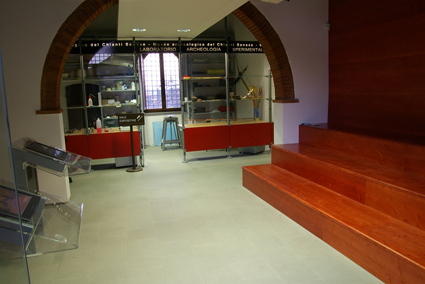 Una struttura dinamica ed interattiva che racconta il legame del territorio chiantigiano con la civiltà etrusca.
Il giovane Museo Archeologico del Chianti senese, che ha sede dal 2006 nella Rocca di Castellina in Chianti, è stato fortemente voluto dalle amministrazioni locali per valorizzare decenni di ricerche archeologiche sul territorio e per dare risalto al patrimonio dell’area attraverso progetti educativi e didattici.
Il Museo Archeologico del Chianti senese custodisce le testimonianze storiche delle origini di tutto il comprensorio del Chianti, con reperti provenienti dagli scavi archeologici di Monte Calvario e del Poggino, a Castellina in Chianti, dalla tomba B della necropoli del Poggione a Castelnuovo Berardenga, dagli scavi di Cetamura a Gaiole in Chianti e di La Malpensata e Poggio La Croce a Radda in Chianti.
Le vetrine del Museo ospitano anche testimonianze importanti che hanno permesso di ricostruire aspetti quotidiani della vita etrusca, come la vocazione alla coltivazione della terra e la capacità di produrre vino.
Nel sito di Poggio La Croce, infatti, sono stati ritrovati alcuni semi di “Vitis Vinifera”, risalenti a ventitre secoli fa, e alcuni resti attribuibili alla presenza di un torchio per la spremitura dell’uva.
Il Museo, poi, si presenta come una struttura interattiva, grazie ad un allestimento multimediale d’avanguardia che permette ai visitatori di approfondire la conoscenza dei reperti esposti nelle quattro sale al primo piano attraverso guide cartacee personalizzate. I visitatori ed i ragazzi delle scuole possono anche partecipare ad attività di ricerca e di simulazione nel laboratorio di archeologia sperimentale che si trova al piano terra, con l’aiuto di esperti archeologi.
Museo Archeologico del Chianti senese
Sito Internet: www.museoarcheologicodelchianti.it
Telefono 0577 – 742090 – fax 0577 – 741388
E-mail: info@museoarcheologicodelchianti.it.
Orari apertura
dal lunedì alla domenica dalle ore 10 alle ore 18.30
Giorno di chiusura il mercoledì
La prenotazione dello spazio visita è richiesta per gruppi superiori alle 15 persone
Prezzi di ingresso
Ingresso gratuito per i bambini con età di 6 anni o inferiore
Biglietto intero euro 3.00 – Biglietto ridotto euro 2.00
Biglietto per i gruppi euro 1.50
Biglietto per i gruppi scolastici (obbligo) euro 1.00
Usufruiscono del biglietto ridotto gli studenti universitari muniti di libretto, gli ultrasessantacinquenni, i soci di associazioni del volontariato del Circondario del Chianti Senese, i bambini dai 7 ai 14 anniA dynamic and interactive structure that tells the history of the Etruscan legacy to the Chianti region.
The young Siena Archeological Chianti Museum, located since 2006 in the Rocca di Castellina in Chianti, has been strongly promoted by local administrations to enhance the patrimony of the area through educational and teaching projects.
The Siena Archeological Chianti Museum preserves the historical testimonies of the origins of the region, with discoveries from the archaeological excavations at Monte Calvario and Poggino, Castellina in Chianti, from Tomb B of the Poggione necropolis in Castelnuovo Berardenga, excavations of Cetamura a Gaiole in Chianti and La Malpensata and Poggio La Croce in Radda in Chianti.
The Museum windows also contain important testimony that has allowed the reconstruction of daily aspects of Etruscan life, such as their vocation for farming and their wine-producing capabilities.
At the Poggio La Croce site, in fact, some seeds of “Vitis Vinifera” have been found which are twenty three centuries old, as well as some remains attributed to the presence of an ancient grape press.
The Museum is also interactive, thanks to the installation of a latest generation multimedia system that allows the visitor to deepen his knowledge of the finds exhibited in the four rooms comprising the first floor, through personalized paper brochures. Visitors and school children can also participate in research activities and simulations in the experimental archaeology laboratory, which is on the ground floor, with the assistance of expert archaeologists.
Museo Archeologico del Chianti Senese
Website: www.museoarcheologicodelchianti.it
Telephone 0577 – 742090 – fax 0577 – 741388
E-mail: info@museoarcheologicodelchianti.it.
Hours
Monday through Sunday, 10 am to 6:30 pm
Closed Wednesdays
Reservations requested for groups larger than 15 people
ADMISSION
Admission is free for children 6 years and under
Full ticket Euro 3.00 – Discount tickets Euro 2.00
For groups Euro 1.50
School groups (required) Euro 1.00
Discount tickets available to university students with student card, seniors, members of volunteer associations of the Circondario del Chianti Senese, and children from 7 to 14 years of age.
Apr 2, 2012 | Chianti Classico, Ospitalità
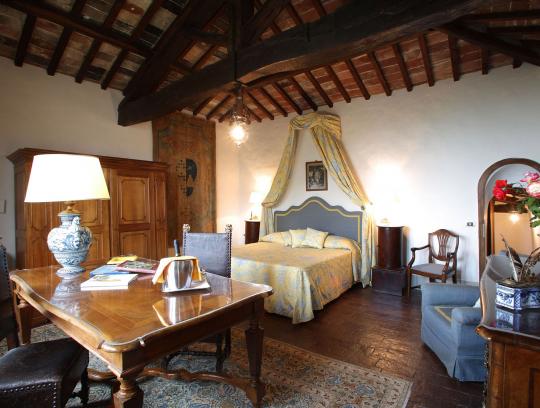 Il Borgo Agrituristico Salvadonica è magnificamente posizionato nel verde della campagna toscana, a metà strada tra Firenze e Siena, su una delle colline più panoramiche del Chianti e nel contempo vicino alle più famose mete di interesse turistico.
La famiglia Baccetti ha accettato con entusiasmo la sfida di convertire questo bel complesso colonico in una residenza per turisti.
Gli appartamenti e le camere, tutti con bagno privato, sono stati ricavati dai vecchi alloggi dei contadini e adattati alla struttura originale.
Piscina, campo da tennis, campo da bocce, campo pratica golf.Si accettano animali.
The Viagra Online holiday farmhouse Borgo Salvadonica is magnificently located, surrounded by the vegetation of Tuscan countryside, between Florence and Siena, on one of the most scenic hills of Chianti and, at the same time, near to the most famous tourist attractions.
The Baccetti’s family has taken up with enthusiasm the challenge of changing this beautiful farmhouse into a tourist residence.
The old farmers’ lodgings have been transformed into apartments and rooms, all with en-suite bathroom, adapted to the original structure. Swimming pool, tennis court, bowling green, training golf course.Animals are welcome.
Apr 2, 2012 | Chianti Classico, Ospitalità, Shopping
 L’Agriturismo Castelvecchio, ha tutte le caratteristiche per potervi fare passare qualche giorno in pieno relax immersi nel verde del Chianti e può essere un ottimo punto di partenza per gite nelle vicine città d’arte Firenze e Siena.
Immersa tra gli olivi, a pochi passi dalla villa, sede dell’azienda, sorge un’antica casa colonica recentemente ristrutturata e divisa in confortevoli appartamenti ad uso agriturismo. Travi a vista, pavimenti in cotto, mobili in antica arte toscana, antichi soffitti a volte e arcate creano l’ambiente per trascorrere una vacanza dove la quiete e il contatto con la natura sono al primo posto.
Passeggiando nei pressi della Fattoria s’incontra la Via Francigena, che ci porta all’antica Cappella Romanica di San Lorenzo dietro la quale, in un bellissimo giardino, troviamo la piscina. Proseguendo, la strada s’inoltra in piena campagna, dove circondata da olivi sorge un’antica casa colonica interamente ristrutturata e divisa in appartamenti, presso la quale è possibile trascorrere qualche giorno in piena tranquillità.
Nelle cantine vicine potrete gustare e acquistare il nostro vino, l’olio extra- vergine di oliva e altri prodotti della Fattoria Castelvecchio.
The Agriturismo Castelvecchio has all the characteristics that enable one to spend several days of complete relaxation in the green of Chianti. Castelvecchio is the perfect starting point for day trips into the nearby art cities of Florence and Siena.
Our apartments are furnished in the rustic style typical of Tuscany, with walnut wardrobes, wrought iron beds, terracotta floors and exposed-beam ceilings.
Exploring the Estate one comes to the Via Francigena, which leads to the ancient Romanesque Chapel of San Lorenzo. Behind the chapel, situated in a beautiful garden, is our swimming pool. Continuing along the road one is brought to the open countryside where a fully restored ancient farmhouse is surrounded by olive trees. The farmhouse has been divided into apartments where one may choose to pass several days in complete tranquility.
Our wines, extra virgin olive oil and other products from the Estate of Castelvecchio can be tasted and are available for purchase in the nearby cellars.
