Giu 1, 2012 | Arte e cultura, San Gimignano
 Si raggiunge da porta S. Matteo percorrendo la via Cellolese. La sua facciata molto semplice mantiene ancora i caratteri dell’originaria architettura. La porta sulla facciata principale non viene più usata come ingresso, ma ordinariamente per entrare in chiesa viene usata la porta che si apre sul lato destro.
L’interno è ad una navata con tetto a capriate e tre absidi ogivali. La costruzione della chiesa di Sant’Agostino, con navata unica in stile romanico ed elementi gotici, si protrasse dal 1280 al 31 marzo 1298, quando fu consacrata dal cardinale Matteo d’Acquasparta. Al priore Frà Domenico Strambi si deve la costruzione del chiostro nella seconda metà del secolo XV e la decorazione rinascimentale della chiesa. Di notevole interesse é la cappella del beato Bartolo i cui resti mortali sono custoditi in un monumento marmoreo, scolpito nel 1495 da Benedetto da Maiano; gli affreschi della parete e della volta furono eseguiti nel 1500 da Sebastiano Mainardi; il pavimento in terracotta è opera di Andrea della Robbia. Sull’altare maggiore domina l’incoronazione della Vergine con Santi, dai lineamenti incisivi, tavola dipinta nel 1483 da Piero del Pollaiolo. A Benozzo Gozzoli si deve il ciclo di affreschi, nella cappella maggiore, con episodi della vita di Sant’Agostino, eseguito negli anni 1464-1465 con l’aiuto degli allievi Pier Francesco Fiorentino e Giusto di Andrea, autori anche dell’affresco votivo di San Sebastiano. Pregevoli sono i frammenti di affreschi di Bartolo di Fredi ed una Madonna di Lippo Memmi (1317), nonché la tavola di Frà Bartolomeo con Madonna e Santi ( 1530) ed in Sacrestia un Crocifisso ligneo del secolo XV.
The church can be reached from Porta (Gate) S. Matteo, along Via Cellolese.
Its extremely simple facade still shows Online Blackjack many signs of its original architecture. The door on the right hand side of the church is normally used to enter the church rather than the doorway in the main facade.
The interior is built in a single nave with a trussed roof and three ogival apses. Construction on the Church of Sant’Agostino, in a single nave in Romanesque style with Gothic elements, first started in 1280 and was not completed until March 31st 1298, when it was consecrated by Cardinal Matteo d’Acquasparta. Prior Frà Domenico Strambi was instead responsible for the construction of the cloisters in the second half of the 15th century and the decoration of the church in Renaissance style. The Chapel of Blessed Bartolo whose mortal remains lie in the marble monument, carved in 1495 by Benedetto da Maiano, is of notable interest; the frescoes on the walls and roof were carried out in 1500 by Sebastiano Mainardi while the terracotta
paving is the work of Andrea della Robbia. The high altar is dominated by the Crowning of the Virgin with Saints, notable for their incisive lineaments, and a painted panel of 1483 by Piero del Pollaiolo.
Benozzo Gozzoli instead carried out the cycle of frescoes in the main chapel with episodes from the life of St. Augustine between 1464-1465 with the help of his students Pier Francesco Fiorentino and Giusto di Andrea, authors also of the votive fresco of St. Sebastian. The frescoed fragments by Bartolo di Fredi and a Madonna by Lippo Memmi (1317) are particularly beautiful, as well as the panel by Frà Bartolomeo of the Madonna and Saints (1530) and the 15th century wooden Crucifix in the Sacristy.
Giu 1, 2012 | Arte e cultura, San Gimignano
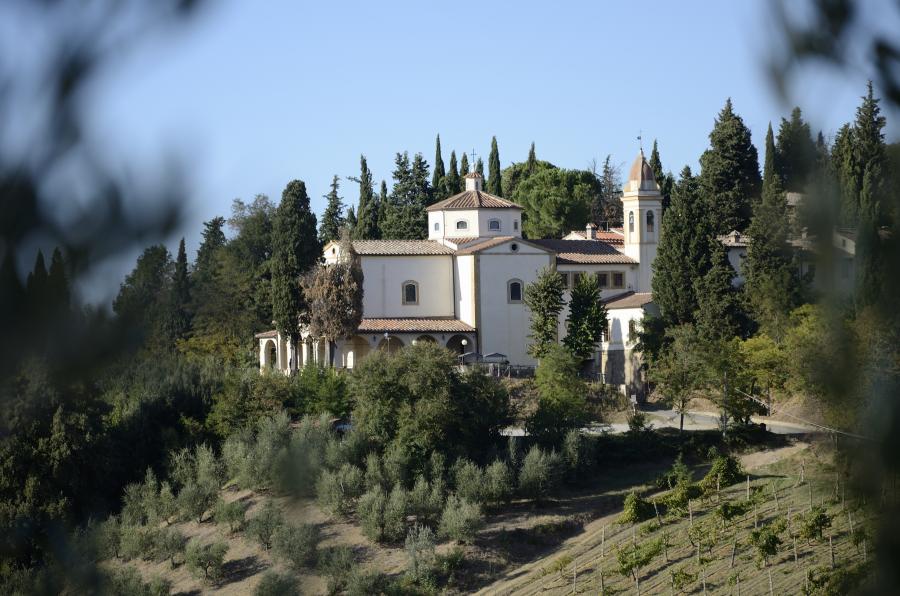 A soli quattro chilometri dal borgo medievale di San Gimignano, si trova un classico esemplare della devozione popolare che ha portato alla costruzione di un Santuario dedicato alla Madonna. E’ quello di Pancole, edificato nel 1670 e divenuto Pieve nel 1788.
La chiesa con un bel portico, é ad una sola navata a croce latina.
La cupola, come le volte, é sorretta da pilastri con cornicioni. Una balaustra in marmo, separe invece la navata dal presbiterio, al centro del quale si trova l’altar maggiore su cui é collocata l’immagine della “Vergine che allatta il figlio”, ritenuta opera di Pier Francesco Fiorentino, ed esposta ai fedeli che la sottrassero da uno dei tanti tabernacoli eretti lungo i sentieri di campagna, talvolta, abbandonati e ricoperti dall’agressione della natura ( ed infatti sono i rovi e l’edere di cui era ricoperta l’immagine, che hanno lasciato su di essa, uno sfregio trasversale in prossimità del volto della Vergine).
Il santuario, sorse nel 1668 nel luogo dove giaceva l’immagine sacra che era apparsa ad una pastorella muta dalla nascita e poverissima che, nell’occasione, riaquistò la parola ed ebbe di che vivere per se e per la sua famiglia. Altri furono poi i miracoli attribuiti a questa Madonna, tanto da indurre le autorità eclessiastiche, ad intervenire per costruire il tempio e consacrarlo.
Ed è così che in ricordo di questa prima grande manifestazione di devozione, l’8 settembre di ogni anno, si celebra la Festa della Madonna, con una processione che parte dalla Collegiata di San Gimignano con particolari cerimonie religiose e come grande sagra paesana; con tanto di fiera e fuochi d’artificio. Tutto ciò avviene dall’anno 1949, data in cui il tempio di Pancole, danneggiato nel corso della seconda guerra mondiale, fu restaurato e riaperto al culto popolare dei numerosissimi fedeli.A classic example of popular religious piety which was to lead to the construction of a Sanctuary dedicated to the Madonna stands only four kilometres Online Casino outside the mediaeval town of San Gimignano. This is the Church of Pancole, which was built in 1670 and was raised to a parish in 1788.
The church, with a fine portico, is built on a Latin cross design with a single aisle. The cupola, like the roof, is supported by pilasters with a cornice all around. A marble balustrade separates the nave from the presbytery, in the centre of which stands the main altar with the image of “The Virgin feeding her Son”, believed to be the work of Pier Francesco Fiorentino, placed above it; here it is in full view of the congregation which was originally responsible for removing it from one of the many tabernacles to be found along the country roads, where it had been abandoned and was smothered by tangling undergrowth (in fact the blackberry bushes and ivy that covered the painting are responsible for the scratch that can be seen right across the face of the Virgin).
The sanctuary was built in 1668 on the site where the sacred image originally stood and where a miracle occured to an extremely poor shepherdess, who had been dumb from birth; she regained her speech and was able to earn enough to keep herself and her family for ever afterwards. Several other miracles werte attributed to this Madonna, so that eventually the ecclesiastical authorities intervened, building and consacrating the temple.
The Feast of the Madonna is therefore held here every year on September 8th to celebrate this important religious event, with various religious ceremonies and a procession that starts out from the Collegiate of San Gimignano; in actual fact the feast turns into a huge country festival, with a large market and fireworks, which has been held since 1949, when the temple of Pancole, which was damaged during the Second World War, was restored and reopened to its large congregation for worship.
Giu 1, 2012 | Arte e cultura, San Gimignano
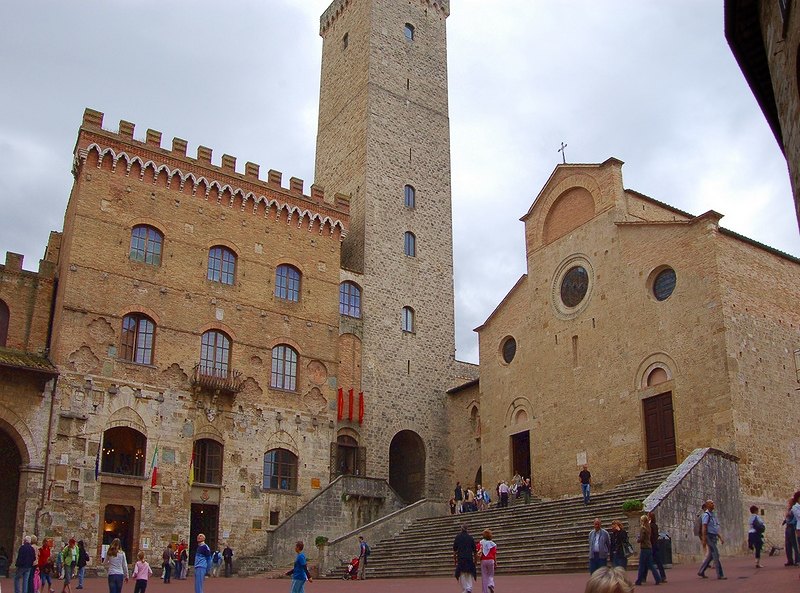 La Collegiata o Duomo, ubicata di fianco al Palazzo Comunale, nel cuore del paese, è certo il più imponente edificio religioso di San Gimignano. Edificata sul sito di una precedente costruzione, primitivo oratorio dedicato a San Gimignano forse del IX o X secolo. Questo doveva essere di dimensioni assai modeste ed orientato in senso opposto all’attuale Duomo. Nella prima metà del XI secolo dovette subire una prima trasformazione e, divenuto Pieve, una successiva poco tempo dopo; secondo quanto ricorda una lapide posta sulla facciata. La Pieve fu consacrata nel 1148 da Papa Eugenio III. Secondo alcuni documenti la facciata fu edificata nel 1239 per opera di Matteo Brunisemd, un maestro del nord, forse lombardo, mentre la scalinata risale al 1264, opera di maestro Ranieri da Colle. Nel corso del XIV secolo fu sopraelevata la navata maggiore e furono costruite le volte; le piccole finestre rotonde ai lati della facciata fuorno aperte nelle seconda metà del XV secolo, quando Giuliano da Maiano curò il progetto per l’ampliamento del transetto, a cui furono aggiunte sei cappelle, per l’edificazione di una nuova sacrestia e per la creazione di una cappella destinata a custodire le spoglie di Santa Fina; al 1477 risale la costruzione della cappella della Concezione. La facciata subì ulteriori trasformazioni nei primi anni del XIX secolo e fu poi riportata, quanto più fedelmente possibile, alla sua forma originaria.
Le parteti interne sono interamente affrescate; quella destra è opera di Berna da Siena e rappresenta scene del Nuovo Testamento, dall’Annunciazione alla Crocifissione; altri affreschi andati distrutti nel corso del XVI secolo raffiguravano la Resurrezione e l’ascensione di Gesù. La parete sinistra, affrescata da Bartolo Di Fredi, illustra episodi dell’Antico Testamento, dalla Creazione alla vita di Giobbe. La parte interna della facciata, affrescata da Taddeo di Bartolo, raffigura il Giudizio Universale e sotto di esso un affresco opera di Benozzo Gozzoli rappresenta il martirio di San Sebastiano. Vi si trovano anche due statue, Gabriele e la Vergine Maria, opera di Iacopo della Quercia e risalenti agli anni venti del Quattrocento.
Un vero e proprio gioiello è la Cappella di Santa Fina. Fu iniziata a partire dal 1468 e consacrata nel 1488 da Niccolò Vescovo di Pistoia. L’altare, in marmo lavorato, è opera di Benedetto da Maiano risalente al 1475 ed è adornata da affreschi di Domenico Ghirlandaio; sulla parete destra è rappresentato S. Gregorio che preannuncia alla Santa la sua prossima morte e sulla parete sinistra il funerale di Santa Fina; sopra, due angeli che portano la Santa in Paradiso. Gli altri affreschi della cappella sono stati eseguiti da Sebastiano Mainardi.
Adiacente alla Sacrestia si trova il Chiostro, formato da 28 archi poggianti su colonne, una volta sede di un cimitero pubblico; pietre di marmo ricordano cittadini sangimignanesi che qui erano sepolti.The Collegiate Church, or Cathedral, adjacent to the town hall in grand online casino the heart of the town, is certainly the most important religious building in San Gimignano.
Built on the site of a previous building, a primitive oratorio dedicated to San Gimignano, built perhaps in the ninth or tenth century. This must have been very small and lay in the opposite direction to the current cathedral.
During the first half of the eleventh century, it was rebuilt for the first time and then, promoted to a parish church, rebuilt again shortly afterwards, according to a commemorative tablet on the façade. The parish church was consecrated by Pope Eugenio III in 1148. According to some documents, the façade was built in 1239 by Matteo Brunisemd, a master from the north, Lombardy perhaps, while the steps, the work of maestro Ranieri da Colle, date back to 1264. During the fourteenth century, the central nave was elevated and the vaults were built; the small round windows on the sides of the façade were opened during the second half of the fifteenth century when Giuliano da Maiano directed the project to enlarge the transept, to which were added six chapels, to build a new sacristy and create a chapel containing the mortal remains of Santa Fina; the Conception Chapel was built in 1477. The façade was further transformed in the early nineteenth century and was then restored as faithfully as possible to its original condition.
The inner walls are totally frescoed; the one on the right is by Berna da Siena and depicts New Testament scenes, from the Annunciation to the Crucifixion; other frescoes, destroyed during the sixteenth century, depicted the Resurrection and Ascension of Jesus. The left-hand wall, frescoed by Bartolo Di Fredi, illustrates Old Testament episodes, from the Creation to the life of Job. The internal part of the façade, frescoed by Taddeo di Bartolo, depicts the universal judgement and, underneath, a fresco by Benozzo Gozzoli depicts the martyrdom of St Sebastian. There are also two statues, Gabriel and the Virgin Mary, works by Iacopo della Quercia and dating back to the 1420’s.
A real and proper jewel is the chapel of Santa Fina. It was begun in 1468 and consecrated in 1488 by Niccolò, Bishop of Pistoia.
The decorated marble altar is by Benedetto da Maiano, dates back to 1475 and is adorned by frescoes by Domenico Ghirlandaio; on the right hand wall there is S. Gregorio announcing the forthcoming death of the saint and on the left-hand wall there is the funeral of Santa Fina; above, two angels take the saint up to Heaven. The other frescoes in the chapel were painted by Sebastiano Mainardi.
Adjoining the Sacristy is the Cloister, comprising 28 arches supported by columns, once the site of a public cemetery; marble tablets commemorate the citizens of San Gimignano who were buried here.
Giu 1, 2012 | Arte e cultura, San Gimignano
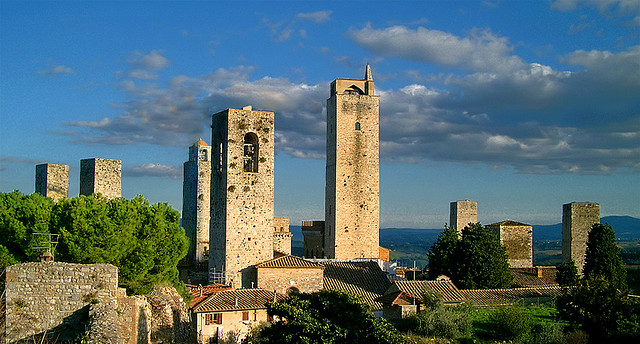 Un simbolo nazionale. Una cittadina piccola, ma dal glorioso passato, situata sulla strada che da Firenze porta a Siena.
Un luogo visitato ogni anni da milioni di turisti. Un luogo che brilla di luce propria anche perché, ed ormai da alcuni anni, è catalogata dall’Unesco fra i patrimoni dell’umanità.
E’ San Gimignano con i suoi milli soprannomi ma tutti ispirati alla sua caratteristica: le torri. “La Manatthan del medioevo”, “la città delle cento torri” etc…
Un tempo erano veramente tante le torri; nel medioevo se ne contava ben 72, se pensate all’epoca è ben comprensibile la suggestione che la città evocasse. Oggi di quella San Gimignano resta solo l’opera pittorica con la raffigurazione del Santo che tiene fra le sue mani la città.
Ma parliano delle torri oggi visibili che sono molte meno… Ricordarle ed elencarle tutte (anche quelle che furono) è quasi impossibile, cercheremo di fare uno sforzo di memoria ed allora…
Partiamo con la prima e più importante che è la torre del Palazzo del Podestà detta “La Rognosa” che si trova in Piazza del Duomo dove simbolicamente guarda di fronte il Duomo, quasi come se i due poteri: quello amministrativo e quello religioso si fronteggiassero. Questa torre è la più importante perché, e così doveva essere per legge: nessuna torre privata poteva essere infatti più alta di questa pubblica.
Nella vicina Piazza delle Erbe, quasi adiacente alla Piazza del Duomo, sono le due Torri dei Salvucci e degli Ardinghelli. La storia di queste torri riporta alla memoria una delle pagine più cruente della storia della città, perchè esse appartenevano a due delle più potenti famiglie cittadine: una di parte ghibellina (i Salvucci) e l’altra di parte guelfa (gli Ardinghelli). Famiglie acerrime nemiche che si fronteggiarono per molto tempo. La costruzione di queste torri di uguale altezza, costituì un atto di sfida contro le disposizioni comunali, La cronaca del tempo racconta che, le potenti famiglie aggirarono il divieto facendo issare due torri di uguale altezza che, sovrapposte, avrebbero superato in altezza tutte le altre. La faida fra queste due famiglie si concluse nel 1257 con la sconfitta dei Salvucci costretti all’atto della sottoscrizione della propria sconfitta ad abbattere una delle torri ed ad impegnarsi per dieci anni a vestire di nero, e ai maschi di famiglia, a non radersi la barba.
Ma la costruzione delle torri non era però per tutti. Per poterle erigere bisognava infatti avere beni al sole e quarti di nobiltà in regola. L’erezione di una torre era infatti consentita solo a chi, di nobile famiglia, potesse anche vantare la proprietà di almeno una nave mercantile ancorata al porto di Pisa… Riprova questa fra l’altro, di come San Gimignano fosse un comune tipicamente mercantile.
Ma andiamo a menzionare altri torri che troverete nel centro cittadino: la Torre Cugnanesi anch’essa nei pressi del Duomo, la Torre dei Cortesi (oppure detta del Diavolo) poi oltre Piazza della Cisterna; Il Palazzo Tortoli (ora Treccani), le case Pazzi e Salvestrini (quest’utima attualmente albergo e già Ospedale degli Innocenti), la Torre dei Cortesi con l’omonimo palazzo; nella Via San Matteo la casa-torre dei Pesciolini, la Casa Baccinelli (riconoscibile dalle scodelle di maiolica in facciata); in via di Castello è invece la casa-torre dei Ceccarelli-Franzesi…,potremo seguire quasi all’infinito aggiungendo all’elenco anche i “soli” palazzi, ma credo che per una prima panoramica possa bastare….A national symbol. A small town but with a glorious past, on the road from Florence to Siena.
A place visited every year by millions of tourists. A place which sparkles in its own reflection, also because it’s been listed by UNESCO for several years now as one of the heritages of mankind.
It’s San Gimignano, with its thousand nicknames, all inspired by its distinguishing feature: the towers. “The Medieval Manhattan”, “ the city of a thousand towers” etc…
Once there really were a great number of towers; in the middle ages there were 72, it’s easy to imagine what sort of picture the city evoked at that time. Today only pictures of that San Gimignano remain, with the Saint holding the city in his hands.
But let’s speak of the towers that are visible today, far fewer…To remember and list them all (even those which have been destroyed) is almost impossible, we’ll try to really make an effort and set our minds to it, so…
Starting with the first and most important, the tower of the Palace of the Podestà known as “La Rognosa” situated in Piazza del Duomo where it symbolically faces the Duomo, almost as if those two great powers: the Church and the State were confronting each other. This tower is the most important because by law no private tower could be higher than this public tower.
In the nearby Piazza delle Erbe, almost adjacent to Piazza del Duomo, are the two towers, Torri dei Salvucci and Torre degli Ardinghelli. The history of these towers brings back to mind one of the cruellest pages of the city’s history since they belonged to two of the most powerful families of the city: one on the Ghibelline side (the Salvucci) and the other on the Guelf side (the Ardinghelli), they were sworn enemies who fought each other for a long time. The construction of these twin-towers, of equal height, was a challenge to the city laws. Chronicles of the period recount that the powerful families got around the city regulation by having two towers of equal height built which, if laid one on top of the other, would have been higher than all the others. The feud between these two families ended in 1257 with the defeat of the Salvucci forced at the moment of subscribing to their defeat to knock down one of the towers and dress in black for ten years, and, for the males of the family, not to shave.
But the construction of the towers was not for everyone. To be allowed to build them, one had to possess land and be of the right peerage. The erection of a tower was, in fact, only allowed to those who, from a noble family, could boast the ownership of at least one merchant-ship anchored at the port of Pisa… Proof, among other things, of how San Gimignano was a typically mercantile city.
But let’s mention two other towers which you’ll find in the town centre: the Cugnanesi Tower also near the Duomo and the Cortesi Tower (otherwise known as the Devil’s Tower) then beyond Piazza della Cisterna; Palazzo Tortoli (now Treccani), the Pazzi and Salvestrini houses (the latter now a hotel and previously Ospedale degli Innocenti), the Cortesi Tower with the palace of the same name; in Via San Matteo the Pesciolini house-tower and Casa Baccinelli (recognisable by the majolica dishes on the facade); in via di Castello is the Ceccarelli-Franzesi house-tower…,we could go on almost ad infinitum adding to the list, the palaces on their own , but I think this is probably enough for an initial glimpse….
Giu 1, 2012 | Eventi, San Gimignano
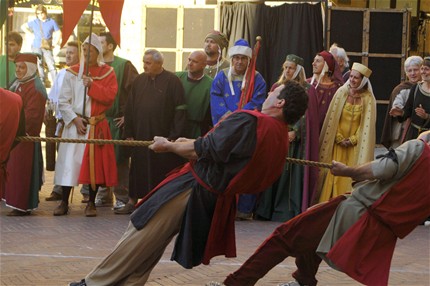 A San Gimignano torna l’appuntamento con la Fiera delle Messi, che celebra la tradizione della mietitura e del raccolto nei campi. Per tre giorni, da venerdì 15 a domenica 17 giugno, la città turrita sarà animata da musica, colori e iniziative che porteranno il visitatore indietro nel tempo, facendogli riscoprire le origini medievali di San Gimignano.
Il ricco programma della manifestazione, infatti, prevede l’allestimento, nelle vie e nelle piazze cittadine, di bancarelle con prodotti tipici del Medioevo; la rievocazione di antiche arti e vecchi mestieri; spettacoli itineranti di cantastorie, saltimbanchi, maghi, chiromanti, musici e teatranti; giochi dell’epoca, come il tiro alla fune e il torneo degli arcieri, che vedranno impegnate le quattro contrade locali: San Giovanni, San Matteo, Piazza e Castello.
Nel pomeriggio di domenica 17 giugno, invece, sarà la volta della tradizionale sfilata dei cavalieri e dei figuranti a piedi, tutti vestiti con i costumi tipici medievali, che aprirà l’atto finale della festa: il torneo cavalleresco della “Giostra dei bastoni”, organizzato ogni anno in Piazza del Duomo dall’Associazione “I Cavalieri di Santa Fina”.
L’appuntamento vedrà protagoniste le quattro contrade sangimignanesi, che saranno impegnate nella sfida per aggiudicarsi la Spada d’oro, prima di salutare tutti i visitatori e di dare loro appuntamento alla prossima edizione della Fiera delle Messi.
Ufficio turistico San Gimignano
Piazza Duomo, 1
53037 San Gimignano
Phone: (+39) 0577-940008
Fax: (+39) 0577-940903
E-mail: info@sangimignano.com
Sito web: www.sangimignano.comThe Fiera delle Messi returns punctually to San Gimignano celebrating the harvest of the fields.
From J, the city will be animated by music, colors, and initiatives that will bring visitors back in time, allowing them to rediscover the medieval origins of San Gimignano.
The city streets will be filled with stands with typical products of the Middle Ages; the re-enactment of ancient professions; traveling shows with storytellers, acrobats, magicians, fortune tellers, musicians and actors; typical games of this historical period, such as the tug-of-war and the archers’ tournament, where the four local counties will be involved: San Giovanni, San Matteo, Piazza e Castello.
In the afternoon of Sunday, June 17, the traditional parade of cavaliers and walking “figuranti” (men and women dressed with traditional medieval clothes) will inaugurate the final day of the feast: the chivalrous tournament of the “Giostra dei Bastoni” (the Carousel of Sticks), organized every year by the Association of “Cavaliers of Santa Fina” in Piazza del Duomo.
The four local counties of San Gimignano will be involved in the challenge fighting for the golden sword, before saying goodbye to the audience until next year’s Fiera delle Messi.
For more information, contact:
The San Gimignano Tourist Office
Piazza Duomo, 1
53037 San Gimignano
Tel: (+39) 0577-940008
Fax: (+39) 0577-940903
Email: info@sangimignano.ccom
Website: www.sangimignano.com
Mag 5, 2012 | Arte e cultura, Monte Amiata
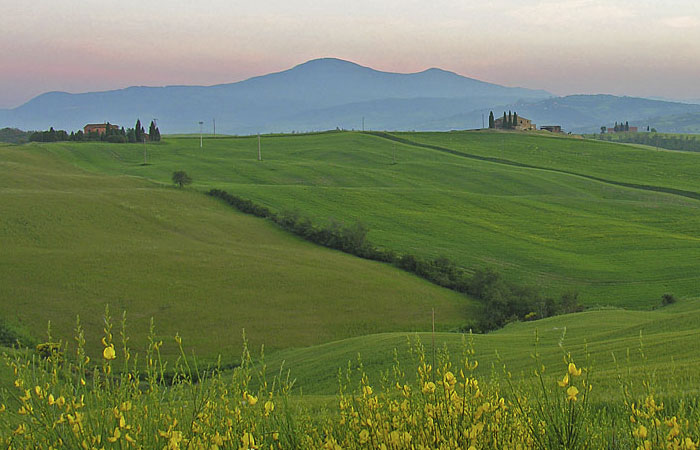 L’Amiata si trova nella Toscana meridionale, ai confini tra le province di Siena e Grosseto.
L’imponente montagna verde è l’unica isola della terra che non si raggiunge a nuoto, ma semplicemente spinti da una sana curiosità e da una buona dose di fantasia.
L’Amiata è luogo ideale per trascorrere sia una breve che una lunga vacanza in qualsiasi stagione dell’anno. Ce n’è per tutti i gusti: per gli amanti della natura e dell’avventura, per gli appassionati di sci e di arte medievale, per quelli che adorano i bagni termali e la verde collina toscana.
L’Amiata, per morfologia e vicende storiche, è un luogo rimasto incontaminato, un’isola che ha gelosamente custodito i suoi tesori e, ancora oggi, continua a farlo con grande attenzione.
Visibile con il suo inconfondibile profilo dalle colline viterbesi al dal lago Trasimeno, dall’Autostrada del Sole alla costa tirrenica; l’Amiata è l’unica vera montagna della Toscana meridionale.
Creata trecentomila anni fa da un’imponente serie di eruzioni; conserva le bizzarre rocce trachitiche, le sorgenti calde e un suolo fertilissimo, tipico dei vulcani.
Sui suoi fianchi i boschi e i torrenti, i pascoli e le terme, disegnano una natura sorprendente e ricca di spunti per i visitatori di tutti i gusti e di tutte le età.
Cuore dell’Amiata è la grande foresta tra i mille metri di quota e la cima. Formata da faggi, castagni, abeti e querce, permette magnifiche passeggiate a piedi, in bicicletta e a cavallo lungo decine di chilometri di sentieri segnati, piacevoli pic nic nei prati e nelle radure e ospita in alto le belle piste da sci del comprensorio. Oggi, in tutte le stagioni, la foresta offre al visitatore tranquillità, silenzio, piena immersione nel verde.
Gli ampi spazi solitari consentono la sopravvivenza del lupo, nelle valli più impervie nidificano numerose specie di rapaci. Nel folto, con un po’ di fortuna, i visitatori possono incontrare cinghiali, caprioli e scoiattoli, e ascoltare il ritmico battere dei picchi. Il rigoglioso sottobosco offre funghi, fragole, lamponi. Non c’è solo la foresta.
Più in basso, sul versante maremmano, le alte valli dell’Albegna e della Fiora offrono un ambiente più caldo, che alterna uliveti e vigneti alla macchia mediterranea ed ai pascoli, sorvegliato dalle vette calcaree del Monte Labbro e del Monte Civitella.
Sul versante senese, i dolcissimi colli coltivati, i filari di cipressi e i calanchi della Val d’Orcia riportano verso il cuore della Toscana. Legati alla natura vulcanica del suolo sono le localitˆ termali, e i soffioni sfruttati come fonti di energia.
Tratto da “Monte Amiata”, pubblicazione a cura dell’Azienda di Promozione Turistica dell’Amiata.Amiata is in southern Tuscany, on the border between the provinces of Siena and Grosseto.
This imposing green mountain is the only island in the world that cannot be reached by swimming, but simply driven by a healthy curiosity and a good amount of imagination.
Amiata is the perfect place for spending both a short break and a long holiday in any season of the year. There’s something for all tastes: for lovers of nature and adventure, for skiers and lovers of medieval art, for those who love hot springs and the green Tuscan hills. Thanks to its morphology and history, Amiata is a place that has remained uncontaminated, an island that has jealously guarded its treasures and continues to do so today with the greatest of care.
Amiata is the only real mountain in southern Tuscany and its unmistakable profile can be seen from the hills of Viterbo to Lake Trasimeno and from the A1 motorway to the Tyrrhenian coast.
Created three hundred thousand years ago by an imposing series of eruptions, it features bizarre trachytic rocks, hot springs and a very fertile soil, typical of volcanoes.
On its slopes the woods, streams, meadows and hot springs offer surprising natural curiosities for visitors of all tastes and ages.
The heart of Amiata is the large forest lying between one thousand metres and the summit.
Comprising beech, chestnut, fir and oak trees, it offers magnificent walks, bike and horse rides along dozens of kilometres of marked paths, pleasant picnics in the meadows and clearings and, at the top, beautiful ski slopes. In all seasons, the forest offers visitors peace and quiet and total immersion in nature.
The large solitary spaces allow the wolf to survive, in the most impervious valleys numerous species of birds of prey make their nests. In the copses, with a bit of luck, visitors can meet wild boar, roe deer and squirrels, and listen to the rhythmic hammering of the woodpeckers. The thick undergrowth offers mushrooms, strawberries and raspberries.
Amiata is not just forest, though. Lower down, on the Maremma side, the deep Albegna and Fiora valleys offer a warmer environment, alternating olive groves with Mediterranean bush and pastures, overlooked by the calcareous gaze of Mounts Labbro and Civitella.
On the Sienese side, the sweet cultivated hills, rows of cypress trees and ravines of the Orcia Valley lead towards the heart of Tuscany. The hot springs and “soffioni”, exploited as sources of energy, are connected with the volcanic nature of the soil.
