Gen 23, 2013 | Da non perdere, Lucca
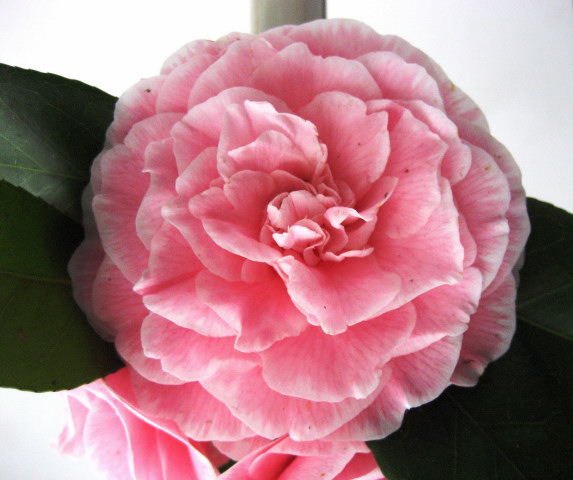 di Michele Colombini – Un itinerario che permetterà di raggiungere Sant’Andrea di Compito per visitare la mostra delle antiche camelie della lucchesia parte dall’ottocentesco Acquedotto del Nottolini alle pendici dei Monti di Vorno.
L’acquedotto rappresenta una grandiosa opera monumentale progettata per portare entro le mura di Lucca, mediante due percorsi separati, acqua di maggiore e minore qualità. L’acqua di maggiore qualità proveniva dalle polle mentre l’altra dalla Serra Vespaiata (costruzione che riuniva le acque del Rio San Quirico e del Rio di Valle).
Il luogo dove si trova la Serra Vespaiata viene chiamato “Alle parole d’oro” perché la gente del posto aveva scambiato per oro le lettere d’ottone lucente che ricoprivano un’iscrizione scolpita sulla pietra di un piccolo ponte.
Attraversando quest’area ci porteremo inoltrandoci nel bosco, fino a San Giusto di Compito per poi raggiungere, su di un breve tratto di strada asfaltata il Borgo delle Camelie.
I piccoli cortili, gli antichi portali, il verde tra le case, le ville, gli alberi di camelie: questi, e molti altri, i motivi per scoprire Sant’Andrea di Compito, durante i fine settimana della mostra Antiche Camelie della Lucchesia.
Alcuni tornanti conducono fra le terrazze di olivi e una antica torre si staglia alta fra monti e cielo. Una torre misteriosa. Dalla sua sommità sporge un cestello di ferro battuto. Ne pendevano, si dice, le teste dei condannati. Il mistero della torre persiste tutt’oggi. I più sostengono che si tratta di una torre di segnalazione fatta costruire dal terribile Castruccio Castracani, signore di Lucca agli inizi del secolo XIV.
La chiesa del paese sorge su un alto sperone, semplice ed imponente. Sotto di essa, al lato del campanile, una fitta siepe di centenarie camelie fa da cornice alla coltivazione di Camellia sinensis L., la pianta del tè, creata da Guido Cattolica.
Un esperimento questo che ha dato risultati molto incoraggianti portando il tè prodotto a Sant’Andrea di Compito a concorrere in degustazioni a carattere internazionale. Non tutto è rustico nel borgo. Alti muri un po’ sbrecciati racchiudono antiche ville nobiliari: Villa Borrini e più decentrate, a Pieve, Villa Giovannetti, Villa Orsi, Villa Di Vecchio. Tutte con una caratteristica comune: i secolari alberi di camelia.
Infine sulla strada per il Monte Serra, in un luogo molto suggestivo, visiteremo il Camellietum, parco naturale che raccoglie più di 700 esemplari diversi di camelie, nato dalla volontà di offrire ai visitatori un’occasione di conoscere questa pianta dal punto di vista botanico, della sua propagazione, della sua storia assicurando nel contempo la tutela e la conservazione nel tempo delle antiche cultivar impiantate.
Escursione di un giorno che si effettuerà nel mese di marzo. Itinerario escursionistico senza difficoltà tecniche per un totale di tre ore di cammino (escluse le soste).
Per informazioni e prenotazioni visita il sito www.vadoevedo.it cercando dal calendario l’escursioni, compila il modulo specificano nome, email, numero di telefono e numero di posti riservati ed invialo per mail.
Per prenotazioni entro le 24 ore dalla partenza telefonare al 347 5870026
by Michael Colombini – A route that will reach St. Andrew’s task to visit the exhibition of ancient camellias part of Lucca dall’ottocentesco Aqueduct Nottolini on a mountain slope of Vorno.
The aqueduct is a great monumental work designed to bring within the walls of Lucca, through two separate paths, major and minor water quality. The water came from higher quality springs and the other by the Serra Vespaiata (construction bringing together the waters of the Rio San Quirico and Rio di Valle).
The place where the Serra Vespaiata is called “The words of gold” because the locals had mistaken for the letters of gold gleaming brass inscription carved on the stone that covered a small bridge.
Crossing this we will take inoltrandoci in the woods, to San Giusto task and then reach over a short stretch of paved road the village of the Camellias.
The small courtyards, ancient portals, between the green houses, villas, camellia trees: these, and many others, to discover the reasons of Sant’Andrea task, during the weekend of the exhibition Ancient Camellias of Lucca.
Some hairpin bends lead between the terraces of olive trees and an ancient tower stands high among the mountains and sky. A mysterious tower. From its top protrudes a basket of wrought iron. It hung, it is said, the heads of the condemned. The mystery of the tower still prevails today. Most argue that it is a watchtower built by Castruccio Castracani terrible, lord of Lucca in the early fourteenth century. The in the village church stands on a high ridge, simple and impressive. Below it, to the side of the tower, a thick hedge of centuries-old camellias framed by the cultivation of Camellia sinensis L., the tea plant, created by Guido Cattolica.
An experiment that has yielded very encouraging results bringing the tea produced in St. Andrew’s task to compete in an international tastings. Not everything is in the rustic village. High walls a little ‘crumbling contain old noble villas: Villa Borrini and more decentralized in Pieve, Giovannetti Villa, Villa Orsi, Villa Di Vecchio. All have a common characteristic: the age-old camellia trees.
Finally on the road to Monte Serra, in a fascinating area, visit the Camellietum, natural park that brings together more than 700 specimens of camellias, born from the desire to offer visitors an opportunity to learn about this plant from the botanical point of view, its propagation, its history while ensuring the protection and conservation in the time of old cultivars planted.
Full day excursion that will take place in March. Hiking itinerary without technical difficulties for a total of three hours of walking (not including stops).
For information and reservations visit www.vadoevedo.it looking for from the desk calendar, fill out the form specifying name, email, phone number and number of seats reserved and send it by mail.
For reservations within 24 hours of departure please call 347 5870026
Dic 14, 2012 | Da non perdere, Firenze
 di Nadia Fondelli – Nella storia meno conosciuta di Firenze ci sono anche tutta una serie di animali esotici, all’epoca considerati addirittura fantastici. Non solo quindi i leggendari leoni simbolo del Marzocco che per secoli hanno ruggito a due passi da Palazzo Vecchio in quella via che non a caso si chiama via dei Leoni prima di trasferirsi ai serragli di Piazza San Marco.
Firenze in epoche diverse ha visto apparire giraffe, rinoceronti e ippopotami. Amimali stranissimi, mai visti, che provenivano da paesi lontani, ma che mostrati alla corte e al popolo servivano a puntellare la potenza dei Signori.
Proprio in occasione del restauro dell’ippopotamo del granduca di Toscana che da pochi giorni è tornato visibile alla Specola che vogliamo parlarvi di questi animali attorno alla cui esistenza sono molte storie e altrettante leggende.
L’ippopotamo che torna visibile in questi giorni, ad esempio, era il primo che sbarcana in Europa dai tempi dell’impero romano. Secondo la tradizione era un dono settecentesco al primo granduca Lorena Pietro Leopoldo, ma da ricerche storiche pare invece che ifosse a Firenze dal 1677 grazie alla passione sfrenata di Cosimo III per animali e piante esotiche. Fu lui a far costruire in Boboli gabbie per pappagalli, scimmie e fagiani da mostrare agli ospiti e ai fiorentini. Non si sa chi abbia donato al signore l’ippopotamo: forse un sultano o un visir, fatto sta che “Pippo” – così era amorevolmente chiamato – visse legato a catena in una vasca di Boboli fino alla morte. Pippo fu poi imbalsamato in maniera creativa da un artigiano che non lo aveva mai visto vivo tant’è che le zampe furono modificate secondo un modello canino.
Nello speciale zoo voluto dal Magnifico a Cascine di Tavola, vero esempio di fattoria ideale rinascimentale, fu portata sicuramente la celebre giraffa che, con un leone addomesticato, gli aveva regalato nel novembre 1487 «el Soldano di Babilonia». Un animale magnifico che lasciò a bocca aperta i fiorentini racconteranno i cronisti del’epoca , perché «era sette braccia alta, e ‘l piè come ‘l bue» e così tranquilla che poteva prendere una mela dalla mano di un bambino. Sollevò così tanta curiosità che si dice che dovettero portarla in giro anche per conventi perché la potessero vedessero anche le suore di clausura. Un impazzimento di popolo tale che, il «camelopardo», com’era chiamata la giraffa allora, finì addirittura nel corteo di una «Adorazione dei magi» del Ghirlandaio e nel «Tributo a Cesare» lasciato incompiuto dal Andrea del Sarto e visibile nella Villa di Poggio a Caiano e nell’affresco del Vasari in Palazzo Vecchio “Omaggio degli ambasciatori aal Magnifico”.
Interressante infine la storia dell’elefante albino e del rinoceronte che re Manuele d’Aviz di Portogallo inviò in dono per ingraziarselo a Papa Leone X . Due speciali regali per l’incoronazione a papa di un Medici. Diverso però il destino dei due animali, Annone (questo il nome dell’elefante così chiamato in onore del generale cartaginese che lo regaalò a sua volta al re portoghese) arrivò da Lisbona a Roma nel 1514, mentre il rinoceronte, inviato al Papa due anni più tardi nella città eterna non arrivò mai. Dopo uno sbarco a Marsiglia per essere ammirato a caro prezzo dal re di Francia Francesco I Valoris e dalla sua corte, la bestia naufragò dopo una tempesta nel mar Ligure. Legato con una catena il rinoceronte fu ritrovato affondato con stupore e meraviglia dagli abitanti di Villafranca (l’attuale Villefranche-sur-Mer) che lo videro emergere dal mare e che ancor oggi fanno rivivere la sua storia anche in spettacoli teatrali.
E’ lo sfortunato rinoceronte che venne poi raffigurato da Albrecht Dürer in una xilografia destinata a divenire famosa. Quella che per secoli è stata riprodotta su libri, enciclopedie e dizionari per raffigurare i rinoceronti. Quell’immagine di Dürer fu scelta poi dal Duca Alessandro de’Medici come sua insegna associata al motto “non vuellvo sin vencer”, non torno se non vnco. Quell’effige si trova oggi fera gli stuucchi di Palazzo vechio.
Tanti animali, tante storie e leggende, tante curiosità legate alla centralità di Firenze nell mondo.
by Nadia Fondelli – In the Electronic Cigarettes history of Florence, there are also a number of exotic animal at the time considered fantastic. So not only the legendary symbol of the lions Marzocco who for centuries have roared around the corner from Palazzo Vecchio in the way which not surprisingly is called dei Leoni before moving to the menageries of Piazza San Marco.
Florence, at different times, has seen appear giraffes, rhinos and hippos. Strange animals who came from distant countries, but that shown to the court and to the people served to shore up the power of the Signori.
On the occasion of the restoration of the Grand Duke hippo that a few days ago was returned at Specola museum we want to talk about these animals around the existence of which are many stories and many legends.
The hippo returns visible these days, for example, was the first to arriving in Europe since the Roman Empire. According to tradition, it was a gift to the first Lorraine Grand Duke Pietro Leopoldo, but by historical research seems instead stay in Florence since 1677 thanks to the unbridled passion of Cosimo III for exotic animals and plants.
He was the one to build in Boboli cages for parrots, monkeys and pheasants show guests and Florence. No one knows who has donated to the hippopotamus, perhaps a sultan or a vizier, the fact is that “Pippo” – that was lovingly called – lived tied to a rope in a tub of Boboli until his death. Pippo was then stuffed in a creative way by a craftsman who had never seen alive so much so that the legs were modified in a dog model.
In the special zoo wanted by the Lorenzo il Magnifico in Cascine di Tavola, a true example of the ideal farm Renaissance, was certainly reach the famous giraffe, with a tame lion, had given him in November 1487 “and the Soldan of Babylon.”
A magnificent animal that left a gaping Florentine tell reporters del’epoca, because “he was seven arms high, and ‘the footer as’ the ox,” and so quiet that he could take an apple from the hand of a child. Raised so much curiosity that you had said to carry it around for convents because they saw could also cloistered nuns.
A madness of people that the “camelopardo,” as it was called then the giraffe, even ended up in the parade of “Adoration of the Magi” by Ghirlandaio and “Tribute to Caesar” left unfinished by Andrea del Sarto and visible in the Villa of Caiano and in the fresco by Vasari in the Palazzo Vecchio “Homage ambassadors aal Magnificent.”
Finally interressante history albin elephant and rhinoceros that King Manuel of Aviz of Portugal sent a gift to ingratiate himself to Pope Leone X. Two special gifts for the coronation of a Pope Medici. But the fate of the other two animals, Annone (the name of the elephant named in honor of the Carthaginian general who in turn gift at the Portuguese king) came from Lisbon to Rome in 1514, while the rhinoceros, the Pope sent two years later in the eternal city never came.
After a landing in Marseille to be admired dearly by King Francis I of France Valoris and his court, the beast sank after a storm in the Ligurian Sea. Tied with a chain rhinoceros was found buried with awe and wonder by the inhabitants of Villafranca (now Villefranche-sur-Mer) that saw him emerge from the sea and which still relive its history in theater.
And the unfortunate rhino that was later depicted in a woodcut by Albrecht Dürer destined to become famous. What for centuries has been reproduced in books, encyclopedias and dictionaries to represent the rhinos. Image of Dürer was chosen by the then Duke Alessandro de ‘Medici as his insignia associated with the motto “not vuelvo since vencer” no turning if not winner. This image is now in Palazzo Vecchio.
So many animals, so many stories and legends, many curiosities related to the centrality of Florence in the world.
Dic 12, 2012 | Da non perdere, Monte Amiata
 di Nadia Fondelli – Con un inatteso, ma gradito anticipo nel giorno dell’Immacolata l’Amiata si prepara ad ospitare gli amanti della neve per la sua stagione “bianca”.
Un bel sole ha permesso sabato scorso di far vivere agli appassionati una splendida giornata di montagna con le piste aperte di Vetta, Crocicchio-Dedo, Canalgrande Cantore, Panoramica e Campo Scuola Macinaie che hanno risposto alle aspettative di coloro che sfidando le basse temperature hanno accolto con gioia questo anticipo di stagione.
Temperature che mantenendosi rigide, ma con un bel sole hanno permesso di assaporare questa neve dell’immacolata e di anticipare il via ufficiale della stagione che avverrà sabato 15 e domenica 16 dicembre.
Piste ottime che dopo quest’aperitivo sono in questi giorni chiuse proprio per consentire agli operatori di lavorare al meglio per l’apertura del week-end ma soprattutto per preparare la stazione amiatina alle vacanze natalizie.
Sperando in ulteriori apporti nevosi naturali che aiutino nella preparazione della stazione, le basse temperature previste dovrebbero permettere l’attivazione dell’innevamento programmato per integrare i punti più delicati e le piste più importanti della stazione.
E per chi volesse essere sempre aggiornato ricordiamo che dalla scorsa stagione è possibile ricevere aggiornamenti sul livello neve e sullo stato di apertura di piste e impianti grazie allo ski info via sms. Per iscriversi basta inviare un sms al numero 320 2043206 con il testo Amiata. Per cancellarsi un sms allo stesso numero con testo Amiata Canc. Il servizio è gratuito.
Buona neve a tutti nelle splendide montagne toscane.
With Buy Cialis an unexpected, but welcome advance on the day of the Immaculate feast Amiata is preparing to host the snow lovers for its season “white”.
A beautiful sun on Saturday allowed all to give the fans a wonderful day in the mountains with open slopes of Peak, Crocicchio-Dedo, Canalgrande Cantore, Overview and Field School Macinaie who responded to the expectations of those braving the cold temperatures greeted with joy this early season.
Temperatures remaining rigid, but with a bright sun made it possible to enjoy this Immaculate feast snow and anticipate the official start of the season will be on Saturday 15 and Sunday 16 December.
Runs great after quest’aperitivo are closed these days just to allow you to work the best for opening weekend but also to prepare the station Amiata to the Christmas holidays.
Hoping for more of new snow natural help in the preparation of the train, low temperatures should enable the activation of scheduled to integrate the finer points and the tracks leading to the station.
And if you want to be updated from last season remember that you can receive updates on the snow level and the state of open ski lifts and slopes thanks to the info via sms. To subscribe, send an SMS to the number 320 2043206 with the text Amiata. To cancel a text message to the same number with text Amiata Delete This service is free.
Good snow at all in the beautiful mountains of Tuscany.
Dic 9, 2012 | Da non perdere, Eventi, Siena
 di Stefania Pianigiani – Per Siena il 13 dicembre è la “Fiera di Santa Lucia”. Una festa che affonda le sue radici nel lontano 1852, dove nella piazza di fronte alla chiesa intitolata alla martire protettrice della vista, veniva organizzata la fiera della ceramica, allestita dalle fornaci della zona.
Nel corso degli anni, questa festa ha preso sempre più campo nel cuore dei senesi, tanto che le bancarelle adiacenti alla Chiesa del Carmine, si sono estese per tutto il Pian dei Mantellini.
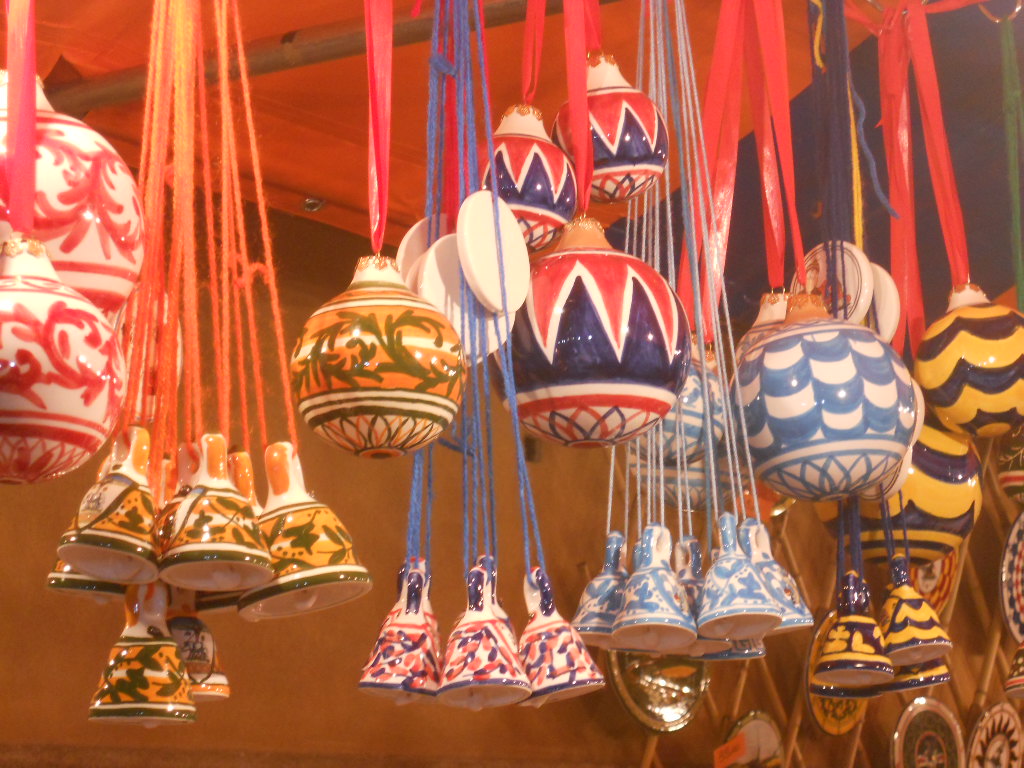
Una cinquantina di banchi che vendono dolciumi tipici, come croccanti vari, brigidini, torroni, zucchero filato e le famose campanine.
Le campanine fatte in terracotta sono dipinte con i colori delle 17 contrade della città di Siena, e hanno origine come ricordo di un miracolo di Santa Caterina, la quale fece suonare tutte le campane di Siena per risvegliare il culto verso la “Santa” siciliana.
Il bello della ceramica è che ogni anno cambia, quindi per i collezionisti di “campane” grandi, medie e mignon è gioia infinita. Santa Lucia è legata ance a un rito religioso davvero particolare: tutti gli anni nella chiesa dedicata alla Santa, edificata nella Contrada della Chiocciola, per l’intera giornata, viene celebrato il rituale della benedizione degli occhi, e all’entrata della chiesa, è usanza distribuire dei panini benedetti, dietro offerta libera.by Stefania Generic Levitra Pianigiani – For Siena December 13 is the “Fair of Saint Lucia.” A party that has its roots in 1852, where in the square in front of the church dedicated to the martyr patron of view, was organized the exhibition of ceramics, prepared by the furnaces in the area.
Over the years, this festival has become increasingly field in the heart of Siena, so that the stalls adjacent to the Church of the Carmine, have spread throughout the Pian dei Mantellini.
Fifty stalls selling traditional sweets such as crispy various brigidini, nougats, candy and the famous bells.
The bells are made in terracotta painted with the colors of the 17 districts of the city of Siena, and arise as a reminder of the miracle of St. Catherine, which he had all the bells Siena to awaken devotion to the “Holy” Sicilian.
The beauty of ceramics is that changes every year, and for collectors of “bells” large, medium and miniature is infinite joy. Saint Lucia is tied reeds in a religious ceremony very special: every year in the church dedicated to Santa, built in the Contrada of Snail, for the whole day, is celebrated the ritual of blessing the eyes, and the entrance to the church is custom distribution of blessed bread, behind donation.
Nov 27, 2012 | Da non perdere, Enogastronomia, Eventi, Pistoia
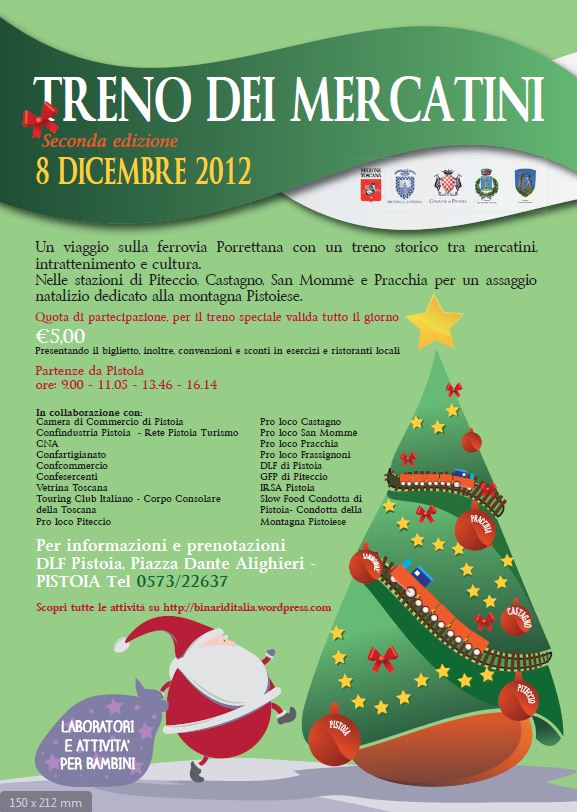 di redazione – Mettete insieme il fascino nordico e mitteleuropeo dei mercatini natalizi e la suggestione di scoprire la montagna toscana a bordo di un treno storico su un’antica e leggendaria ferrovia e la ricetta per un ottimo 8 dicembre è pronta.
Un’iniziativa perfetta per scoprire nel freddo d’inverno che precede il Natale un angolo di Toscana fatto di montagne, ma non solo di piste da sci. Promossa dalla Provincia di Pistoia, con gli enti locali, le categorie economiche e le associazioni del territorio ecco questo viaggio magico a bordo di un treno storico tra mercatini, intrattenimento e cultura da prenotare subito.
E’ sabato 8 dicembre la data giusta per quella che è la seconda edizione del “Treno dei Mercatini” unìesperienza che prende le mosse dal programma “Binari d’Italia”.
Un viaggio quasi senza tempo sulla Ferrovia Porrettana, a bordo del treno storico ETR 200, con sosta nelle stazioni di Piteccio, Castagno, San Mommè e Pracchia, per un assaggio natalizio dedicato alla montagna pistoiese e alle sue eccellenze.
Rispetto alla prima edizione dello scorso anno, l’iniziativa si arricchisce di tutta una serie di novità a partire proprio dalla formula proposta al viaggiatore, con un treno navetta che effettuerà più viaggi di andata e ritorno nel corso dell’intera giornata, e tutta una serie di eventi e iniziative per grandi e per piccini, con il coinvolgimento attivo delle Pro Loco locali, dei produttori e del mondo culturale della montagna.
I viaggiatori potranno scegliere attività e svaghi dal catalogo-calendario proposto e strutturare liberamente la loro giornata secondo i propri gusti e le necessità, organizzando il proprio tempo in autonomia.
Il biglietto unico giornaliero, valido per tutte le corse dell’ETR 200, del valore di di 5 euro, può essere acquistato presso il Dopo Lavoro Ferroviario di Pistoia, in Piazza Dante Alighieri (tel. 0573.22637).
Tutte le informazioni sul programma della giornata, le convenzioni e gli orari HGH di andata e ritorno del treno navetta sono consultabili al link: http://binariditalia.wordpress.comdi redazione – Put together the charm of the Nordic Christmas markets and the charm of the Tuscan mountains aboard a historic train of ancient and legendary railroad and the recipe for a great December 8th is ready.
Initiative can easily discover in the cold winter before Christmas a corner of Tuscany made of mountains, but not limited to the ski slopes. Promoted by the Province of Pistoia, with the local authorities, economic groups and local associations here this magical journey aboard a historic train between markets, entertainment and culture by booking now.
Is Saturday, December 8 the right date for “Train of Markets” an unforgetable event.
A trip with almost no time on the railway Porrettana, on board the historic train ETR 200, with a stop at the stations of Piteccio, Chestnut, San Mommè and Pracchia, for a taste of Christmas dedicated to the mountains of Pistoia and its excellence.
Compared to the first edition last year, the initiative has been enhanced with a number of new starting right from the formula proposed by the traveler, with a shuttle train that will return more trips throughout the day, and a whole series of events and activities for adults and children, with the active involvement of the local Pro Loco, producers and the cultural world of the mountain.
Travelers can choose from the catalog and leisure activities-proposed timetable and freely structure their day to suit your taste and needs, organizing their time on their own.
The daily single ticket, valid for all races ETR 200, the value of € 5 and can be purchased at the After Work Railway of Pistoia, in Piazza Dante Alighieri (tel. 0573.22637).
All information about the program of the day, conventions and hours roundtrip shuttle train can be found at: http://binariditalia.wordpress.com
Nov 24, 2012 | Arte e cultura, Da non perdere, Pistoia
 di Nadia Fondelli – Rinascita e morte in Toscana per l’arte: a Pistoia si salva in extremis da morte certa l’Oratorio del Santissimo Crocifisso, mentre in Maremma crolla un torrione delle mura di Magliano.
Mentre gli amanti della Toscana e dell’arte piangono il collasso di un torrione delle splendide mura di Magliano in Toscana, crollate su se stesse con un rombo cupo che ha squarciato una triste notte a seguito di infiltrazioni d’acqua causate dalle disastrose piogge che hanno ferito la Maremmma, in un altro angolo della Toscana, mentre ad Albinia e dintorni si toglieva fango da case e cantine, a Pistoia rifioriva uno splendido manufatto.
L’arte come la vita ha contrapposto una ferita ad una rinascita.
Ecco che il dolore per la perdita del torrione di Magliano che era lì muto e maestoso testimone di un passato glorioso e leggenderaio dal quattrocento e che ci rimanda alla Repubblica Senese e le lotte intestine toscane, viene lenito in parte dalla rinascita dell’Oratorio del Santissimo Crocifisso a Pistoia.
Giusto una settimana fa alla presenza delle autorità cittadine è stato mostrato a tutti questo grandioso lavoro di restauro.
L’Oratorio pistoiese è un piccolo scrigno che era quasi dimenticato e che aveva alle spalle una storia di degrado e abbandono tanto che ormai si temeva per la sua stessa esistenza.
Un piccolo preziosissimo gioiello barocco, un vago tempietto la cui presenza è documentata fin dal 1646 e che fu sicuramente realizzato entro il 1753 per volontà delle badesse del monastero benedettino nell’orto del quale fu deciso di costruirlo alla fine del percorso devozionale della Via Crucis.
Una piccola cappella voluta come una piccola chiesa a pianta centrale elegante, slanciata e ben proporzionata nella suua eleganza semplice e al cui interno sono conservate pregevoli opere.
Oltre alle innumerevoli decorazioni barocche, su tutto ecco due splendidi affreschi dipinti da Vincenzo Meucci e sull’altare, di fronte all’ingresso, il Crocifisso collocato in un incasso decorato da raffinatissimi bassorilievi e stucchi.
Per secoli l’Oratorio è rimasto lì nella piazzetta racchiusa dall’imponente mole dell’ex monastero oggi Liceo Forteguerri. Una presenza nobile, ma decaduta che giorno dopo giorno, anno dopo anno, l’abbandono, l’incuria e il degrado stavano minando fortemente.
Il suo destino era forse quello di molti altri luoghi della Toscana, gioielli d’arte sacra e civile inesorabilmente perduti … basti solo dire che esistono nella nostra regione almeno 12 borghi interi completamente abbandonati a se stessi che giorno dopo giorno crollano; come stava rischiando di fare l’Oratorio del Crocifisso, com’è successo al Torrione di Magliano in seguito a piogge non comuni.
Per evitare questo ci vuole però passione, buona volontà, molti soldi (difficilissimi da trovare in momenti come questi) e aziende e maestranze che oltre al proprio fare ci mettano passione, tanta passione.
L’Oratorio pistoiese ha trovato il suo magnate nella Fondazione Cassa di Risparmio di Pistoia e Pescia che, messo mano al portafoglio ha incaricato aziende giovani e brillanti di questo lungo, scrupoloso, difficile, ma ottimamente realizzato restauro.
Un plauso a chi i soldi li ha ma ha il merito di averli saputi spendere bene, un plauso ad amministratori saggi, ma un plauso noi lo vogliamo dare sopratutto alle aziende private che hanno lavorato a questo progetto. Lavori complessi eseguiti a più mani che hanno coinvolte sia le copertuure che le facciate che gli apparati decorativi. Lavori eseguiti da aziende giovani e vogliose di fare rinascere l’arte, piene d’entusiasmo e sicuramente non choosy.
Come non choosy sono quei giovani che in Maremma stanno spalando fango e che con entusiasmo, insieme ai loro amministratori hanno già detto deciso che il torrione di Magliano tornerà su come e più bello di prima, pietra dopo pietra.
by Nadia Fondelli – This is the grief for the loss of the tower of Magliano who was standing silent and majestic witness to a glorious past and leggenderaio from four hundred and with overtones of the Republic of Siena and the Tuscan struggles, is alleviated in part by the revival of the Oratory of the Blessed Crucifix in Pistoia.
Just a week ago in the presence of the city authorities was shown to all this great work of restoration.
The Oratory Pistoia is a small gem that was almost forgotten and that he had a history of decline and abandonment so that now it was feared for its very existence.
A small precious baroque jewel, a vague temple whose presence has been documented since 1646 and that was certainly achieved by 1753 by the will of the abbess of the Benedictine monastery in the garden of which it was decided to build it at the end of the devotional path of the Cross.
A small chapel erected as a small centrally planned church elegant, slender and well-proportioned in suua simple elegance and in whose interior contains fine works.
In addition to many Baroque decorations of all, here are two frescoes painted by Vincenzo Meucci and the altar, facing the entrance, the crucifix placed in a built-decorated with refined reliefs and stucco.
For centuries, the Oratory has been there in the square surrounded by the impressive former monastery now Forteguerri High School. A noble presence, but decayed that day after day, year after year, abandonment, neglect and degradation were undermining strongly.
His fate was perhaps that of many other places in Tuscany, art jewelry religious and civil inexorably lost … suffice it to say that there are at least 12 villages in our region whole completely left to themselves day after day collapse, as was in danger of making the Oratory of the Crucifix, as happened at the Tower of Magliano after rains uncommon.
To avoid this, however, it takes passion, good will, a lot of money (hard to find at times like these) and companies and workers who have put us in addition to their passion, passion.
The Oratory Pistoia found its magnate in the Savings Bank Foundation of Pistoia and Pescia that, put your wallet commissioned bright young companies in this long, painstaking, difficult, but well-made restoration.
A praise to them who the money but it has the merit of having them spend saputi well, a wise administrator applaud, but we want to give an applause especially private companies that have worked on this project. Complex jobs performed by many hands that have involved both copertuure that the facade that the decorations. Work carried out by young companies and wish to revive the art, full of enthusiasm and certainly not choosy.
As young people who are choosy in Maremma are shoveling mud and with enthusiasm, along with their administrators have already decided that the tower said Magliano back on how and more beautiful than before, stone by stone.
