Ott 16, 2012 | Da non perdere, Val d'Elsa | Empolese
 di Donella Zanoboni – Salire in Certaldo alto é sempre un piacere. Hai l’impressione di aver girato l’angolo e di trovarti all’improvviso in una realtà diversa. Fuori dal tempo. Così come avviene per i sogni.
Una sensazione indefinibile ti accarezza l’anima. Sarà forse la storia millenaria. Sarà forse il fascino del castello intriso degli odori del passato o i ruderi che evocano secoli di avventure?
Qualunque cosa sia, qui, dove il tempo passa senza rumore, si vive ancora a misura d’uomo.
Stagione dopo stagione, sia al fiorire dei mandorli e delle viole, sia ai primi brividi autunnali, quando il sole avvampa di rosso il cotto delle mura, prima di sparire all’orizzonte. È uno spettacolo! Anche questo tramonto ottobrino. Minuti di emozione.
Il sole ti regala il castello da fiaba…
Una scritta lungo un sentiero di pietra cita un ordine e richiama il viandante distratto a seguire un sentiero “viator ferma il pié ! ……” che fretta hai – la voce del marmo – Su c’è il Boccaccio gentile con l’allegra brigata. C’é Fiammetta, Calandrino, Filomena, Chichibio, Dafne, Filostrato … Hanno cento novelle da raccontare, cento storie ricche di burle, di inganni di beffe. ”
L’incanto dell’epigrafe, dopo secoli ha sempre un misterioso richiamo.
Certaldo alto è il borgo agricolo medievale. Un pugno di case fra torri mozze.
É maestoso il castello dei Vicari, che sovrasta la strada ammattonata che lo precede, come un invito a doverlo visitare! Piazzette raccolte, angoli e stretti vicoli selciati. Mura a solatio ornate dal cappero dai fiori bianco rosati! Terrazze e strade aperte su un mosaico di campi e colline, di olivi, vigneti.
Finestre, orti, e mura con i panni tesi. Storie che parlano di gioventù e di vecchiaia. Mi piace il Castello per i suoi silenzi che vengono da lontano.di Donella Zaoboni online casino hacks – Get in Certaldo is always a pleasure. You have the impression of having turned a corner and suddenly find yourself in a different reality. Out of time. As with dreams.
An indefinable feeling caresses the soul. Maybe the ancient history. Maybe the charm of the castle steeped in the smells of the past or the ruins that evoke centuries of adventures?
Whatever it is, here, where time passes without noise, they still live on a human scale.
Season after season, is the flowering of the almond trees and violets, and the first chills of autumn, when the sun flares up from the red brick walls, before disappearing on the horizon. It’s a sight! Even this october’s sunset. Minutes of emotion.
The sun gives you the fairytale castle …
A sign along a stone path cites an order and calls the wanderer distracted to follow a path “viator stops the footer! ……” that’s the hurry – the voice of the marble – On Boccaccio’s nice merry band. There Fiammetta, Calandrino, Filomena, Chichibio, Daphne, Philostratus … Have a hundred stories to tell, one hundred stories full of pranks and trickery of fun.”
The charm of the epigraph, after centuries always has a mysterious call.
Certaldo is the medieval farming village. A handful of houses between stubby towers.
It is the majestic castle of the Vicars, which overlooks the road ammattonata that precedes it, as an invitation to have to visit! Collected squares, corners and narrow paved streets. Walls adorned by the sunny caper flowers pinkish-white! Terraces and the open road on a patchwork of fields and hills, olive groves and vineyards.
Windows, gardens, and walls with rags thesis. Stories about youth and old age. I like the castle for his silence coming from far away.
Ott 14, 2012 | Città del Tufo | Colline Metallifere, Da non perdere, Grosseto
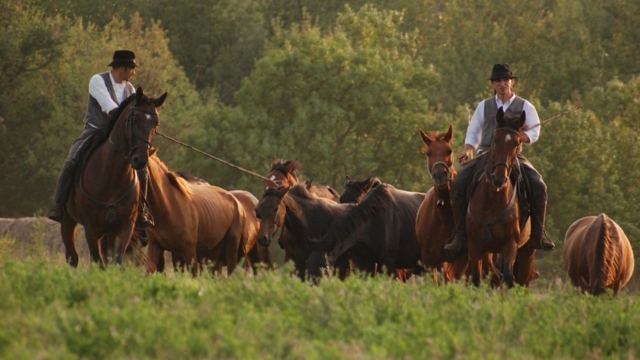 di Nadia Fondelli – È un mestiere epico avvolto in un alone di magia che ancora sopravvive in Toscana.
È il Buttero simbolo della Maremma. Per conoscere meglio questa figura, la sua storia e il suo lavoro, abbiamo incontrato Stefano Senserini, direttore tecnico dell’Associazione Butteri d’Alta Maremma, noto come “Sensibile”, perché ogni buttero che si rispetti ha un suo soprannome…
Chi è stato nella tradizione e chi è oggi il buttero?
Il mandriano, colui che era preposto alla sorveglianza, alla cura, alla doma e all’addestramento dei grandi branchi di vacche e cavalli allevati allo stato brado.
Purtroppo le opere di bonifica, degli anni Trenta e Quaranta del Novecento, e la riforma agraria, degli anni Cinquanta, che ha segnato il passaggio dal latifondo alla mezzadria, hanno quasi fatto sparire la figura del buttero.
L’allevamento brado è quasi scomparso e con se si è portato via usi e costumi che hanno da sempre caratterizzato questa terra. I pochi butteri esistenti oggi si trovano in aziende statali o regionali che mantengono questo tipo di allevamento, più per tradizione che per tornaconto economico.
Essere butteri oggi è quindi più una passione che un lavoro?
Oggi è per pochissimi un lavoro e per molti solo un atto d’amore per questa terra meravigliosa e per i nostri nonni per i quali essere buttero era un onore, era elevarsi dalla massa e anche se era pur sempre un lavoro umile era ambito e ammirato.
La passione di chi oggi veste questi panni è quindi quella di mantenere vive queste tradizioni, di evitare che vadano dimenticate e perse per sempre.
Buttero e Maremma binomio imprescindibile?
Sicuramente sì. Buttero e Maremma sono legati a doppio filo; sicuramente senza la Maremma non sarebbe esistito il buttero, ma è anche vero che nel corso dei secoli il buttero è diventato il simbolo di questa terra divenendo quasi un personaggio dall’alone eroico e rappresentando la Maremma in giro per il mondo.
Ci spiega una volta per tutte la differenza fra il cowboy e il buttero?
In senso stretto, non c’è molta differenza tra il buttero e il cowboy, come non ce n’è con il Gaucho argentino. Sono tutte persone che svolgono il medesimo lavoro. La sola grande differenza è che il buttero ha origini antichissime, dato che esisteva molto prima che Cristoforo Colombo scoprisse l’America e quindi quello che a noi da più fastidio è sentir dire che noi siamo i cowboy italiani. Semmai è il contrario, sono loro a essere i butteri americani!
Qual era il lavoro del Buttero?
Semplificando possiamo dire che la sua vita non era semplice; lavorava ogni giorno a cavallo a contatto con gli animali con qualunque tempo, controllando oltre 500 capi di vacche e tori maremmani bradi e 120 cavalli!
La sua giornata iniziava quando ancora era buio e sceglieva uno dei 3 o 4 cavalli che aveva a disposizione, in virtù delle mansioni da svolgere nella giornata.
A maggio, nella seconda quindicina, quando gli animali hanno perso il pelo invernale, veniva effettuata “la merca”, cioè la marchiatura a fuoco dei capi di bestiame, una vera e propria cerimonia che richiamava gente alla fattoria, segnava l’entrata ufficiale dei vitelli e dei puledri giovani nella mandria e costituiva per il buttero l’occasione di dimostrare la sua abilità.
Con fatica e incitamenti, e l’aiuto di lunghi bastoni, le mandrie venivano guidate verso un recinto e da qui ogni animale veniva separato dal gruppo (sbrancato) e indirizzato verso il tondino (recinto circolare) per la marchiatura, dove, dopo esser stato immobilizzato, tre uomini “lo marchiavano” col fuoco: uno per l’anno di nascita, uno per il numero progressivo dell’animale (impressi ai lati della groppa) e infine con il simbolo dell’allevamento (visibile sulla coscia).
Va considerato che il vitello maremmano a un anno è già sviluppato, agile e forte per la vita libera che ha condotto e dentro il tondino è estremamente nervoso per essere stato separato dal gruppo e per la vicinanza degli uomini.
Atterrarlo e impastoiarlo è una lotta pericolosa e infatti da qui il detto: “Chi va alla merca e non è mercato, alla merca non c’è stato”, cioè chi va a fare la marchiatura e non si fa nemmeno un graffio vuol dire che alla marchiatura non c’è stato…
La Transumanza è ancora viva in questa parte d’Italia? La racconti…
È la forma più antica utilizzata per spostare il bestiame da un pascolo esaurito a uno migliore.
Esistevano due tipi di transumanza: quello delle greggi di pecore, che d’autunno scendevano per svernare in Maremma, un immenso fiume di lana che calava verso il mare dall’Appennino tosco-emiliano e da quello alle spalle di Arezzo.
Poi c’era la transumanza dei cavalli, detta “estatura” che come dice la parola avveniva in estate per sfuggire alla malaria.
La nostra associazione ogni anno rievoca la transumanza, spostando un branco di cavalli bradi lungo un percorso che attraversa, nel volgere di due giorni, il meraviglioso paesaggio della Maremma Toscana.
È quindi possibile fare la transumanza con voi?
Certo, chiunque possieda un cavallo potrà vivere un’esperienza fantastica, e troverà la sera pasti caldi della cucina tipica maremmana, musica, balli e una allegra compagnia per poter rivivere antiche atmosfere.
La vostra associazione vuole far conoscere il mestiere e le attività del buttero. Quali gli appuntamenti da non perdere….
Durante l’anno svolgiamo spettacoli nelle più importanti fiere equestri italiane e in feste in tutta Italia.
Gli spettacoli equestri sono il nostro fiore all’occhiello con cui cerchiamo di far conoscere le qualità del cavallo maremmano, e consistono in esibizioni di antichi giochi tipici della Maremma, come il “Gioco della Rosa” e lo spettacolare “Carosello”, una coreografia di figure eseguite al trotto e al galoppo in un susseguirsi di cavalli e cavalieri che formano un tutt’uno con la musica che li accompagna in cerchi, pettini, diagonali mozzafiato.
Qui si vede l’abilità del buttero, ma anche le qualità del cavallo Maremmano che si fida ciecamente del suo cavaliere e lo asseconda anche nella più pericolosa delle figure.
Durante il periodo estivo inoltre, nelle nostre strutture del Puntone di Scarlino, abbiamo appuntamenti fissi in notturna (agosto) nei quali oltre a presentare i numeri sopradescritti diamo anche dimostrazione di quello che era il lavoro del buttero, conducendo una mandria di vacche maremmane nel recinto e facendo vedere come si spostano e si dividono i vitelli durante la merca.
A fine settembre organizziamo la Transumanza delle Colline Metallifere, che quest’anno ha celebrato la sua XVIII edizione, e parteciperanno, con i propri cavalli, cavalieri da tutta Italia aiutandoci a spostare un branco di puledri bradi; e, infine, un’altra attività di cui andiamo fieri è quella di gestire insieme alle Bandite di Scarlino l’allevamento allo stato brado di una mandria di vacche Maremmane nel Padule di Scarlino.
Info: www.butteri-altamaremma.com – email: info@butteri-altamaremma.com
di Nadia Fondelli – Shrouded by an aura of magic, it is an epic trade that still survives in Tuscany. The “Buttero” is the symbol of Maremma. To learn more about this figure, its history and its trade, we met with Stefano Senserini, technical manager of the Associazione Butteri d’Alta Maremma (association of Butteri of the Upper Maremma), also known as “Sensitive”, because every “buttero Online Pokies” worthy of the title has a nickname.
Who was the “buttero” traditionally and who is he today?
The “buttero” is the herdsman, the person who was traditionally in charge of watching over, looking after, taming and breaking large herds of cows and horses bred in the wild.
Sadly, the land reclamation works carried out in the 1930s and ‘40s, and the agrarian reform of the 1950s, which marked the transition from the large landed estates to sharecropping, almost caused the extinction of the “buttero”.
Wild breeding has almost disappeared, eradicating in its wake customs and traditions that have always distinguished this land. The few remaining “butteri” can be found in state or regional companies, which preserve this type of breeding more for traditional reasons than economic interests.
So, being a “buttero” today is therefore more of a passion than a job?
Today, very few “butteri” consider their craft a profession. For the majority, it is an act of love towards this wonderful land and our grandparents, for whom being a “buttero” was an honour, a means to rise above the masses and a much coveted and admired profession, albeit a humble one.
Today, those who carry on this trade, are motivated by the desire to keep these traditions alive, to save them from being forgotten and lost forever.
So, the words “buttero” and Maremma are inseparable?
Yes, without a doubt. “Buttero” and Maremma are two closely related concepts; the “buttero” would never have existed without the Maremma region, but it is also true that, over the centuries, the “buttero” has become the symbol of this land, virtually taking on an air of heroism and representing Maremma around the world.
Can you explain, once and for all, the differences between the cowboy and the “buttero”?
Strictly speaking, there are few differences between the two, just as the “buttero” does not differ much from the Argentinian Gaucho. They all do the same job.
The only major difference is that the “buttero” dates much further back, given that the figure existed way before Christopher Columbus’s discovery of America, so what annoys us the most is that we are called the Italian cowboys. It’s the exact opposite: cowboys are the American “butteri”!
What did the Buttero’s duties involve?
To put it simply, the life of the “buttero” was not an easy one; his duties involved watching over more than 500 wild Maremma cows and bulls and 120 horses every day, sitting atop a horse come rain or shine.
His working day started when it was still dark and he chose one of the 3 or 4 horses available, according to the tasks to be performed during the day. In May, during the second half of the month, when the animals shed their winter coats, the “merca”, that is, the branding of the cattle heads, was carried out.
This was a veritable ceremony, which attracted people to the farm, signalled the official entry of the young calves and foals into the herd and offered the “buttero” the opportunity to display his skills.
With much effort and spurring, and with the aid of long sticks, the herds were guided towards an enclosure and from here each animal was separated from the group (cut out) and directed towards the tondino (circular fence) to be branded. After being immobilized here, the animal was branded by three different men: one branded the year of birth, another the animal’s serial number (marked at either side of the rump) and a third the farm’s symbol (visible on the thigh).
One must bear in mind that a one year-old Maremma calf is already fully developed, possesses strength and agility owing to the free life it has led, and, inside the tondino, is extremely nervous because it has been separated from the group and is surrounded by people.
The struggle to floor and fetter the calf is an dangerous one, hence the saying: “Chi va alla merca e non è mercato, alla merca non c’è stato”, that is, he who takes part in the branding and comes out of it without a single scratch didn’t perform it in the first place…
Does transhumance still exist in this part of Italy? Can you explain what it means?
It is the oldest method used to move the cattle from a depleted grazing land to a fresh pasture. There were two types of transhumance: one was the transhumance of sheep flocks, which descended in the autumn to winter in Maremma; an endless sea of wool marching towards the sea from the Tuscan-Emilian Apennines and the Apennines north of Arezzo.
The second was the transhumance of horses, known as estatura, which, as the word suggests in Italian, took place during the summer season to avoid malaria. Every year our association recreates the experience of transhumance, moving a herd of wild horses along a course that cuts across the glorious landscape of the Tuscan Maremma over a two-day period.
Can people take part in the transhumance experience with you?
Of course. Anyone who owns a horse will be able to enjoy an extraordinary experience, with hot and typical, local dishes in the evenings, as well as music, dances, all in the company of cheerful people recreating ancient atmospheres.
Your association aims to spread the word about the trade and duties of the “buttero”. Which events should we not miss out on?
During the year we organise equestrian shows at leading Italian equestrian fairs and at shows all around the country.
The equestrian shows are the feather in our cap: they are an opportunity for us to display the Maremma horses’ qualities and consist of ancient games, typical of the region, such as the “Game of the Rose” and the spectacular “Carousel”, a choreography of trotting and galloping movements, where horses and horsemen follow one another forming a whole with the music accompanying them as they perform breathtaking circles, serpentines and diagonals.
It is during such performances that the skills of the “buttero” and the Maremma horses are displayed to their fullest, the horse trusting its rider so blindingly as to tackle even the most dangerous of movements.
Furthermore, during the summer season, in our Puntone di Scarlino complex, we hold set evening events (on August), featuring, in addition to the aforementioned performances, a demonstration of the “buttero’s” duties: the buttero leads a herd of Maremma cows into an enclosure and shows the public how the calves are arranged and separated during the branding phase.
From end September onwards, we organise the Colline Metallifere Transhumance, this year are celebrateed 18th year.
The event will attract riders and their horses from all over Italy and they will help us move a herd of wild foals. Last but not least, we are also proud to be co-managing, with the Bandite di Scarlino, the wild breeding of a herd of Maremma cows in the Padule di Scarlino area.
For further information contact: www.butteri-altamaremma.com – e-mail: info@butteri-altamaremma.com
Ott 13, 2012 | Da non perdere, Eventi, Prato
 Dopo l’esposizione “Soffici 1907 – 2007. Cento anni dal ritorno in Italia” e l’apertura al pubblico del “Museo Ardengo Soffici e del ’900 italiano” si apre a Poggio a Caiano una nuova mostra dal titolo: “Ardengo Soffici. L’Europa in Toscana”.
Curata da Luigi Cavallo, studioso dell’artista e del Novecento oltre che curatore del Museo, la mostra concentra lo sguardo sul periodo 1900 – 1918 ed illustra, con opere e documenti originali, i contributi che dall’Europa giunsero nel nostro Paese con la mediazione di Soffici, dando vita a un importante capitolo della nostra cultura.
Esposte 111 opere tra dipinti, disegni e sculture – provenienti da collezioni pubbliche e private di mezza europa – ed eccezionali documenti originali come prime edizioni di libri e riviste.
Potrete ammirare oltre alle opere di Soffici quelle di grandi maestri come Picasso, Apollinaire, Degas, Toulouse-Lautrec, Sisley, Dufy, Léger, Lipchitz, Max Jacob, Henry Rousseau Il Doganiere, Soutine, Alexandra Exter, Archipenko, Larionov, Gončarova, e fra gli italiani Medardo Rosso, Modigliani, Balla, Boccioni, Carrà, de Chirico, Savinio, Primo Conti, Giovanni Costetti, Achille Lega, Magnelli, Marinetti, Rosai, Severini, Viani.
Da segnalare in mostra fra le altre, tre carte di Picasso tra cui: Bicchiere a calice, un disegno del 1913 (pubblicato, lo stesso anno, da Soffici sulla rivista Lacerba), Composizione del 1909, disegno donato probabilmente a Soffici durante il periodo in cui fu a Parigi per la preparazione della mostra sugli Impressionisti, organizzata a Firenze dalla rivista LaVoce nel 1910. Di Amedeo Modigliani invece tre disegni: Ritratto di Moïse Kisling (1916), Nudo femminile seduto (1916-1917) e il bellissimo Nudo di donna seduta, sempre degli stessi anni. Di Pierre-Auguste Renoir due dipinti di paesaggio: Les Arbres, automne (1910) e Bord de mer. Di Fernand Léger in mostra Composition à la feuilledel 1931; del grande scultore lituano Jacques Lipchitz Arlequin et mandoline del 1920, di Marinetti una straordinaria composizione del 1916, Parole in libertà, che il fondatore del futurismo pubblicò nella prima pagina della rivista L’Italia Futurista, di Balla esposte alcune opere, tra cui un notevole dipinto del 1915-1916 Leggerezza di rose. Testimonianza dell’intenso rapporto tra Soffici e de Chirico due dipinti di quest’ultimo:Figura di donna in riva al mare(1925) e Lotta di cavalieri e fanti (1928) appartenuto a Soffici.
Tra le opere di Soffici in mostra, oltre a preziose carte dipinti come Trasporto funebre (1910), dalle spiccate suggestioni impressioniste; Margherite e La route, del 1911 e le famose Bagnanti del 1911.
Scuderie Medicee di Poggio a Caiano – Museo Ardengo Soffici e del ’900 italiano braless pokies , Dal 13 ottobre 2012 al 27 gennaio 2013
After the exhibition “Soffici from 1907 to 2007. One hundred years after his return to Italy “and the public opening of the” Museum Soffici and 900 Italian “opens in Poggio a Caiano a new exhibition entitled” Soffici. Europe in Tuscany. ”
Curated by Luigi Cavallo, scholar and artist of the twentieth century as well as curator of the Museum, the exhibition focuses his gaze on the period 1900 – 1918 and illustrates with works and original documents, the contributions from Europe arrived in our country with the mediation Soffici, giving rise to an important chapter of our culture.
Exhibited 111 works, including paintings, drawings and sculptures – from public and private collections of half Europe – and exceptional original as first editions of books and magazines.
You can enjoy not only the works of those great masters such as Soffici: Picasso, Apollinaire, Degas, Toulouse-Lautrec, Sisley, Dufy, Leger, Lipchitz, Max Jacob, Henry Rousseau The Customs officer, Soutine, Alexandra Exter, Archipenko, Larionov, Goncharova, and among the Italians Medardo Rosso, Modigliani, Balla, Boccioni, Carrà, de Chirico, Savinio, Primo Conti, John Costetti, Achilles League, Magnelli, Marinetti, Roses, Severini, Viani.
Worthy of note among other shows, three cards Picasso including: Glass goblet, a drawing of 1913 (published the same year, the journal Lacerba) Composition of 1909, donated design probably Soffici during the period who was in Paris for the preparation of the exhibition on the Impressionists, organized in Florence by the magazine The Voice in 1910.
Instead of three drawings by Amedeo Modigliani: Portrait of Moise Kisling (1916), Female nude seated (1916-1917) and the beautiful nude woman sitting, always the same years.
Pierre-Auguste Renoir two landscape paintings: Les Arbres, automne (1910) and Bord de mer. Fernand Léger exhibition in Composition à la feuille of 1931, the great Lithuanian sculptor Jacques Lipchitz Arlequin et mandoline 1920,
Marinetti’s an extraordinary composition of 1916 words in freedom, that the founder of Futurism published on the front page of the magazine Italy Futurist. Balla number of works, including a remarkable painting of 1915-1916 Lightness of roses. Witness the intense relationship between Soft and de Chirico two paintings of the latter: Figure of a woman on the beach (1925) and Fight of cavalry and infantry (1928) belonged to Fluffy.
Among the works of Soffici on display, as well as valuable paintings as cards funeral Transport (1910), with strong influences impressionist; Daisies and the route of the famous Bathers 1911 and 1911.
Scuderie Medicee of Caiano – Museum Soffici and 900 Italian, from 13 October 2012 to 27 January 2013
Ott 3, 2012 | Chianti Classico, Da non perdere, Eventi
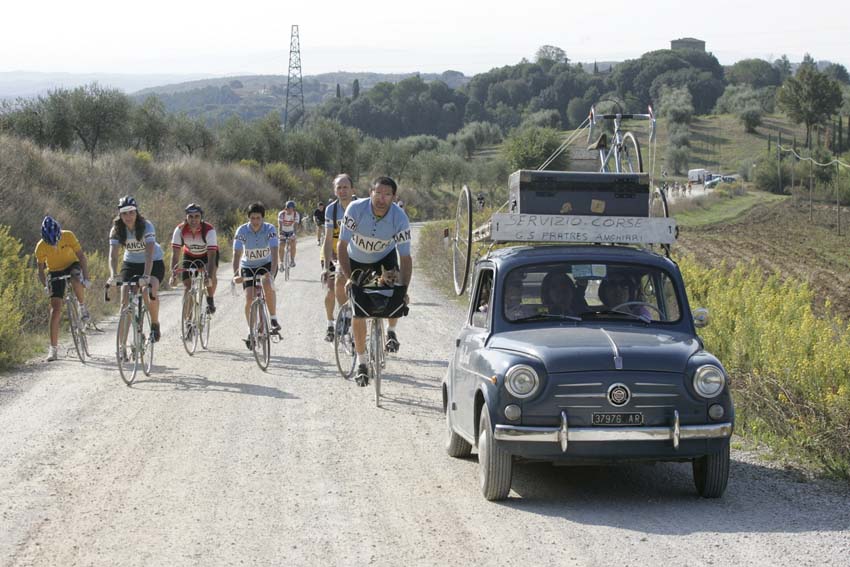 E’ un vero e proprio evento da non perdere! Una gara spettacolare ed originalissima, creata ed organizzata dall’Associazione Parco Ciclistico del Chianti.
Un vero e proprio show del pedale che appassionerà anche coloro che hanno poca dimestichezza con i nomi di Bartali e Coppi.
Perché l’Eroica è qualcosa di diverso davvero. In epoca di bici ipertecnologiche e doping veri e presunti ecco un’autentica macchina del tempo che ci riporterà indietro di molti anni…
L’Eroica è una gara cicloturistica d’ epoca su strade prevalentemente sterrate.
E’ speciale da ogni punto di vista. Ripropone ambienti e scenografie del ciclismo anteguerra, polvere e fango, nessuna assistenza tecnica, ristori d’ epoca, strade stupende, ma difficili, grande spirito di sacrificio e d’ adattamento.
Si ricercano le radici autentiche di questa straordinaria passione popolare chè è il ciclismo della strada, quella che ha alimentato tante leggende…
Domenica 7 ottobre
Info: Piazza Ricasoli, 50 – Gaiole in Chianti – e-mail: eroica@parcociclisticodelchianti.itIt’s a real and proper event that is not payday loans teletrack to be missed! A spectacular and highly original competition, created and organised by the Chianti Cycling Park Association.
It’s a real and proper show of pedals that will also involve those who are not very familiar with the names of Bartali and Coppi.
The Heroic is really something different. In times of hypertechnological bikes and real and presumed doping, here is an authentic time machine that will take us back many years…
The Heroic is a period bike race run on mainly unmade-up roads.
It is special from all points of view. It proposes settings and scenographies of pre-War cycling, dust and mud, no technical assistance, period restorations, wonderful but difficult roads, a great spirit of sacrifice and adaptation.
A search is made for the authentic roots of this extraordinary popular passion for cycling, one that has given rise to so many legends…
7 October – Info: Piazza Ricasoli, 50 – Gaiole in Chianti – e-mail: eroica@parcociclisticodelchianti.it
Set 3, 2012 | Arte e cultura, Da non perdere, Val di Cornia
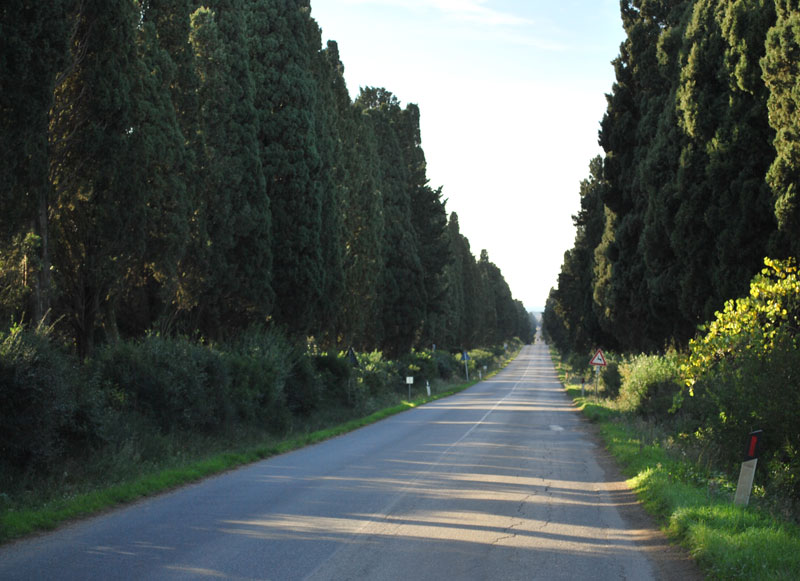 Bolgheri è soprattutto uno stato d’animo, un modo di vivere, un’atmosfera rarefatta di un mondo che si pensa estinto.
Perfetta questa frase per raccontare questo borgo e la sua terra e ci spiace solo di non averne la paternità perché questo semplice e centrato flash appartiene al Consorzio del Vino omonimo.
A volte bastano davvero poche parole per descrivere un luogo, per riassumere il tutto in poco più di una riga.
Difficile davvero dire Bolgheri e parlare di ciò che è speciale. Di un piccolissimo borgo che è solo la frazione di un comune ma che è più famose del comune a cui appartiene; di un luogo baciato dalla natura che si trova a metà strada fra le ultime propaggini delle Colline Metallifere lungo la costa maremmana livornese e che dallo sposalizio di questi due diversi fattori climatici sa trarne il meglio; del posto dove si trovano da secoli a silenti sentinelle quei rigogliosi cipressi resi immortali dai celebri versi di Giosuè Carducci nella poesia “Davanti a San Guido”; di quel luogo dov’è nata nel 1959 quella che è stata la prima oasi naturale privata d’Italia; dove sono quelle quattro vigne o poco più dov’è nato, quasi per scommessa, un vino che ha fatto la storia recente dell’enologia e che è oggi splende fra gli astri più lucenti nel firmamento della viticoltura mondiale.
Solo così si può parlare di Bolgheri, parlando di tutte le sue straordinarie unicità racchiuse fra le mura e le atmosfere rarefatte di quello che è un caratteristico borgo toscano sviluppatosi intorno a un castello più volte rimaneggiato nel corso dei secoli che si raggiunge dopo cinque chilometri di viale dove sono i famosi cipressi di cui sopra.
Una zona da svelarsi fra le frasche della sua oasi oggi del Wwf che mantiene inalterate le caratteristiche dell’antica Maremma con i ginepri, i pini domestici, i lecci, i frassini e dove si muovono sornioni i caprioli e gli scoiattoli fra i voli degli storni del falchi, dei germani reali.
Fermiamoci, siamo in un luogo magico. Alziamo il calice con quel vino unico, profumato, complesso e generoso che parla di un micro territorio e di una favola moderna che scopriremo piano piano.
First and foremost, Bolgheri is a state of mind, a lifestyle, a rare atmosphere of a Levitra world that is thought to be extinct.
This is the best sentence to describe this village and its land. We’re only sorry that we didn’t come up with it ourselves as this simple and focused flash belongs to the wine consortium of the same name.
At times only a few words are needed to describe a place, to sum it all up in little more than one line.
It’s hard to explain what makes Bolgheri so special. It’s a tiny village that is merely the hamlet of a municipality, but which is more famous than the municipality to which it belongs; a place caressed by nature that is located halfway between the final foothills of the Colline Metallifere (metal-bearing hills) along the Livorno coast in the Maremma area and which knows how to get the best out of the union of these two different climatic factors; the place where the silent sentinels of those luxuriant cypress trees have stood for centuries, made immortal in the famous verses of Giosuè Carducci in the poem Davanti a San Guido; that place where what was the first private nature park in Italy was created in 1959; where those four vines or more gave rise to a wine as if by accident that has gone down in recent wine-making history and still shines out as one of the brightest stars in world oenology.
This is the only way to talk about Bolgheri, about all of its extraordinary unique features contained within its walls and the rare atmosphere of a typical Tuscan village built up aroud a castle that has been reworked several times over the centuries, where you arrive after three miles of a wide road lined with the famous cypress trees.
Discover this area with the branches of its WWF oasis, which keeps the features of old Maremma intact with the juniper, domestic pine, oak and ash and where the deer and squirrels move craftily amidst the flight of the starlings, hawks and wild ducks.
That’s enough; this is a magical place. Let’s raise our glasses with this uniquely perfumed, full-bodied and generous wine that speaks of a small land and a modern-day fairytale that we discover a little at a time.
Set 2, 2012 | Arte e cultura, Da non perdere, Garfagnana
 Anche in Toscana abbiamo un “gran canyon”: si trova in Garfagnana, nel Comune di Bagni di Lucca, nascosto tra i boschi di faggio. Come tutti i luoghi inaccessibili e un po’ misteriosi, leggende e storie di paura, tramandate oralmente, avvolgono questo luogo.
L’Orrido di Botri è il canyon più grande e profondo della Toscana, un’aspra e imponente gola calcarea scavata nel corso del tempo dalle fredde acque cristalline dei torrenti Mariana e Ribellino che si uniscono nel Rio Pelago: in alcuni punti le ripide pareti raggiungono i 200 metri di altezza.
Per salvare questo luogo unico e di assoluta bellezza, fin dal 1971, è stata istituita una Riserva naturale statale, gestita dal Corpo Forestale di Stato, che comprende una superficie di 286 ettari.
Dal 1993, in più, l’area si trova al centro di un’oasi di protezione della fauna di circa 2.000 ettari, voluta dalla Provincia di Lucca, dove la caccia è completamente vietata.
La vegetazione si presenta ricca e lussureggiante, con varietà anche rare: nei tratti umidi e ombrosi, in basso, vicino alle acque, prevalgono i muschi, le epatiche e i vari tipi di felci. Qui si trova anche una pianta carnivora, la pinguicola.
Nelle zone rocciose, soleggiate, nei livelli più alti delle pareti, nascono specie erbacee come la rara pianta di aquilegia, di silene o la bella primula auricola.
Per le piante vi crescono il faggio, il carpino nero, l’orniello detto anche “albero della manna”, l’acero, il salice, il tiglio selvatico, il maggiociondolo, il leccio in alcuni punti bel soleggiato, e il raro tasso.
Da giugno a settembre è possibile visitare L’Orrido di Botri, partendo da località Ponte Gaio, unico accesso alla gola, dove si trova il Centro di accoglienza del Corpo forestale dello Stato con la biglietteria.
Percorrerlo non è facile, il fondo è scivoloso, occorre quindi un abbigliamento adeguato. Obbligatorio dotarsi di un casco, affittabile presso il centro.
L’Ufficio Guide Alpine organizza escursioni all’Orrido di Botri a partire da giugno, tutti i weekend: il percorso segue il letto del fiume, circa quattro ore andata e ritorno, con partenza da Ponte Gaio per arrivare alla cosiddetta “Piscina”. L’ultimo tratto presenta difficoltà maggiori.
Meglio non avventurarsi da soli, soprattutto senza esperienza, e godersi una bella giornata a contatto con la natura. Le guide conoscono le leggende dell’Orrido di Botri e prima di entrarvi si rivolgano agli spiriti del luogo.
Informazioni:
Ufficio Guide Scuola di Alpinismo: tel. 335- 6322005 www.ufficioguide.it
Centro accoglienza del CFS di Ponte a Gaio Tel 0583/800020
A Ponte Gaio si trova un’ottima trattoria, il Nido dell’Aquila, cucina semplice ed economica
In Tuscany we have a “grand canyon” too. It’s located in the Garfagnana area, in the municipality of Bagni di Lucca, hidden in the oak forests.
Like all inaccessible places, it’s a bit mysterious and it is cloaked in myth and scary stories that have been passed down by word of mouth.
Orrido di Botri is the biggest and deepest canyon in Tuscany, a harsh and impressive limestone gorge that has been carved over time by the cold, clear waters of the Mariana and Ribellino torrents, which merge in Rio Pelago. At certain points, the steep walls climb up to 650 feet high.
To protect this uniquely beautiful place, a state nature reserve was founded in 1971, managed by the State Forestry Department, which covers a surface area of 286 hectares.
From 1993 onwards, the area has been situated in the middle of an oasis protecting the fauna covering approximately 2,000 hectares, set up by the Lucca provincial government, where hunting is strictly forbidden.
The vegetation is rich and luxuriant, with rare varieties. In shaded and wet areas, moss, Hepaticae and various kinds of fern prevail low down and close to water. Butterwort, a carnivorous plant, is also found here.In rocky and sunny areas, higher up than the plants, grassy varieties are found such as the rare Aquilegia, Silene and the beautiful Primula auricola. In terms of trees, you’ll find oak, black hornbeam, ash (also known as Manna Ash), maple, willow, wild linden, laburnum and oak in some sunny places, as well as the rare yew tree.
You can visit Orrido di Botri from June to September, setting off from Ponte Gaio, the only access point to the gorge, where you’ll find the hospitality centre of the State Forestry Department with the ticket office. It’s not an easy walk; the ground is slippery, so you need to be properly kitted out. Wearing a helmet is a must, which can be hired at the centre.
The Alpine Guide Office organises hikes to theOrrido di Botri every weekend from June onwards. The route follows the river bed and takes about four hours there and back, starting from Ponte Gaio and arriving at the so-called “Piscina” (pool).
The final stretch is the most difficult. Don’t try to do it alone, especially if you’re inexperienced. It’s a great day out in touch with nature. The tour guides know all about the myths of Orrido di Botri and summon the local spirits before entering there.
Info:
Ufficio Guide Scuola di Alpinismo: Tel. 335- 6322005 www.ufficioguide.it
Centro accoglienza del CFS di Ponte a Gaio Tel 0583/800020
There’s a fantastic eatery in Ponte Gaio, Nido dell’Aquila, offering cheap, simple food.
