Ago 3, 2013 | Da non perdere, Garfagnana, Lunigiana, Maremma, Val d'Elsa | Val di Merse, Val di Cecina

di Nadia Fondelli – Siamo nel periodo più caldo dell’anno e fra umido e afa abbiamo difficoltà a difenderci e anche le escursioni e gite diventano complicate.
Noi che conosciamo davvero il territorio e che non scriviamo dalla scrivania, ma andiamo a scoprire… abbiamo per voi, una serie di proposte anticaldo. Escursioni fra grotte e canyon perfette adesso. Per chi è in vacanza e per chi cerca anche un’escusione di un solo giorno.
Antro del Corchia
In provincia di Lucca e quindi vicina anche alla Versilia, incastonata tra gli spettacolari scenari del Parco delle Alpi Apuane è la “Montagna vuota” che porta con sé i segreti di milioni di anni di storia geologica: al suo interno ben 70 km di gallerie e pozzi, 1200 metri di dislivello massimo, un sistema di condotti carsici sviluppati in 2 km cubici di roccia che rendono l’Antro del Corchia il più importante complesso carsico d’Italia ed uno dei maggiori al mondo.
Il percorso di quasi due chilometri si fa con soste, in circa due ore. La presenza di oltre 1000 scalini non la rende un’escursione adatta a persone con ridotta mobilità. La temperatura interna, costante durante tutto l’anno, si aggira sui 7,5°. Necessario indossare almeno una felpa, avere con se una cerata e calzare scarpe con suola in gomma meglio se da trekking.
Apertura: mattina e pomeriggio secondo un calendario annuale www.antrocorchia.it. Disponibili anche visite guidate in più lingue. Su richiesta sono disponibili anche due diversi percorsi speleologici entrambi di tre ore: la Galleria della Neve e il Ramo del Fiume; le attrezzature tecniche necessarie sono parzialmente fornite dal gestore e comprese nel prezzo del biglietto.
Il Museo delle miniere di Montecatini Valdicecina
In Valdicecina visita a un luogo speciale dove la memoria rimanda alla polvere e alla fatica della vita in miniera; qui era nel XIX secolo la più grande miniera di rame d’Europa.
Un’esperienza emozionante è calarsi nelle viscere della terra per andare alla scoperta della miniera di Caporciano che è possibile visitare con guida. Il sito si trova a circa un chilometro dal centro del paese e offre un viaggio emozionante ed indimenticabile che vi porterà a ripercorrere, passo dopo passo, i percorsi fatti per oltre un secolo dai minatori. Percorrere le gallerie scavate nel corso degli anni, ma soprattutto quelle ottocentesche. La visita in un’atmosfera dal clima costante mai superiore ai 10° vi lascerà sulla pelle l’odore del minerale, qualche goccia d’umidità, ma tanta emozione.
Ammirerete i cunicoli, il pozzo d’estrazione del minerale all’interno della torre e chiuderete la visita all’interno dell’oratorio dedicato a Santa Barbara patrona dei minatori.
Percorso facile, adatto a tutti, visita di circa un’ora e mezza. Si consiglia di indossare almeno una felpa, avere con se una cerata e calzare scarpe con suola in gomma meglio se da trekking.
Informazioni e prenotazioni: tel. +39 0588 86099 – www.volterratur.it –www.museodelleminiere.it
Grotta del Sassocolato
Siamo nel territorio di Castell’Azzara in provincia di Grosseto e alle pendici del Monte Amiata a 900 metri d’altitudine.
Dall’abitato di Castell’Azzara, seguendo l’apposita segnaletica, si sale verso il Poggio delle Forche, uno sperone di roccia ben visibile dal paese e, dopo circa un chilometro di cammino, si raggiunge la cavità naturale, prevalentemente lineare, con alcuni dislivelli significativi superabili nella parte turistica mediante scale artificiali. In un ambiente dove non si superano gli 8° una delle caratteristiche è la
presenza di una grande colonia di Chirotteri (pipistrelli di 12 specie diverse) che, nel periodo estivo, raggiunge complessivamente 2000/2500 individui!
Il percorso turistico si snoda attraverso spazi anche grandi attrezzati con scale a gradini fino ad una profondità di 30 metri. La visita dura circa 45 minuti, ma per chi è più allenato esiste anche un itinerario più impegnativo di tre ore.
Si consiglia di indossare almeno una felpa, avere con se una cerata e calzare scarpe con suola in gomma meglio se da trekking.
Apertura: dal 10 aprile al 10 novembre.
Informazioni: Gruppo Speleologo l’Orso: +39 0564 951032
L’orrido di Botri
Il “gran canyon” di Toscana si trova in Garfagnana, nel Comune di Bagni di Lucca, nascosto nelle faggete.
Grande e profondo è un’aspra e imponente gola calcarea scavata nel corso del tempo dalle fredde acque cristalline dei torrenti Mariana e Ribellino che si uniscono nel Rio Pelago: in alcuni punti le ripide pareti raggiungono i 200 metri di altezza.
Per salvaguardare questo luogo unico di assoluta bellezza dal 1971 è stata istituita una Riserva naturale statale gestita dal Corpo Forestale di Stato, che comprende una superficie di 286 ettarial centro di un’area di un’oasi di protezione della fauna di circa 2.000 ettari, voluta dalla Provincia di Lucca.
La vegetazione, ricca e lussureggiante ha varietà anche rare: fra cui, nella parte umida, una pianta carnivora, la pinguicola. Nelle zone rocciose soleggiate, nei livelli più alti delle pareti nasce la rara pianta di aquilegia, di silene o la bella primula auricola.
C’è tempo fino a settembre per visitare L’Orrido di Botri, partendo da località Ponte Gaio, unico accesso alla gola, dove si trova il Centro di accoglienza del Corpo forestale dello Stato con biglietteria.
Percorrerlo non è facile anche se il percorso si divide in quattro steep di diversi livelli perchè il fondo è scivoloso, sopratutto nel tratto finale. Chi lo vuole percorrere tutto fino alla famosa “piscina” metta in conto quattro ore per andata e ritorno con pause. Per tutti occorre un abbigliamento adeguato dato che l’ambiente è totalmente ombroso e l’acqua fresca anche in piena estate. Abiti tecnici, uno zaino con il cambio d’abito e sopratutto fondamentale la scelta delle scarpe. Si consiglia scarpette da scoglio che aggrappano sulle pietre e non sono troppo pesanti in acqua. Obbligatorio il casco, affittabile presso il centro.
Informazioni:
Ufficio Guide Scuola di Alpinismo: tel. 335- 6322005 – www.ufficioguide.it
Centro accoglienza del CFS di Ponte a Gaio Tel 0583/800020
Stretti di Giaredo
Quasi sconosciuto ai più questo canyon scavato dalle vorticose acque del Gordana poco dopo Pontremoli, andando in direzione di Zeri.
Gli stretti di una bellezza straordinaria con pareti alte oltre 30 metri in cui a malapena filtra timidamente il sole hanno una lunghezza percorribile di poco meno di un chilometro, ma decisamente, non sono adatti a tutti.
Si tratta di una forra fluviale e si percorre il letto del fiume. In alcuni tratti placido e a seconda delle annate lo si deve anche nuotare per brevi bracciate in un’acqua cristallina e fresca. Un’ora per percorrerli tutti e un’altra ora per tornare indietro. Cinque le gole principali che si attraversano, la più bella quella centrale.
Si raggiungono (dato che non esistono indicazioni) come detto prendendo da Pontremoli in direzione di Zeri. Dopo alcuni tornanti in località Cavezzana Gordana si prende su uno di essi a sinistra abbandonando la strada asfaltata e prendendone una sterrata in discesa. Su uno spiazzo si lascia l’auto e si prosegue fino a trovare il fiume. Si consiglia abiti tecnici, costume da bagno, uno zaino con il cambio d’abito in auto e sopratutto fondamentale la scelta delle scarpe. Si consiglia scarpette da scoglio che aggrappano sulle pietre e non sono troppo pesanti in acqua.
Non esistono visite guidate organizzate in loco, si consiglia solo ad escursionisti esperti e comunque con prudenza e attenzione dato che la zona è alluvionale, sopratutto nei passaggi a nuoto
.
by Nadia Fondelli – We are in the hottest time of year, and between wet and muggy we have propecia side effects difficulty to defend ourselves and also excursions and trips become complicated.
We who really know the area and that we do not write off the desk, but let’s find out … we have for you, a series of proposals. Excursions between caves and canyons perfect now.
For those who are on vacation and for those seeking un’escusione even a single day.
Antro del Corchia
In the province of Lucca and thus also close to the Versilia, set among the spectacular scenery of the Apuan Alps is the “empty Mountain” which brings with it the secrets of millions of years of geological history: inside a 70 km of tunnels and wells, 1,200 vertical meters up a system of karst conduits developed in 2 cubic km of rock that make the Antro del Corchia the most important karst in Italy and one of the largest in the world.
The course of almost two kilometers you with stops in about two hours. The presence of more than 1,000 steps does not make a trip suitable for people with reduced mobility. The internal temperature constant throughout the year, is about 7.5 °. Must at least wear a sweatshirt, having with you a tarp and wear shoes with rubber soles, preferably from trekking.
Hours: morning and afternoon according to an annual calendar www.antrocorchia.it. Also available guided tours in several languages. On request there are also two different speleological both three-hour: Gallery of Snow and the Branch River, the necessary technical equipment are partly provided by the operator and included in the ticket price.
The Mining Museum of Montecatini Val di Cecina
In Valdicecina visit to a special place where memory refers to the dust and fatigue life in the mine, here in the nineteenth century was the largest copper mine in Europe.
Is an exciting adventure descend into the bowels of the earth to discover the mine of Caporciano that can be visited with a guide. The site is located about a kilometer from the town center and offers a thrilling and unforgettable experience that will take you to retrace, step by step, the paths made for over a century by miners. Browse tunnels dug over the years, but especially those nineteenth-century. The visit in an atmosphere of constant climate was never higher than 10 ° will leave the smell on the skin of the mineral, a few drops of moisture, but so much emotion. Admire the tunnels, shaft extraction of the mineral inside the tower and you close the visit inside the oratory dedicated to St. Barbara patron saint of miners.
Easy trail, suitable for all, visit of about an hour and a half. You should wear at least a sweatshirt, having with you a tarp and wear shoes with rubber soles, preferably from trekking.
Information and reservations: tel. +39 0588 86099 – www.volterratur.it-www.museodelleminiere.it
Cave Sassocolato
We are in the territory of Castell’Azzara in the province of Grosseto, on the slopes of Monte Amiata at an altitude of 900 meters.
From the town of Castell’Azzara, following the signs, you climb towards the Poggio delle Forche, a spur of rock visible from the village and, after about a mile of walking, you will reach the natural cavity, mainly linear, with some significant slopes in the tourist overcome by artificial stairs. In an environment where you do not exceed 8 ° one of the characteristics is the presence of a large colony of bats (bats of 12 different species) that, during the summer, reaching a total of 2000/2500 individuals!
The tourist route winds through large spaces also equipped with ladders with steps up to a depth of 30 meters. The tour lasts about 45 minutes, but for those who are more trained there is also a route more challenging than three hours.
You should wear at least a sweatshirt, having with you a tarp and wear shoes with rubber soles, preferably from trekking.
Open from April 10 to November 10.
Information: Group Speleologist the Bear: +39 0564 951032
The Orrido di Botri
The “Grand Canyon” of Tuscany is located in Garfagnana, in the town of Bagni di Lucca, hidden in the beech woods.
Big and deep is a rugged and imposing limestone gorge carved over time by the cold waters of the streams and Mariana Ribellino who come together in Rio Pelago: in some places the steep walls reach 200 meters in height.
In order to preserve this unique place of absolute beauty from 1971 was established a state nature reserve managed by the State Forestry Corps, which encompasses an area of 286 ettarial center of an oasis of fauna protection of nearly 2,000 acres, built by the Province of Lucca.
The vegetation is rich and luxuriant variety also has rare: among them, the wet, a carnivorous plant, butterwort. In rocky areas sunny in the higher levels of the walls comes the rare plant aquilegia, campion or the beautiful primula auricula.
You have until September to visit TheOrrido di Botri, starting from Ponte Gaio, only access to the throat, where the Reception Centre of the State Forestry Corps with ticket services.
Touring it is not easy even if the path is divided into four different levels of steep because the bottom is slippery, especially in the final stretch. Who wants to go around to the famous “pool” account us four hours to return with breaks. For all need to dress appropriately given that the environment is totally shady and cool water even in summer. Dresses technicians, a backpack with a change of clothes and especially the fundamental choice of shoes. We recommend shoes for rocks that cling on the stones and are not too heavy in the water. Mandatory helmet, rentable at the center.
Information:
Office Guide Mountaineering School: tel. 335-6322005 – www.ufficioguide.it
Best Friends of CFS Ponte a Gaio Tel 0583/800020
Stretti di Giaredo
Almost unknown to most people this canyon carved by the swirling waters of Gordana shortly after Pontremoli, going in the direction of Zeri.
The Straits of outstanding natural beauty with walls more than 30 meters where the sun barely filters timidly have a viable length of just under a mile, but definitely are not suitable for everyone.
It is a river gorge and walk along the river bed. In some places placid and depending on the year you must also swim for short strokes in crystal clear water and fresh. Hour to cover them all and another hour to get back. Five main gorges that are crossed, the most beautiful central one.
Are reached (since there are no indications) as said in the direction of taking from Pontremoli Zeri. After a few turns in the locality Cavezzana Gordana you take on one of them left on the next road and taking a dirt downhill. On an open space you leave the car and continue until you find the river. It is recommended that technical clothing, swimsuit, a backpack with a change of clothes in the car and especially the fundamental choice of shoes. We recommend shoes for rocks that cling on the stones and are not too heavy in the water.
There are no guided tours on site, it is recommended only for experienced hikers with care and attention and in any case given that the area is alluvial, especially in the passages by swimming.
Lug 4, 2013 | Chianti Classico, Eventi, Val d'Elsa | Val di Merse
 di redazione – Parte venerdì 5 nel primo week end di luglio la Festa Medievale più famosa di Toscana:”Monteriggioni di Torri si Corona”, giunta quest’anno alla sua XXIII edizione e che si svolge nel bellissimo castello medievale di Monteriggioni, a due passi da Siena.
Due weekend (venerdì, sabato, domenica 5-6-7 e 12-13-14 luglio) durante i quali il suggestivo borgo tornerà a rivivere proprio come ai tempi del Medioevo.
Anche quest’anno la Festa prenderà il via con un evento spettacolare. Venerdì intorno alle ore 12 saranno una quindicina di paracadutisti del 186º Folgore a battezzare la festa lanciandosi con dei paracadute a vela e atterrando nel prato antistante il Castello di Monteriggioni.
Alle ore 17 il via ufficiale della festa con gli spettacoli, racchiusi sotto la direzione artistica di Francesco Burroni, autore e attore senese.
Il tema a cui è ispirata questa edizione è “La festa a corte e la fiera nel borgo”, sviluppato come da tradizione nell’arco dei due weekend.
In questo primo fine settimana, dal 5 al 7 luglio, in tutte le piazze, vicoli, vie andrà in scena la “Festa a Corte”, durante la quale sarà celebrata la vita di dame, cavalieri e rimatori cortesi.
Tra gli appuntamenti da non perdere la rievocazione storica del matrimonio di Messer Duccio Salimbeni con Madonna Baldesca di Ghinibaldo di Strove, a cura del Gruppo storico Agresto, il grande spettacolo di fuoco, maschere e trampoli con il gruppo internazionale Progetto Bagliori, le performance degli spagnoli Acatomba, freschi campioni mondiali di improvvisazione teatrale, musiche medievali sacre e di corte e tanti match di improvvisazione.
Tra le novità di quest’anno, si segnalano gli spettacoli realizzati in ben cinque lingue diverse (italiano, inglese, spagnolo, tedesco e francese) che renderanno la festa ancora più internazionale.
Come sempre poi non mancheranno per le vie di Monteriggioni figuranti, artigiani, buon cibo toscano, attività ludiche per bambini e il mercato medievale, con terrecotte, giochi in legno, riproduzioni di armi antiche, araldica, manufatti in pelle e tanto altro ancora…da acquistare rigorosamente, solo dopo aver scambiato nella piazza principale,l’euro con l’antica moneta “Grosso”, l’unica che circolerà dentro le mura del Castello di Monteriggioni.
I biglietti possono essere acquistati presso tutti i circuiti Box Office, nei centri commerciali e punti vendita UniCoop Firenze o direttamente a Monteriggioni durante i giorni di festa, alle biglietterie fuori dalle mura.
I costi sono: venerdì intero 8 € – ridotto 6 €, sabato intero 12 € – ridotto 10 €, domenica intero 10 € – ridotto 8 €.
Il biglietto ridotto è rivolto a: residenti nel comune di Monteriggioni, ragazzi di 11-16 anni, militari, over 65, diversamente abili, gruppi organizzati di oltre 30 pax.
Entrata gratuita per i bambini fino a 10 anni.
by redaction – Start 5th Friday in the first weekend of July, the mmost famouus Medieval Festival of Tuscany: “Monteriggioni di Torri si corona”, now in its XXIII edition, which takes place in the beautiful medieval castle of Monteriggioni, near from Siena.
Two weekends (Friday, Saturday, Sunday 5-6-7 and 12-13-14 July) during which the charming village will return to relive just like in the Middle Ages.
This year the festival will kick off with a spectacular event. Friday at around 12 will be fifteen paratroopers of 186 º Folgore to baptize the party jumping with parachutes sailing and landing on the lawn in front of the Castle of Monteriggioni.
At 17, the official start of the festival with performances, enclosed under the artistic direction of Francesco Ravines, author and actor Siena.
The theme that has inspired this edition is “The court festival and fair in the village”, as tradition developed over the two weekends.
In this first weekend, July 5 to 7, in all the squares, alleys, streets will stage the “Party at the Court”, which will be celebrated during the life of the ladies, knights and courtly poets.
Among the events not to miss the historical re-enactment of the marriage of Messer Salimbeni with Duccio Madonna Baldesca of Ghinibaldo of Strove by the Group of historic Agresto, the great fire show, masks and stilts with the international group Flashes Project, the performance of the Spanish Acatomba, fresh, world champions of improvisational theater, medieval sacred music and of the court and match many of improvisation.
Among the novelties of this year, the report shows performed in five different languages (Italian, English, Spanish, German and French) that will make the party even more international.
As always, then there will be in the streets of Monteriggioni listed, artisans, good Tuscan food, fun activities for children and the medieval market, with pottery, wooden toys, reproductions of antique arms, heraldry, leather goods and much more .. . to buy strictly, only having exchanged in the main square, the euro currency with the old “Big”, the only one that will circulate inside the castle walls of Monteriggioni.
Tickets can be purchased at all circuits Box Office, in shopping malls and retail outlets or directly UniCoop Florence to Monteriggioni during the festival days, the ticket outside the walls.
The costs are: Friday entire 8 € – reduced 6 €, Saturday whole 12 € – reduced 10 €, Sunday full 10 € – reduced € 8.
The reduced ticket is intended for: residents in the municipality of Monteriggioni, 11-16 years old, military, over 65, disabled, groups of more than 30 pax.
Free entrance for children up to 10 years.
Giu 20, 2013 | Arte e cultura, Firenze, Montagna Pistoiese, Monte Amiata
 di Donella Zanoboni – Il 24 giugno,quando il sole raggiunge la sua massima declinazione, é considerato il giorno del solstizio d’estate, della Festa di S Giovanni e di tanti miti e leggende che accompagnano quuesto giorno.
Non é facile orientarsi nelle congerie di credenze e usanze che ruotano intorno al 24 giugno perché sono frutto di varie stratificazioni che raccolgono frammenti di tradizioni diverse sia pagane che cristiane.
Rimane da chiarire quale sia stato il motivo per cui fu scelto lo stesso giorno sia per le popolarità pagane che cristiane (quindi la nascita del Battista).
La notte fra il 23 e 24 giugno é ritenuta quindi magica e in quanto a credenze e superstizioni c’erano e ce ne sono tutt’oggi in ogni parte del mondo.
Senza addentrarsi troppo in considerazioni per le quali non abbiamo una particolare preparazione, ci limiteremo a raccontare alcuni dei più curiosi episodi che accadeva e accadono tutt’oggi nella magica notte di S Giovanni.
Iniziamo c’é con la storia dell’acqua che sgorga il 23 giugno e solo quella notte. Un acqua speciale che guarisce tutti i mali, ma però bisogna trovare la sorgente magica…anche se chiaro è il riferimento al Battista che battezzava con l’acqua del Giordano.
É in quella notte che si devono raccogliere le erbe magiche; iperico, ruta, artemisia, agnocasto, lavanda, ginestra, verbena, felce e ribes. Sono le 9 erbe di San Giovanni.
Si raccolgono in mazzetti e si tengono in casa per protezione.
Se poi le poniamo sotto il cuscino in quella notte, si dice che “quel che si sogna si realizzi”.
Alcune delle benefiche erbe, oltre che a scacciare i demoni e le streghe proteggano dal “malocchio”. L’artemisia ad esempio, consacrata anticamente alla sorella lunare del solare Apollo (secondo Apuleio), la verbena simbolo di pace e prosperità e il ribes i cui frutti rossi sono detti “bacche di San Giovanni”.
Molto diffusa anche l’usanza di accendere grandi falò nella notte dedicata al Battista. In questi falò si gettano legni ed erbe secche. Saltare poi su questi fuochi significa che si riuscirà a “saltare” ogni pericolo che si presenti durante l’anno.
Bruciando poi nel fuoco alcune erbe (di quelle raccolte quella notte) e conservandone le ceneri, queste salvaguarderanno anche contro i fulmini durante i temporali.
Un proverbio istriano assicura anche che “San Giovanni col su ‘ fogo brusa le strighe el moro e l’ lovo “, ovvero “San Giovanni con il suo fuoco brucia le streghe, il moro e il lupo”.
In Normandia invece anticamente ci si bagnava nella rugiada la mattina di San Giovanni per far ringiovanire la pelle e preservarla dalle malattie. Rugiada che anche la virtù di proteggere i panni dalle tarme tant’è che, le nostre nonne durante la notte del 23 giugno stendevano alla rugiada i teli dove veniva messo il pane per avere una buona lievitazione!
Anche la preparazione del liquore del nocino veniva effettuata questa notte e l’usanza risale addirittura ai Celti della Bretagna.
Secondo la tradizione le donne devono staccare le noci quando la drupa é ancora verde con una lama di legno, mai di metallo. L’infusione, darà un liquore considerato un’autentica panacea.
Sempre per San Giovanni il giovane regalava alla sua ragazza un mazzetto di fiori e lei restituiva il regalo alla festa dei SS. Pietro e Paolo il 29 di giugno.
A Roma in età medievale c’era l’usanza di mangiare, danzare e cantare sui prati fra la basilica di San Giovanni in Laterano e Santa Croce in Gerusalemme.
Nella notte della vigilia si accendevano grandi fuochi, si beveva e danzava all’aperto o nelle osterie in attesa del sorgere del sole!
Accanto al fuoco che aveva una funzione liberatoria, vi era la rugiada dalle virtù fecondatrici! Le giovani spose che volevano ottenere figli, sollevavano le vesti sedendosi sull’erba umida sul monte Testaccio per un intimo lavacro propiziatorio.
La funzione del Santo come patrono anche dell’amicizia lo ricorda un detto toscano che dice “San Giovanni non vuole inganni ” spiegando che il Battista secondo la leggenda era inflessibile con chi tradiva la fiducia dell’amico!
by Donella Zanoboni – On June 24, when the sun reaches its maximum declination, is considered the day of the summer solstice, the Feast of semenax increase St Giovanni and many myths and legends that accompany quuesto day.
It’s not easy to navigate the patchwork of beliefs and customs that revolve around June 24 because they are the result of various layers that collect fragments of both pagan and Christian traditions.
It remains unclear what was the reason why he was chosen the same day for both the popularity pagan and Christian (thus the birth of Giovanni the Baptist).
On the night of June 23 and 24 is considered magical and then in terms of beliefs and superstitions were there and there are still all over the world.
Without going too much into consideration for which we do not have a particular preparation, we’ll just tell you about some of the most curious episodes that happened and still happen in the magical night of San Giovanni.
Let’s start there with the history of water that flows on June 23 and only that night. A special water that heals all wounds, but, however, we must find the magic spot … even if it is clear that the reference to John the Baptist baptized with water from the Jordan River.
It is on that night that you have to collect the magical herbs, St. John’s wort, rue, mugwort, chaste tree, lavender, broom, verbena, fern and currants. It’s 9 herbs of St. Giovanni. They gather in clusters and are held in the house for protection.
If then we put under the pillow that night, it is said that “what you dream to happen.”
Some of the beneficial herbs, as well as to cast out demons and witches protect against the “evil eye”. The mugwort for example, once consecrated to the sister of the solar lunar Apollo (according to Apuleius), the vervain symbol of peace and prosperity and red currant whose fruits are called “berries of St. John.”
Also the widespread custom of lighting bonfires in the night dedicated to John the Baptist. These bonfires are thrown wood and dried herbs. Then jump on these fires means that you will be able to “jump” any hazards that will come up during the year.
Then burning some herbs into the fire (of those collections that night) and keeping the ashes, these also safeguard it against lightning during thunderstorms.
A proverb Istrian also ensures that “with St. John on ‘fogo brusa the witches el el moro’ lovo”, or “Saint John with his fire burning witches, the dark and the Wolf”.
In Normandy instead once we bathed in the dew on the morning of St. John of Jerusalem to rejuvenate your skin and protect it from disease. Dew that the virtue of protecting the clothes from moths so much so that our grandmothers during the night of June 23, the dew lay the sheets where it was put the bread to get a good rise!
The preparation of the walnut liqueur was done tonight and the custom dates back to the Celts of Brittany.
According to tradition, women must remove the nuts when the drupe is still green with a wooden knife, never metal. The infusion will give a liquor considered a real panacea.
Also for the young St. John gave his girlfriend a bouquet of flowers and she returned the gift to the feast of SS. Peter and Paul on June 29.
In Rome in the Middle Ages it was customary to eat, dance and sing on the lawns between the Basilica of St. John Lateran and Santa Croce in Gerusalemme.
On the night of the eve bonfires were lit, they drank and danced outdoors or in taverns waiting for the sunrise!
Next to the fire that had a feature release, there was the dew from the virtues fertilizing! The young brides who wanted to get children, lifting their robes sitting on the wet grass on Mount Testaccio for an intimate washing propitiatory.
The function of the saint as the patron saint of friendship also remembers a Tuscan saying that says “St. John does not want to deceive” explaining that the Baptist according to legend was relentless with those who betrayed the trust of his friend!
Giu 20, 2013 | Siena, Val d'Elsa | Val di Merse
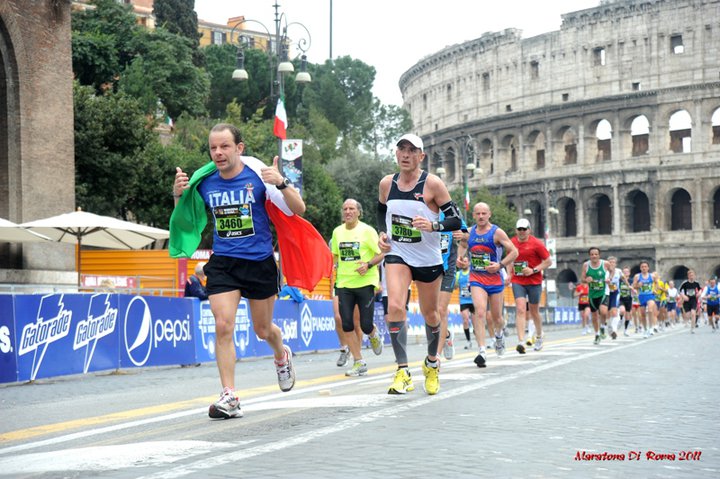 di Veronica Becchi – Quando la passione per lo sport permette di aiutare gli altri e di sostenere un’iniziativa di beneficenza, tagliare il traguardo assume un significato ancora più carico di soddisfazione e di gioia.
Ne è testimone il sindaco di Colle di Val d’Elsa, Paolo Brogioni, maratoneta di lungo corso e grande appassionato di sport, che con questa spinta di adrenalina in più ha corso qualche settimana fa la maratona di Milano partecipando a una raccolta fondi a sostegno del Centro di riabilitazione equestre “Tosca delle Bollicine” dell’associazione sportiva Le Bollicine di Siena, impegnata nel recupero motorio e intellettivo di ragazzi disabili.
Insieme al primo cittadino colligiano hanno corso anche alcuni amici e volontari dell’associazione senese, dandosi il cambio in una staffetta che ha coinvolto, fra gli altri, Alessandro, uno dei ragazzi che frequentano il Centro e l’associazione.
Sindaco, come è nata questa iniziativa?
La corsa è la mia grande passione da molti anni e ho sempre considerato lo sport in generale come un mix di passione, divertimento, benessere e sana competizione, ma anche come un momento per stare insieme agli altri.
Negli ultimi anni ho partecipato a numerose maratone, esperienze ogni volta uniche e sempre diverse, anche se le corri più volte nella stessa città.
La maratona di Milano ho voluto correrla non solo per confrontarmi con me stesso e con le mie capacità sportive, ma anche e soprattutto per fare qualcosa per gli altri, portando un contributo concreto all’attività sociale dell’associazione Le Bollicine e sperimentando un nuovo modello di sostegno al sociale.
Ci spieghi meglio.
In un momento in cui le istituzioni possono contare su risorse sempre minori da destinare al volontariato e al sociale, l’unione fra sport e solidarietà può aprire nuovi orizzonti.
Credo che anche in Italia dobbiamo iniziare a sperimentare forme diverse per sostenere le nostre associazioni e i progetti che portano avanti nel sociale e in altri settori, prendendo come esempio quanto accade già in tanti altri Paesi, a partire dagli Stati Uniti.
Qui sono molto attive fondazioni che raccolgono fondi da destinare al sociale attraverso iniziative di grande richiamo come le maratone, una su tutte New York.
Era la prima volta che viveva un’esperienza simile?
Non proprio. Qualche anno fa ho partecipato, con grande piacere, a un’iniziativa per certi aspetti simile, che univa sport e solidarietà.
Si trattava della “Run x You – Correre con amore”, corsa organizzata dall’associazione omonima e dal gruppo Elba Onlus per raccogliere fondi a favore della residenza-vacanza per disabili “I Sassi Turchini” di Porto Azzurro.
La manifestazione ha fatto tappa per due volte a Colle di Val d’Elsa e ho corso anche io, partecipando insieme ad associazioni e atleti colligiani.
Un’esperienza molto emozionante e interessante che spero vada avanti anche per altri progetti e torni presto a trovarci.
Intende ripetere?
Sicuramente e molto volentieri. Sono soddisfatto per l’esperienza di Milano e per l’aiuto dato all’associazione de Le Bollicine anche se in questa occasione ho avuto la conferma che occorre lavorare ancora molto sulla cultura degli italiani in questa direzione.
La partenza è andata bene. Ora bisogna continuare la corsa verso questo nuovo traguardo. Io sono pronto.
L’attività dell’associazione Le Bollicine.
Il Centro è accreditato presso l’Anire, Associazione nazionale riabilitazione equestre, il Comitato paraolimpico italiano e il Movimento Special Olympics Italia e aiuta ragazzi disabili attraverso un progetto terapeutico specifico e individualizzato che punta a instaurare un rapporto di fiducia tra il cavallo e il paziente.
Il Centro di riabilitazione equestre Tosca delle Bollicine che conterà sul contributo del Charity Program e dell’aiuto di volontari e amici dell’associazione senese promuove un progetto terapeutico specifico e individualizzato, dove, attraverso un rapporto di fiducia tra l’animale e il paziente, si cerca di migliorare le capacità motorie, le competenze cognitive e le facoltà intellettive come l’attenzione, la concentrazione e la memoria, aiutando il paziente nella conquista di una maggiore autonomia personale e sociale.
Il centro Tosca delle Bollicine dispone di tutti gli ausili e delle attrezzature previste dall’Anire e le attività, convenzionate con i Comuni di Siena, Sovicille e Monteriggioni e le Asl 7 zona senese, sono condotte da tecnici di riabilitazione equestre e da istruttori di equitazione con brevetto rilasciato dal Comitato Paraolimpico italiano e dal Movimento Special Olympics Italia.
I cavalli a disposizione della struttura sono sette, specificamente addestrati per la riabilitazione equestre, e i corsi si tengono ogni giorno coinvolgendo, in media, 30 persone diversamente abili con differenti patologie psico-fisiche.
Durante le lezioni sono presenti i volontari che collaborano nell’accoglienza degli utenti con momenti di gioco e di socializzazione. Per maggiori informazioni sulle attività del centro e dell’associazione, è possibile consultare il sito http://www.bollicine.org/il-centro-tosca-delle-bollicine/.
by Veronica Becchi hgh product reviews – When the passion for the sport allows you to help others and to support a charity initiative, cross the finish line takes on an even more full of satisfaction and joy.
Witness the mayor of Colle di Val d’Elsa, Paolol Brogioni, long-time marathon runner and a great lover of sports, and with this extra boost of adrenaline ran the marathon a few weeks ago in Milan attending a fundraiser in support the Center for equestrian rehabilitation “Tosca delle Bollicine”, engaged in the recovery of motor and intellectual disabled children.
Along with the mayor Colle course also have some friends and volunteers of Siena in relays in a relay race that involved, among others, Alessandro, one of the children who attend the Centre and the Association.
Mayor, how did this initiative?
Running is my passion for many years and I have always considered sport in general as a mix of passion, fun, well-being and healthy competition, but also as a time to be together with others.
In recent years I have participated in numerous marathons, experiences every time unique and always different, even if you run more than once in the same city.
The Milan marathon I wanted much sooner not only to confront myself and my sport skills, but also to do something for others, bringing a real contribution to the social activity of the association Bollicine and experimenting with a new model support to the social.
Could you explain better.
At a time in which institutions can rely on fewer and fewer resources to devote to volunteering and social union between sport and solidarity can open new horizons.
I think that in Italy we begin to experience different forms to support our partnerships and projects that advance the social and other sectors, taking as an example what is already happening in many other countries, from the United States.
Here are very active foundations that collect funds for the social initiatives through a great attraction such as marathons, one in all New York.
It was the first time I lived a similar experience?
Not really. A few years ago I attended, with great pleasure, an initiative similar in some respects, combining sport and solidarity.
It was the “Run x You – Running with love,” race organized by the same name and the Gruppo Elba non-profit organization to raise funds for the holiday-residence for people with disabilities “The Sassi Turchini” of Porto Azzurro in Elba island.
The event was stopped twice in Colle di Val d’Elsa and I ran it too, along with participating organizations and athletes Colle.
A very exciting and interesting that I hope will go on to other projects and come back soon.
Will you repeat that?
Surely and very willingly. I am satisfied with the experience of Milan and for the help given to the association of Bubbles although on this occasion I had the confirmation that we need to work much more on the culture of the Italians in this direction.
The start went well. Now we need to continue the race toward this new goal. I’m ready.
The activities of the association Bollicine.
The Center is accredited by the ANIRE, National Association of equestrian rehabilitation, the Italian Paralympic Committee and the Special Olympics Movement Italy and helps disabled children through a specific and individualized treatment plan that aims to establish a relationship of trust between the horse and the patient.
The Center for equestrian rehabilitation Tosca Bubbles that will count on the contribution of the Charity Program and the help of volunteers and friends of the Sienese promotes a specific and individualized treatment plan, where, through a relationship of trust between the animal and the patient, trying to improve motor skills, cognitive skills and intellectual faculties such as attention, concentration and memory, helping the patient in the conquest of greater personal and social autonomy.
The center Tosca Bollicine has all the aids and equipment provided dall’Anire and activities which have an agreement with the towns of Siena, Monteriggioni and the local health authorities and Sovicille 7 Siena area, are conducted by technical equestrian rehabilitation and riding instructors with patent issued by the Italian Paralympic Committee and the Special Olympics Movement Italy.
The horses available to the structure are seven, specifically trained for equestrian rehabilitation, and courses are held each day involving, on average, 30 people with disabilities with different pathologies psycho-physical characteristics.
During the lessons there are volunteers who work in welcoming users with moments of play and socialization. For more information on the activities of the center and the association, you can visit http: www.bollicine.org/il-centro-tosca-delle-bollicine
Mag 27, 2013 | Chianti Classico, Crete Senesi, Enogastronomia, Siena, Val d'Elsa | Val di Merse, Val d'Orcia | Val di Chiana, Val di Cornia, Val Tiberina
 di redazione – Un grande mese il giugno che ci attende per “Girogustando”, la manifestazione che dal 2002 unisce in Terra di Siena ristoranti e culture culinarie diversi.
Un giugno ricco di tanti spunti fra provocazioni e nonsense. Meglio un pesce povero, un pesce finto o un pesce d’oro? E se il pesce d’oro si trasforma in carne chianina? O se un brigante si mette a legger poesia?
Ecco le serate di giugno dove “i cuochi d’Italia s’incontrano”.
Dopo i primi dieci appuntamenti primaverili tra marzo e maggio, le cinque date in Umbria in aprile e le prime due in provincia di Padova a maggio, la kermesse dei menu a quattro mani propone, sulla soglia dell’estate, altre cinque ghiotte occasioni di confronto e conoscenza in linea con la propria mission 2013 secondo la quale “la cultura vien mangiando”.
Lombardia, Piemonte e Toscana a… Siena. Il calendario senese della manifestazione riparte alla grande mercoledì 5 giugno a Poggibonsi quando il prestigioso Ristorante da Alcide, più di un secolo e mezzo di storia alle spalle, ospiterà l’Osteria di San Cerbone di Massa Marittima (Grosseto), per una serata di riscossa del cosiddetto ‘pesce dimenticato’.
A caratterizzare il menu a quattro mani saranno cefali, moscardini, tremole ed altri freschi esemplari di quella vasta cerchia di pescato facilmente disponibile nell’arcipelago toscano ma troppo spesso sacrificato a beneficio di tipologie più blasonate e lontane per provenienza.
La sera seguente, giovedì 6 giugno, Girogustando si sposta da nord a sud della provincia di Siena. Sul lago di Chiusi “Torlo vini – enoteca con cucina” di Torino farà visita al ristorante Pesce d’oro, che a dispetto del nome si dedicherà per l’occasione esclusivamente agli eccellenti prodotti della terra.
Le due femme cuisineMarta Torlo e Gianna Manfano metteranno a confronto la Fassona piemontese con la Chianina; grazie ai sommelier Ais, il confronto Piemonte-Toscana interesserà anche i rispettivi vitigni Nebbiolo e Sangiovese.
Mercoledì 12 giugno si risalirà poi verso Siena, e parallelamente, anche sui crinali della storia. A Murlo, centro strategico della civiltà etrusca, la Locanda dei Briganti di Gropparello (Piacenza) sarà ‘alloggiata’ per una sera nella Trattoria il Libridinoso: in preda alla passione per libri e scritti in genere, la cuoca Donatella Barcelli alternerà pietanze tradizionali a readings di ‘poesie mangerecce’, interpretate in sala dall’attore senese Camillo Zangrandi.
Umbria e Valdichiana in trasferta a… Padova. Contemporaneamente, il mese di giugno proporrà anche la terza e quarta tappa di Girogustando a Padova e provincia: dopo le prime due serate in maggio, i gemellaggi gastronomici in terra veneta ripartiranno martedì 4 giugno a Santa Giustina in Colle, dove il ristorante l’Angolo di Acquaviva di Montepulciano sarà ospite del ristorante Bianchi, 40 anni di gestione familiare oggi splendidamente proseguita da quattro sorelle, ovvero la nuova generazione della famiglia.
Più avanti, alla vigilia del solstizio d’estate, menu a quattro mani di scena a Vigonza: qui giovedì 20 giugno il ristorante Ai Molini ospiterà Le Macerine di Castiglion del Lago (Perugia).
La Cultura vien mangiando. A riprova dello slogan 2013 di Girogustando, le esposizioni di opere d’arte ed i “live paintings” in programma anche nelle serate di giugno, protagonisti pittori e scultori toscani e veneti. Il cartellone di eventi Girogustando per il 2013 proseguirà fino al mese di novembre.
Info: www.girogustando.tv
by redaction – A increase semen volume pills great month June that awaits us for “Girogustando”, the event that since 2002 combines Sienna restaurants and different culinary cultures.
A June full of many ideas between provocation and nonsense. Better a poor fish, a fish or a fake gold fish? And if the golden fish turns into Chianina beef? Or if a robber gets from reading poetry?
Here are the evenings of June where the “chefs in Italy meet.”
After the first ten appointments spring between March and May, the five dates in Umbria in April and the first two in the province of Padua in May, the festival menu offers four hands on the threshold of summer, five other delicious opportunities for comparison and knowledge in line with its mission 2013 seconds which “culture comes with eating.”
Lombardy, Piedmont and Tuscany … Siena. The timing of the event starts great Sienese Wednesday, June 5 at Poggibonsi when the prestigious Restaurant from Alcide, more than a century and a half of history, will host the Osteria di San Cerbone of Massa Marittima (Grosseto), for an evening of rescue the so-called ‘forgotten fish’.
To characterize the menu for four hands will be mullet, octopus, aspens and other fresh specimens of that vast circle of fish readily available in the Tuscan archipelago but too often sacrificed for the benefit of the most renowned types and for distant origin.
The following evening, Thursday, June 6, Girogustando moves from north to south of the province of Siena. Lake Chiusi “Torlo wines – wine cellar with kitchen” in Turin will visit the restaurant Golden Fish, which despite the name will devote exclusively for the occasion and excellent products of the earth.
The two femme cuisine Marta Torlo and Gianna Manfano will compare the Fassona Piedmont with the Chianina, and thanks to AIS sommelier, comparison-Piedmont Tuscany also affect their Nebbiolo and Sangiovese.
Wednesday, June 12 will then ascend towards Siena, and in parallel, even on the ridges of the story. A Murlo, strategic center of the Etruscan civilization, Locanda dei Briganti Gropparello (Piacenza) will be ‘housed’ for an evening in the Trattoria Libridinoso: in the throes of passion for books and writings in general, the cook traditional dishes Donatella Barcelli alternate readings of ‘edible poems’, played by the actor in the hall of Siena Camillo Zangrandi.
Umbria and Val di Chiana away in … Padova. At the same time, the month of June will also feature the third and fourth stage of Girogustando in Padua: after the first two nights in May, twinning food in Veneto will share Tuesday, June 4 in Santa Giustina in Colle, where the restaurant’s Corner Acquaviva di Montepulciano will be a guest of the restaurant Bianchi, 40 years old, family-run beautifully today continued by four sisters, or the new generation of the family.
Later, on the eve of the summer solstice, four-hand menu of scene in Vigonza: here Thursday, June 20 the restaurant will host Ai Molini The Macerine of Castiglione del Lago (Perugia).
Culture comes with eating. As evidence of the slogan Girogustando 2013, the exhibitions of works of art and the “live paintings” also scheduled in the evenings of June, players painters and sculptors Tuscany and Veneto. Girogustando The program of events for 2013 will continue until November.
Info: www.girogustando.tv
Mag 23, 2013 | Da non perdere, Siena, Val d'Elsa | Val di Merse
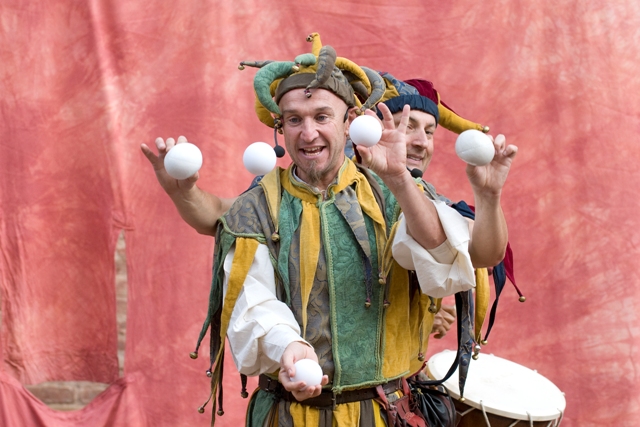 di redazione – Due giorni di rievocazione storica e allegria nella parte alta di Colle con artisti di strada, duelli e mercati, taverne, spazi per “Il Rinascimento di Colle”. Sabato 8 e domenica 9 giugno torna un grande spettacolo fra cui si segnala il sabato alle 21 il corteo storico per ricordare l’arrivo del Vescovo e l’acquisizione del titolo di città nel giugno 1592.
Rievocazione storica, allegria e tanto divertimento tornano a unirsi nella terza edizione de “Il Rinascimento di Colle”, un grande e suggestivo spettacolo a cielo aperto che sabato 8 e domenica 9 giugno animerà il cuore più antico di Colle di Val d’Elsa, conosciuta come “città del cristallo”, attraversata dalla Via Francigena e luogo natale dell’architetto Arnolfo di Cambio.
Dalle ore 17 alla mezzanotte un ricco programma di spettacoli nelle vie e nelle piazze del borgo che sovrasta la parte più moderna della città coinvolgerà tutti i presenti, con un vero e proprio tuffo nel passato della città: accanto ad artisti di strada, giullari, musici, giocolieri, saltimbanchi, cantastorie e falconieri, ci sarà spazio per rivivere l’atmosfera rinascimentale passeggiando per le vie del borgo e incontrando i tanti figuranti in costume, visitando l’accampamento militare, assistendo ai duelli in piazza e agli spettacoli itineranti e riscoprendo i sapori tipici del territorio nelle taverne all’aperto, allestite per l’occasione.
Nella prima giornata, sabato 8 giugno, alle ore 21, la città rivivrà, con un ricco corteo storico, l’arrivo del primo Vescovo, Usimbardo Usimbardi e il conferimento del titolo di Città che seguì la bolla di Papa Clemente VIII, in cui il Pontefice riconobbe la presenza di una diocesi a Colle di Val d’Elsa. A sfilare per le vie di Castello, saranno, oltre al Vescovo, rappresentanti delle istituzioni civili, militari e religiose di allora, accanto a nobili e popolani.
La due giorni – organizzata e promossa sotto la direzione artistica del Cers, Consorzio europeo rievocazioni storiche con il patrocinio del Comune di Colle di Val d’Elsa – coinvolgerà tante associazioni della città, che, ancora una volta e con grande entusiasmo, porteranno il loro contributo nel riproporre antichi mestieri dell’epoca; nell’allestire e animare i mercati e le taverne e nell’arricchire il programma della manifestazione con performance e animazione al fianco dei numerosi artisti professionisti presenti.
Uno spettacolo a cielo aperto che renderà “attore” e protagonista chiunque sarà presente e vorrà scoprire o riscoprire Colle di Val d’Elsa, la sua parte alta e la storia locale, all’insegna dell’allegria e del divertimento per tutte le età.
“Il Rinascimento di Colle” sarà anche una festa “a misura di bambino”, con uno spazio riservato ai più piccoli con giochi dell’epoca e laboratori didattici. Lo scenario di rievocazione storica, poi, sarà arricchito dal presidio militare e da artigiani, antiche botteghe e mestieri medievali e rinascimentali che popoleranno le vie di Castello, accanto alla riproduzione di un mercato dell’epoca.
L’età rinascimentale sarà protagonista anche a tavola, nelle taverne allestite nelle piazze e nei ristoranti del borgo, dove si potranno gustare, serviti da personale in costume, vino speziato e antiche ricette, accanto a piatti tipici della tradizione povera toscana.
“Il Rinascimento di Colle” non sarà solo una rievocazione storica, ma anche un’opportunità per conoscere il territorio e il suo patrimonio artistico, culturale ed enogastronomico, oltre ai prodotti di eccellenza in campo artigianale, a partire dal cristallo. A Colle di Val d’Elsa, infatti, viene prodotto il 95% del cristallo italiano e il 15% di quello mondiale e il borgo di Castello ospita un laboratorio permanente nel Vicolo della Misericordia, a due passi dal Duomo, dove sarà possibile assistere, anche sabato 8 e domenica 9 giugno, alla lavorazione dal vivo, a caldo e a freddo, con ingresso libero.
Informazioni. Il costo del biglietto di ingresso è di 9 euro, 6 euro il ridotto (valido anche per i residenti a Colle di Val d’Elsa). Ingresso gratuito per i bambini di età inferiore ai 12 anni. Per informazioni, è possibile consultare il sito www.ilrinascimentodicolle.org; inviare un’e-mail all’indirizzo segreteria@cersonweb.org oppure contattare il numero 345-7583298.
La manifestazione è anche su Facebook, con la pagina “Il Rinascimento di Colle”, aggiornata costantemente con foto e video delle passate edizioni e anticipazioni sulla due giorni di giugno, e fa parte del “Via Francigena Collective Project”, organizzato dall’Associazione “Civita” e dall’Associazione Europea delle Vie Francigene e promosso in Toscana da ATVF, Associazione Toscana Vie Francigene.
by redaction – Two days of historical re-enactment and cheer at Semenax the top of hill with street performers, duels and markets, taverns, spaces for “The Renaissance of Colle.” Saturday 8 and Sunday, June 9 back a great show among its noteworthy 21 Saturday at the parade to commemorate the arrival of the bishop and the acquisition of the title of city in June 1592.
Historical Reenactment, joy and fun back to join in the third edition of “The Renaissance of Colle”, a large and impressive open air performance on Saturday 8 and Sunday, June 9 animate the oldest part of Colle di Val d’Elsa, known as the “city of crystal”, crossed by the Via Francigena and the birthplace of the architect Arnolfo di Cambio.
From 17 pm to midnight a rich program of performances in the streets and squares of the village overlooking the more modern part of the city will involve all those present, with a real blast from the past of the city, next to street performers, jugglers, musicians , jugglers, acrobats, storytellers and falconers, there will be room to relive the Renaissance atmosphere strolling through the streets of the village and meeting the many people in costume, visiting the military camp, assisting to duels in the square and the touring shows and rediscovering the flavors of the territory in open-air tavernas, erected for the occasion.
On the first day, Saturday, June 8, at 21, the city will be revived, with a rich historical parade, the arrival of the first Bishop, Usimbardo Usimbardi and the transfer of the title of City that followed the bull of Pope Clement VIII, in which the Pope recognized the presence of a diocese in Colle di Val d’Elsa. A parade through the streets of Castello, will, in addition to Bishop, representatives of civil institutions, military and religious authorities of the time, next to nobles and commoners.
The two day event – organized and promoted under the artistic direction of the ESRB, the European Consortium pageants under the patronage of the Municipality of Colle di Val d’Elsa – involve many associations of the city, which once again and with great enthusiasm, will bring their contribution to revive ancient crafts and skills, in setting and animate markets and taverns and in enriching the program of the event with performances and animation alongside many professional artists present.
An open air performance that will make “actor” and starred anyone will be present and will want to discover or rediscover Colle di Val d’Elsa, the upper part of the local history and, under the banner of joy and fun for all ages.
“The Renaissance of Colle” is also a party “child-friendly”, with an area reserved for children with games and educational workshops era. The scenario of historical re-enactment, then, will be enriched by the military garrison and craftsmen, antique shops and crafts medieval and renaissance that will populate the streets of Castello, next to playing a market era.
The Renaissance will be featured at the table, in the taverns set up in the streets and restaurants of the village, where you can taste, served by costumed staff, spiced wine and ancient recipes, along with typical dishes of Tuscan peasant.
“The Renaissance of Colle” is not only a historical, but also an opportunity to know the area and its artistic, cultural and gastronomic addition to the products of excellence in craftsmanship, starting from the crystal. At Colle di Val d’Elsa, in fact, is produced 95% of Italian crystal and 15% of the world and the village of Castle houses a permanent laboratory in Vicolo della Misericordia, a few steps from the Duomo, where you can attend, Also on Saturday 8 and Sunday, June 9, to live processing, hot and cold, with free admission.
Information. The cost of the ticket is 9 €, 6 € (concession also applies to residents in Colle di Val d’Elsa). Free admission for children under the age of 12 years. For information, you can visit www.ilrinascimentodicolle.org, send an email to segreteria@cersonweb.org or contact number 345-7583298.
The event is also on Facebook, with the page “The Renaissance of Colle” is constantly updated with photos and videos of past editions and advances on two days in June, and is part of the “Via Francigena Collective Project”, organized by the ” Civita “and by the European Association of the Via Francigena and promoted by ATVF in Tuscany, Tuscany Association Via Francigena.
