Ago 3, 2013 | Da non perdere, Garfagnana, Lunigiana, Maremma, Val d'Elsa | Val di Merse, Val di Cecina

di Nadia Fondelli – Siamo nel periodo più caldo dell’anno e fra umido e afa abbiamo difficoltà a difenderci e anche le escursioni e gite diventano complicate.
Noi che conosciamo davvero il territorio e che non scriviamo dalla scrivania, ma andiamo a scoprire… abbiamo per voi, una serie di proposte anticaldo. Escursioni fra grotte e canyon perfette adesso. Per chi è in vacanza e per chi cerca anche un’escusione di un solo giorno.
Antro del Corchia
In provincia di Lucca e quindi vicina anche alla Versilia, incastonata tra gli spettacolari scenari del Parco delle Alpi Apuane è la “Montagna vuota” che porta con sé i segreti di milioni di anni di storia geologica: al suo interno ben 70 km di gallerie e pozzi, 1200 metri di dislivello massimo, un sistema di condotti carsici sviluppati in 2 km cubici di roccia che rendono l’Antro del Corchia il più importante complesso carsico d’Italia ed uno dei maggiori al mondo.
Il percorso di quasi due chilometri si fa con soste, in circa due ore. La presenza di oltre 1000 scalini non la rende un’escursione adatta a persone con ridotta mobilità. La temperatura interna, costante durante tutto l’anno, si aggira sui 7,5°. Necessario indossare almeno una felpa, avere con se una cerata e calzare scarpe con suola in gomma meglio se da trekking.
Apertura: mattina e pomeriggio secondo un calendario annuale www.antrocorchia.it. Disponibili anche visite guidate in più lingue. Su richiesta sono disponibili anche due diversi percorsi speleologici entrambi di tre ore: la Galleria della Neve e il Ramo del Fiume; le attrezzature tecniche necessarie sono parzialmente fornite dal gestore e comprese nel prezzo del biglietto.
Il Museo delle miniere di Montecatini Valdicecina
In Valdicecina visita a un luogo speciale dove la memoria rimanda alla polvere e alla fatica della vita in miniera; qui era nel XIX secolo la più grande miniera di rame d’Europa.
Un’esperienza emozionante è calarsi nelle viscere della terra per andare alla scoperta della miniera di Caporciano che è possibile visitare con guida. Il sito si trova a circa un chilometro dal centro del paese e offre un viaggio emozionante ed indimenticabile che vi porterà a ripercorrere, passo dopo passo, i percorsi fatti per oltre un secolo dai minatori. Percorrere le gallerie scavate nel corso degli anni, ma soprattutto quelle ottocentesche. La visita in un’atmosfera dal clima costante mai superiore ai 10° vi lascerà sulla pelle l’odore del minerale, qualche goccia d’umidità, ma tanta emozione.
Ammirerete i cunicoli, il pozzo d’estrazione del minerale all’interno della torre e chiuderete la visita all’interno dell’oratorio dedicato a Santa Barbara patrona dei minatori.
Percorso facile, adatto a tutti, visita di circa un’ora e mezza. Si consiglia di indossare almeno una felpa, avere con se una cerata e calzare scarpe con suola in gomma meglio se da trekking.
Informazioni e prenotazioni: tel. +39 0588 86099 – www.volterratur.it –www.museodelleminiere.it
Grotta del Sassocolato
Siamo nel territorio di Castell’Azzara in provincia di Grosseto e alle pendici del Monte Amiata a 900 metri d’altitudine.
Dall’abitato di Castell’Azzara, seguendo l’apposita segnaletica, si sale verso il Poggio delle Forche, uno sperone di roccia ben visibile dal paese e, dopo circa un chilometro di cammino, si raggiunge la cavità naturale, prevalentemente lineare, con alcuni dislivelli significativi superabili nella parte turistica mediante scale artificiali. In un ambiente dove non si superano gli 8° una delle caratteristiche è la
presenza di una grande colonia di Chirotteri (pipistrelli di 12 specie diverse) che, nel periodo estivo, raggiunge complessivamente 2000/2500 individui!
Il percorso turistico si snoda attraverso spazi anche grandi attrezzati con scale a gradini fino ad una profondità di 30 metri. La visita dura circa 45 minuti, ma per chi è più allenato esiste anche un itinerario più impegnativo di tre ore.
Si consiglia di indossare almeno una felpa, avere con se una cerata e calzare scarpe con suola in gomma meglio se da trekking.
Apertura: dal 10 aprile al 10 novembre.
Informazioni: Gruppo Speleologo l’Orso: +39 0564 951032
L’orrido di Botri
Il “gran canyon” di Toscana si trova in Garfagnana, nel Comune di Bagni di Lucca, nascosto nelle faggete.
Grande e profondo è un’aspra e imponente gola calcarea scavata nel corso del tempo dalle fredde acque cristalline dei torrenti Mariana e Ribellino che si uniscono nel Rio Pelago: in alcuni punti le ripide pareti raggiungono i 200 metri di altezza.
Per salvaguardare questo luogo unico di assoluta bellezza dal 1971 è stata istituita una Riserva naturale statale gestita dal Corpo Forestale di Stato, che comprende una superficie di 286 ettarial centro di un’area di un’oasi di protezione della fauna di circa 2.000 ettari, voluta dalla Provincia di Lucca.
La vegetazione, ricca e lussureggiante ha varietà anche rare: fra cui, nella parte umida, una pianta carnivora, la pinguicola. Nelle zone rocciose soleggiate, nei livelli più alti delle pareti nasce la rara pianta di aquilegia, di silene o la bella primula auricola.
C’è tempo fino a settembre per visitare L’Orrido di Botri, partendo da località Ponte Gaio, unico accesso alla gola, dove si trova il Centro di accoglienza del Corpo forestale dello Stato con biglietteria.
Percorrerlo non è facile anche se il percorso si divide in quattro steep di diversi livelli perchè il fondo è scivoloso, sopratutto nel tratto finale. Chi lo vuole percorrere tutto fino alla famosa “piscina” metta in conto quattro ore per andata e ritorno con pause. Per tutti occorre un abbigliamento adeguato dato che l’ambiente è totalmente ombroso e l’acqua fresca anche in piena estate. Abiti tecnici, uno zaino con il cambio d’abito e sopratutto fondamentale la scelta delle scarpe. Si consiglia scarpette da scoglio che aggrappano sulle pietre e non sono troppo pesanti in acqua. Obbligatorio il casco, affittabile presso il centro.
Informazioni:
Ufficio Guide Scuola di Alpinismo: tel. 335- 6322005 – www.ufficioguide.it
Centro accoglienza del CFS di Ponte a Gaio Tel 0583/800020
Stretti di Giaredo
Quasi sconosciuto ai più questo canyon scavato dalle vorticose acque del Gordana poco dopo Pontremoli, andando in direzione di Zeri.
Gli stretti di una bellezza straordinaria con pareti alte oltre 30 metri in cui a malapena filtra timidamente il sole hanno una lunghezza percorribile di poco meno di un chilometro, ma decisamente, non sono adatti a tutti.
Si tratta di una forra fluviale e si percorre il letto del fiume. In alcuni tratti placido e a seconda delle annate lo si deve anche nuotare per brevi bracciate in un’acqua cristallina e fresca. Un’ora per percorrerli tutti e un’altra ora per tornare indietro. Cinque le gole principali che si attraversano, la più bella quella centrale.
Si raggiungono (dato che non esistono indicazioni) come detto prendendo da Pontremoli in direzione di Zeri. Dopo alcuni tornanti in località Cavezzana Gordana si prende su uno di essi a sinistra abbandonando la strada asfaltata e prendendone una sterrata in discesa. Su uno spiazzo si lascia l’auto e si prosegue fino a trovare il fiume. Si consiglia abiti tecnici, costume da bagno, uno zaino con il cambio d’abito in auto e sopratutto fondamentale la scelta delle scarpe. Si consiglia scarpette da scoglio che aggrappano sulle pietre e non sono troppo pesanti in acqua.
Non esistono visite guidate organizzate in loco, si consiglia solo ad escursionisti esperti e comunque con prudenza e attenzione dato che la zona è alluvionale, sopratutto nei passaggi a nuoto
.
by Nadia Fondelli – We are in the hottest time of year, and between wet and muggy we have propecia side effects difficulty to defend ourselves and also excursions and trips become complicated.
We who really know the area and that we do not write off the desk, but let’s find out … we have for you, a series of proposals. Excursions between caves and canyons perfect now.
For those who are on vacation and for those seeking un’escusione even a single day.
Antro del Corchia
In the province of Lucca and thus also close to the Versilia, set among the spectacular scenery of the Apuan Alps is the “empty Mountain” which brings with it the secrets of millions of years of geological history: inside a 70 km of tunnels and wells, 1,200 vertical meters up a system of karst conduits developed in 2 cubic km of rock that make the Antro del Corchia the most important karst in Italy and one of the largest in the world.
The course of almost two kilometers you with stops in about two hours. The presence of more than 1,000 steps does not make a trip suitable for people with reduced mobility. The internal temperature constant throughout the year, is about 7.5 °. Must at least wear a sweatshirt, having with you a tarp and wear shoes with rubber soles, preferably from trekking.
Hours: morning and afternoon according to an annual calendar www.antrocorchia.it. Also available guided tours in several languages. On request there are also two different speleological both three-hour: Gallery of Snow and the Branch River, the necessary technical equipment are partly provided by the operator and included in the ticket price.
The Mining Museum of Montecatini Val di Cecina
In Valdicecina visit to a special place where memory refers to the dust and fatigue life in the mine, here in the nineteenth century was the largest copper mine in Europe.
Is an exciting adventure descend into the bowels of the earth to discover the mine of Caporciano that can be visited with a guide. The site is located about a kilometer from the town center and offers a thrilling and unforgettable experience that will take you to retrace, step by step, the paths made for over a century by miners. Browse tunnels dug over the years, but especially those nineteenth-century. The visit in an atmosphere of constant climate was never higher than 10 ° will leave the smell on the skin of the mineral, a few drops of moisture, but so much emotion. Admire the tunnels, shaft extraction of the mineral inside the tower and you close the visit inside the oratory dedicated to St. Barbara patron saint of miners.
Easy trail, suitable for all, visit of about an hour and a half. You should wear at least a sweatshirt, having with you a tarp and wear shoes with rubber soles, preferably from trekking.
Information and reservations: tel. +39 0588 86099 – www.volterratur.it-www.museodelleminiere.it
Cave Sassocolato
We are in the territory of Castell’Azzara in the province of Grosseto, on the slopes of Monte Amiata at an altitude of 900 meters.
From the town of Castell’Azzara, following the signs, you climb towards the Poggio delle Forche, a spur of rock visible from the village and, after about a mile of walking, you will reach the natural cavity, mainly linear, with some significant slopes in the tourist overcome by artificial stairs. In an environment where you do not exceed 8 ° one of the characteristics is the presence of a large colony of bats (bats of 12 different species) that, during the summer, reaching a total of 2000/2500 individuals!
The tourist route winds through large spaces also equipped with ladders with steps up to a depth of 30 meters. The tour lasts about 45 minutes, but for those who are more trained there is also a route more challenging than three hours.
You should wear at least a sweatshirt, having with you a tarp and wear shoes with rubber soles, preferably from trekking.
Open from April 10 to November 10.
Information: Group Speleologist the Bear: +39 0564 951032
The Orrido di Botri
The “Grand Canyon” of Tuscany is located in Garfagnana, in the town of Bagni di Lucca, hidden in the beech woods.
Big and deep is a rugged and imposing limestone gorge carved over time by the cold waters of the streams and Mariana Ribellino who come together in Rio Pelago: in some places the steep walls reach 200 meters in height.
In order to preserve this unique place of absolute beauty from 1971 was established a state nature reserve managed by the State Forestry Corps, which encompasses an area of 286 ettarial center of an oasis of fauna protection of nearly 2,000 acres, built by the Province of Lucca.
The vegetation is rich and luxuriant variety also has rare: among them, the wet, a carnivorous plant, butterwort. In rocky areas sunny in the higher levels of the walls comes the rare plant aquilegia, campion or the beautiful primula auricula.
You have until September to visit TheOrrido di Botri, starting from Ponte Gaio, only access to the throat, where the Reception Centre of the State Forestry Corps with ticket services.
Touring it is not easy even if the path is divided into four different levels of steep because the bottom is slippery, especially in the final stretch. Who wants to go around to the famous “pool” account us four hours to return with breaks. For all need to dress appropriately given that the environment is totally shady and cool water even in summer. Dresses technicians, a backpack with a change of clothes and especially the fundamental choice of shoes. We recommend shoes for rocks that cling on the stones and are not too heavy in the water. Mandatory helmet, rentable at the center.
Information:
Office Guide Mountaineering School: tel. 335-6322005 – www.ufficioguide.it
Best Friends of CFS Ponte a Gaio Tel 0583/800020
Stretti di Giaredo
Almost unknown to most people this canyon carved by the swirling waters of Gordana shortly after Pontremoli, going in the direction of Zeri.
The Straits of outstanding natural beauty with walls more than 30 meters where the sun barely filters timidly have a viable length of just under a mile, but definitely are not suitable for everyone.
It is a river gorge and walk along the river bed. In some places placid and depending on the year you must also swim for short strokes in crystal clear water and fresh. Hour to cover them all and another hour to get back. Five main gorges that are crossed, the most beautiful central one.
Are reached (since there are no indications) as said in the direction of taking from Pontremoli Zeri. After a few turns in the locality Cavezzana Gordana you take on one of them left on the next road and taking a dirt downhill. On an open space you leave the car and continue until you find the river. It is recommended that technical clothing, swimsuit, a backpack with a change of clothes in the car and especially the fundamental choice of shoes. We recommend shoes for rocks that cling on the stones and are not too heavy in the water.
There are no guided tours on site, it is recommended only for experienced hikers with care and attention and in any case given that the area is alluvial, especially in the passages by swimming.
Ago 1, 2013 | Enogastronomia, Lunigiana, Massa Carrara
 di Nadia Fondelli – E’ impossibile dire Lunigiana senza parlare dei “testi”, elemento fondamentale della tipicità della zona e non solo culinariamente parlando. Il testo è molto di più, è parte stessa della cultura e della tradizione di Lunigiana. In esso vengono cotti gli impasti di farina, le varie torte d’erbe e di verdure salate, le carni di agnello della zona e perfino di dolci.
Impossibile quindi sedersi a tavola in Lunigiana, scoprire le sue specialità prescindendo dal testo. L’origine del testo si perde nella notte dei tempi, quando in questa terra si scolpivano le misteriose stele.
Fino a qualche decennio fa la costruzione dei testi era un’attività per molte famiglie della zona, si costruivano in terracotta utilizzando le materie prime estratte dai monti: argilla e pietra refrattaria che impastate, erano ottime per resistere al fuoco.
La fornace si trovava quasi sempre in un angolo del seccatoio e anche oggi, pochi irriducibili discendenti di quelle famiglie ancora producono i testi con l’antica tecnica. Si tratta però quasi sempre dei testi piccoli, quelli dove si cucinano i panigacci, le focaccette, le pattone e il castagnaccio.
Diffusissimi oggi sono i testi in ghisa costituiti da due elementi: il soprano (il coperchio rialzato fatto a forma di piccola cupola) e il sottano (la parte sottostante).
I due elementi vengono posti a scaldare sul fuoco separatamente, quindi riempiti con le sostanze da cuocere e poi unite le due parti. La cottura si ultima ponendo le braci sopra al testo.
Ma quale legno scegliere per la cottura? Una scelta fondamentale, quasi un’arte. Le fascine vengono scelte a seconda di cosa deve essere cotto e determinano il gusto finale della pietanza.
Ecco il vero segreto dei grandi piatti di Lunigiana: il testo.
Il testarolo
E’ un antico pane azzimo senza lievito circolare (dalla forma del testo) con uno spessore di 2-3 mm. circa. La farina di grano viene amalgamata con acqua tiepida e sale fino all’ottenimento di una pastella molto liquida.
A questo punto si scaldano i testi di ghisa sul fuoco vivo e una volta ben caldi, vi si versa sopra la pastella che spandendosi nel “sottano” ne assume la circonferenza formando un disco. Adesso si copre col “soprano” e si lascia cuocere pochi minuti. Una volta cotto il testarolo viene tagliato a rombi e fatto rinvenire in acqua bollente ferma.
Una volta scolato viene condito con olio extra vergine d’oliva, pecorino grattugiato e pesto. Alcune moderne varianti propongono i testaroli anche con condimenti di vongole e altri sughi di pesce.: Comunque sia è ottimo. Se volte acquistarlo viene venduto sfuso nei forni e nei negozi di generi alimentari della zona e commercializzato a più ampio raggio sottovuoto.
I panigacci
E’ anch’esso un piatto antichissimo legato alla tradizione dei testi. Si amalgama la farina di grano con acqua tiepida come per i testaroli, ma in questo caso la pastella che si deve ottenere è di media consistenza.
Si cuoce nei testi di terracotta preventivamente riscaldati su fuoco vivo. Quando assumono una colorazione chiara i testi vengono estratti dal fuoco vivo, riempiti dell’impasto e impilati in modo che la cottura del panigaccio avvenga fra un testo e l’altro.
La torta d’erbe
Straordinaria nelle sue mille varianti di erbe spontanee della zona. La sua squisitezza è dovuta alla combinazione degli ingredienti: erbe spontanee e ortaggi della zona diverse a seconda della stagione, ma straordinariamente diverse anche da valle a valle.
La torta assume ovviamente la forma del testo in cui viene cotta, si presenta quindi circolare e il suo ripieno è di un verde intenso. I periodi migliori per degustarla sono marzo-maggio e settembre-dicembre.
Le erbe spontanee sono: borragine, bietole, cipolle, spinaci selvatici, asparagi selvatici, porri, carote, pimpinella, orecchie d’asino, cime di ortiche, finocchietto selvatico, cicerbita, pan e vin, grassa porci, valerianella, centocchio, luppolo, cime di rovo, etc…
Una volta lavate vengono cotte in acqua bollente salata e spesso tagliuzzate ancora da crudo. Si mettono quindi in una terrina per essere impastate con gli altri ingredienti ovvero: parmigiano, pane grattato, sale e olio.
A parte si prepara la pasta di farina e acqua; una volta ottenuto un impasto compatto si stende una sfoglia, che viene adagiata nel “sottano” del testo e sopra si dispone l’impasto d’erbe poi si ricopre con la parte restante della sfoglia. Si chiude poi il testo e si ricopre il tutto con la brace calda per ultimare la cottura per cui serve circa mezz’ora.by Nadia Fondelli – It ‘s impossible to say can i buy vigrx plus at a store Lunigiana not to mention the “testi”, a key element of the character of the area and not just talking about seasonal cooking. The testi is much more, is part of the same culture and tradition of Lunigiana. In it are cooked dough of flour, cakes of various herbs and salted vegetables, meat of lamb in the area and even desserts.
Therefore impossible to sit at the table in Lunigiana, discover its specialties apart from the testi. The origin of the testi is lost in the mists of time, when in this land were carved the mysterious stele.
Until a few decades ago the construction of testi was an activity for many families in the area were built in terracotta using the raw materials extracted from the mountains, clay and refractory stone which knead, they were great to resist fire.
The furnace was almost always in a corner of the squeegee and even today, a few diehard descendants of those families still produce testi with the ancient technique. It is, however, almost always of small text, the ones where you cook the panigacci, the focaccette, the pattone and castagnaccio.
Ubiquitous today are the testi in cast iron consisting of two elements: the soprano (the raised cover made in the shape of small dome) and the sottano (the part below).
The two elements are placed on the fire to warm separately, then filled with the substance to be cooked and then add the two parties. The last cooking by placing the coals on top of the text.
But what wood should you use for cooking? A fundamental choice, almost an art. The bundles are chosen depending on what needs to be cooked and determine the final taste of the dish.
Here’s the real secret of the great dishes of Lunigiana text.
The testarolo
It ‘an ancient unleavened bread without yeast circular (the shape of the testo) with a thickness of 2-3 mm. about. The wheat flour is mixed with warm water and salt until a very liquid batter.
At this point, the cast-iron pans are heated over an open fire and once very hot, you pour the batter in that “sottano” assumes the circumference forming a disc. The time now is covered with the “soprano” and cook a few minutes. Once cooked testarolo is cut into diamond shapes and done soaked in boiling water stops.
Once drained is seasoned with extra virgin olive oil, parmigiano cheese and pesto. Some modern variants also offer testaroli with toppings of clams and other seafood sauces.: Whatever is great. If you buy it sometimes is sold in bulk ovens and grocery stores in the area and marketed on a larger scale vacuum.
The panigacci
It ‘also an ancient dish in the tradition of the testi. Amalgamates the wheat flour with warm water as for testaroli, but in this case the batter to be obtained is of medium consistency.
It is baked in a terracotta testo previously heated on high heat. When stain clear testo are extracted from the live fire, filled dough and stacked so that the cooking of the panigaccio occurs between a text and another.
The vegetable pie
Extraordinary in its several variants of wild herbs in the area. Its delicacy is due to the combination of ingredients: herbs and vegetables in the area differ depending on the season, but also extraordinarily different from valley to valley.
The cake is obviously of the form of the text in which it is cooked, is therefore circular and its filling is a deep green. The best times to enjoy it are March-May and September-December.
The herbs are: borage, beets, onions, wild spinach, asparagus, leeks, carrots, salad burnet, donkey ears, tops of nettles, wild fennel, sow-thistle, pan e vin, fat hogs, corn salad, Centocchio, hops, The Thorn tops, etc …
After washing are cooked in boiling salted water and shredded often still raw. He then put in a bowl to be mixed with other ingredients such as: Parmesan cheese, bread crumbs, salt and oil.
Aside from preparing the dough of flour and water, once you get a firm dough is spread a sheet, which is nestled in the “sottano” text above and you have the mixture of herbs and then cover with the remaining portion of the dough . Then closes the text and everything is covered with hot embers to finish cooking that serves about half an hour.
Lug 23, 2013 | Arcipelago | Costa degli Etruschi, Eventi
 di Nadia Fondelli – L’Isola di Pianosa, ai tempi del carceri di massima sicurezza chiamata “isola del diavolo” dallo scorso 17 luglio è diventata (finalmente) fruibile per i subacquei.
Il Parco dell’Arcipelago Toscano facendo sua la giusta considerazione che un parco ha senso di esistere se può essere fribile, ha aperto ai diving la fruizione subacquea contingentata per la scoperta dei fondali più belli dell’area protetta dell’isola.
Un risultato frutto di una proficua collaborazione tra istituzioni, forze dell’ordine e operatori del settore e del consorzio elbano diving.
I magnifici fondali dell’arcipelago toscano fino a pochi giorni fa “proibiti” saranno finalmente visibili a subacquei esperti e a piccoli gruppi accompagnati da guide ambientali subacquee.
E’ una fruizione sperimentale che è stata preceduta da un monitoraggio scientifico, ma è pur sempre un grande passo avanti rispetto al proibizionismo di ieri.
Definiti con cura e attenzione i percorsi di immersione e le regole di accesso e inoltre chi vuole fare le immersioni a Pianosa deve contattare solo uno dei seguenti diving autorizzati:
www.divinginelba.com, www.riodiving.it, www.subacquea.com, www.elbadiving.it
I diving che vogliono essere accreditati e autorizzati dovranno essere iscritti alla Camera di Commercio, specificare le caratteristiche dei natanti utilizzati, (che dovranno rispondere a dei requisiti di sostenibilità ambientali), pagare un abbonamento annuale e un ticket a immersione per ogni barca.
Per l’accredito contattare: parco@islepark.it
La fruizione sperimentale è consentita al momento con quattro boe, due boe sono di servizio riservate ai mezzi di soccorso e sorveglianza. La quinta boa, sp5, sarà usata solo successivamente a seguito del completamento definizione del percorso subacqueo. Troverete nel disciplinare tutto quello che c’è da sapere.
Un occasione unica, dimenticherete le mete tropicali immergendovi nel mare incontaminato dell’Arcipelago toscano.
by Nadia Fondelli – The Island of Pianosa, at the time vigrx of maximum security prisons called “Devil’s Island” from July 17 has become (finally) accessible to divers.
The Park of the Tuscan Archipelago doing its due consideration that the park has a reason to exist if it can be fribile, opened to the enjoyment underwater diving quota for the discovery of the most beautiful backdrops of the protected area of the island.
This is the result of a fruitful collaboration between institutions, law enforcement and the industry and the consortium Elba diving.
The stunning scenes of the Tuscan archipelago until a few days ago “forbidden” will finally be visible to experienced divers and small groups accompanied by environmental guides diving.
It ‘an experimental use which was preceded by a scientific monitoring, but it’s still a big step forward compared to the prohibition of yesterday.
Defined with care and attention the paths of immersion and access rules and also those who want to dive in Pianosa should contact only one of the following authorized diving:
www.divinginelba.com, www.riodiving.it, www.subacquea.com, www.elbadiving.it
The diving who want to be accredited and licensed must be registered with the Chamber of Commerce, specify the characteristics of the vessels used, (which must meet the requirements of environmental sustainability), to pay an annual subscription and a ticket to dive for each boat.
To deduct contact: parco@islepark.it
The experimental use is permitted at the time with four buoys, two buoys service are reserved for emergency vehicles and surveillance. The fifth buoy, sp5, will only be used subsequently as a result of the completion of path definition underwater. You will find in regulating everything there is to know.
A unique opportunity, forget the tropical destinations immersing yourself in the pristine sea of the Tuscan Archipelago.
Lug 19, 2013 | Arte e cultura
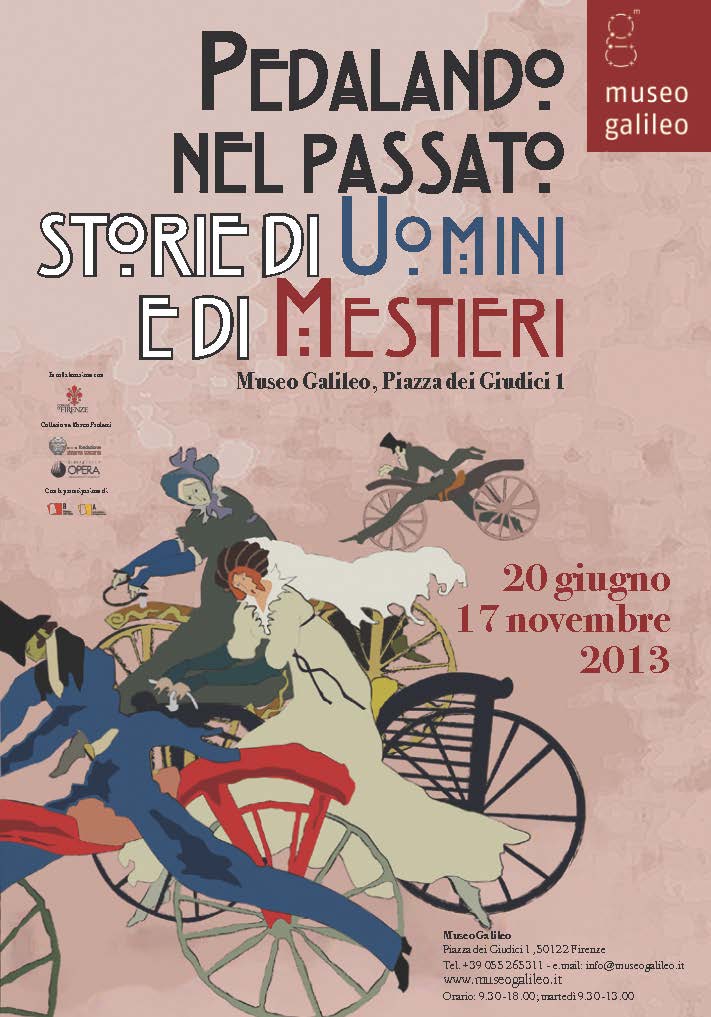 di Simone Focardi – Il mondiale di ciclismo si avvicina sempre più e Firenze e la Toscana non si fanno trovare impreparate all’evento proponendo anche, al Museo Galileo (fino al 17 novembre) un’appassionante ed originale esposizione che racconta la storia della bicicletta.
Due sezioni che illustrano una storia poco nota ricca di sorprese. Nella prima sezione sono esposti antichi bicicli che fanno parte delle collezioni del Museo Galileo, solitamente conservati nei depositi.
Gravemente danneggiati durante l’alluvione di Firenze del 1966 e successivamente restaurati, sono stati donati da vari collezionisti.
L’originale raccolta spazia dalla draisina, l’antenato della bicicletta che si spingeva con i piedi, allo “scuotiossa”, il primo velocipede dotato di pedali e freni, ai bicicli dalle grandi ruote anteriori fino ai più recenti “bicyclette” e “bicicletto”.
La seconda sezione è dedicata alle cosiddette “biciclette dei mestieri”. Vere e proprie botteghe ambulanti, veicoli modificati e attrezzati con vari strumenti per lo svolgimento di diverse attività e risalenti al periodo tra i primi anni del Novecento e il secondo dopoguerra che offrono uno spaccato di vita popolare e documentano antichi mestieri, come l’arrotino, il calzolaio, il burattinaio, alcuni dei quali oggi scomparsi.
Le biciclette esposte costituiscono una selezione della collezione di Marco Paoletti.
La mostra è ideata e curata dal Museo Galileo – Istituto e Museo di Storia della Scienza, in collaborazione con Comune di Firenze, Collezione Marco Paoletti, Fondazione Sistema Toscana, Opera Laboratori Fiorentini – Civita Group e con la partecipazione di Biblioteca delle Oblate – Archivio Storico Comunale Firenze.
L’ingresso alla mostra è compreso nel biglietto del museo. Info: http://mostre.museogalileo.it/biciclette
by Simone Focardi – The cycling worldchampionship is
www semenax com getting closer and Florence and Tuscany you do find unprepared proposing event, the Galileo Museum (until 17 November) an exciting and original exhibition which tells the story of the bicycle.
Two sections that illustrate a little-known story full of surprises. In the first section are exposed antique bicycles that are part of the collections of the Museo Galileo, usually kept in storage.
Severely damaged during the flood in Florence in 1966 and subsequently restored, have been donated by various collectors.
The original collection ranges from the dandy horse, the ancestor of the bicycle that went with the feet, the “scuotiossa”, the first velocipede with pedals and brakes as bicycles from the large front wheels to the most recent “bicyclette” and “Biker “.
The second section is devoted to the so-called “bicycle crafts.” Real street shops, modified vehicles and equipped with various tools for carrying out different activities and dating from the early years of the twentieth century and the Second World War that offer a glimpse of everyday life and documenting ancient crafts, such as the grinder, the shoemaker, the puppeteer, some of which have now disappeared.
The bikes on display are a selection of the collection of Marco Paoletti.
The exhibition is conceived and curated by Museo Galileo – Institute and Museum of the History of Science, in collaboration with the City of Florence, Collection Marco Paoletti, Fondazione Sistema Toscana, Opera Laboratori Fiorentini – Civita Group and with the participation of the Oblate Library – Historical Archive Comunale Florence.
Admission to the exhibition is included in the museum ticket. Info: http://mostre.museogalileo.it/biciclette
Lug 18, 2013 | Arezzo, Arte e cultura, Valdarno
 by redaction – Fino all’8 settembre il Cassero per la scultura italiana dell’Ottocento e del Novecento, museo civico unico in Italia che per vocazione è interamente dedicato alla scultura, in via Trieste 1 a Montevarchi, ospita la mostra “Alluminio. Tra Futurismo e Contemporaneità, un percorso nella scultura italiana sul filo della materia”. Evento che rientra nel progetto “Contemporaneamente…al Cassero!
Suggestioni, poetiche, linguaggi e approfondimenti sulla scultura italiana contemporanea”, realizzato dal Comune di Montevarchi, Assessorato alla Cultura, curato dal direttore scientifico de “Il Cassero” Alfonso Panzetta, finanziato insieme alla Regione Toscana nell’ambito di “Toscanaincontemporanea 2012” e sostenuto da CiAl – Consorzio Nazionale per il Recupero e il Riciclo dell’Alluminio, official partner dell’evento.
Questa mostra, che rappresenta l’evento di punta del progetto, è dedicata all’approfondimento, di taglio storico – tematico, sull’utilizzo di uno dei materiali (medium), della scultura contemporanea come l’alluminio.
Sono oltre 60 le opere esposte provenienti da collezioni pubbliche, archivi e fondazioni private, di artisti come Thayaht e Ram, Regina e Renato Di Bosso, ma anche Bruno Munari e Valeriano Trubbiani, Dadamaino e Gilberto Zorio, e tanti altri scultori che hanno usato l’alluminio per le loro opere.
Un materiale che è comparso nella scultura italiana a partire dalla metà degli anni Dieci del ‘900 fornendo agli artisti nuove e inattese frontiere espressive per tutto il XX secolo, fino alle nuove generazioni del XXI secolo.
Una mostra che non intende essere esaustiva ma avviare, attraverso una congrua selezione di opere, una riflessione sul tema documentando le diverse tecniche d’impiego e le differenti potenzialità comunicative di questo materiale.
Questo racconto trasversale parte dal secondo Futurismo degli anni Venti e Trenta, dove viene messo in evidenza il diverso utilizzo dell’alluminio in relazione al linguaggio plastico scelto dagli artisti; dalle “sintesi plastiche” alle “aereosculture”, fino agli “spazialismi” che precedono la Seconda Guerra Mondiale ( scultori come Mino Delle Site, Wladimiro Tulli, Sante Monachesi), passando per gli scultori più legati al “Novecento” italiano (Lina Arpenani, Carlo Lorenzetti, Giangiacomo Barbieri).
Sono poi presentati alcuni esempi delle prime ricerche informali e astratte del dopoguerra (Alfio Castelli, Francesco Somaini, Ernesto Galeffi), per poi proseguire con la poetica delle “strutture” e delle superfici “optical” degli scultori attivi negli anni Sessanta (Getulio Alviani, Nane Zavagno, Diana Baylon, Bruno Munari) e con l’uso dell’alluminio da parte degli artisti della “figurazione astratta” e dell’“arte povera” attivi tra gli anni Settanta e Novanta.
Infine una selezione di opere, datate dopo il 2000 (Rivalta, Grassino, Garbolino Rù, Borrelli, Loretti), riguarda autori emergenti che impiegano questo metallo in modo sempre più costante e originale.
La mostra è allestita in due sedi: lo spazio mostre temporanee Ernesto Galeffi, via Burzagli 43, per quanto riguarda la sezione storica con le opere del XX secolo, e le sale permanenti de “Il Cassero per la scultura italiana dell’Ottocento e del Novecento”, via Trieste 1, per quella contemporanea del XXI secolo.
Informazioni: tel.0559108274. E-mail: info@ilcasseroperlascultura.it sito web:www.ilcasseroperlascultura.it Il Cassero è anche su Facebook e Youtube.
by redaction – Until 8 September, the mold for the HGH nineteenth and twentieth century Italian sculpture, museum, unique in Italy for that vocation is entirely devoted to sculpture, in Trieste 1 in Montevarchi, hosts the exhibition “Aluminium. Between Futurism and Modernity, a path in Italian sculpture on the edge of matter. ” Event part of the project “… At the same time the castle keep!
Suggestions, poetic language and insights on contemporary Italian sculpture “, produced by the City of Montevarchi, Department of Culture, edited by the scientific director of” The Keep “Alfonso Panzetta, funded with the Region of Tuscany in the context of” Toscanaincontemporanea 2012 “and supported CiAl – National Consortium for the Recovery and Recycling of Aluminium, official partner of the event.
This exhibition, which is the flagship event of the project is dedicated to deepening, cutting historical – thematically, using one of the materials (medium), contemporary sculpture such as aluminum.
More than 60 works on display from public collections, archives, and private foundations, by artists such as Thayaht and Ram, Queen and Renato Di Bosso, but also Bruno Munari and Valerian Trubbiani, Dadamaino and Gilberto Zorio, and many other sculptors who have used the ‘aluminum for their works.
A material that has appeared in the Italian sculpture from the middle of the second decade of the 900 artists providing new and unexpected expressive frontiers throughout the twentieth century, until the new generations of the XXI century.
An exhibition that is not meant to be exhaustive but to start, through a fair selection of works, a reflection on documenting the various techniques of application and the different communicative potential of this material.
This story starts from the second cross-Futurism of the twenties and thirties, where it is highlighted the different use of aluminum in relation to the plastic language chosen by the artists, the “synthetic plastic” to “aereosculture”, to the “spazialismi” preceding World War II (sculptors such as Mino Delle Site, Wladimiro Tulli, Sante Muniz), passing through the sculptors more related to the “Novecento” Italian (Lina Arpenani, Carlo Lorenzetti, Giangiacomo Barbieri).
Are then presented some examples of early research and informal post-war abstract (Alfio Castelli, Francesco Somaini, Ernesto Galeffi), then continue with the poetry of the “structures” of the surfaces and “optical” the sculptors active in the sixties (Alviani, Nane Zavagno, Diana Baylon, Bruno Munari) and with the use of aluminum by the artists of the “abstract representation” and ‘”arte povera” active between the seventies and nineties.
Finally, a selection of works, which date after 2000 (Rivalta, Grassino, Garbolino Rù, Borrelli, Loretti) concerns emerging authors who employ this metal in a more consistent and original.
The exhibition is staged in two locations: the temporary exhibitions space Ernesto Galeffi, via Burzagli 43, with regard to the historical section with the works of the twentieth century, and permanent theaters of “The formwork for the nineteenth and twentieth century Italian sculpture “, via Trieste 1, for that contemporary twenty-first century.
Information: tel.0559108274. E-mail: info@ilcasseroperlascultura.it website: www.ilcasseroperlascultura.it The Castle is also on Facebook and Youtube.
Lug 18, 2013 | Arcipelago | Costa degli Etruschi, Arte e cultura, Livorno
 di redazione – Incontri con gli autori, spazi lettura, eventi e musica. Per tre giorni la centralissima Piazza Guerrazzi di Cecina, sulla Costa degli Etruschi, sarà un vero e proprio salotto letterario grazie alla prima edizione di “Cecinautori. Festival della letteratura, delle arti e dello spettacolo”.
Un nuovo festival dedicato alla letteratura e ai libri che si svolgerà venerdì 2, sabato 3 e domenica 4 agosto organizzato dalla Fondazione Culturale Hermann Geiger. Ideale prosecuzione di “Un Parco di Autori”, fortunatissimo evento che per tre anni ha portato sulla Costa Etrusca tra i più grandi nomi della cultura italiana, che da quest’anno il festival si sposta nel pieno centro di Cecina.
Tante le novità di questa manifestazione, direzione artistica di Alessandro Schiavetti, che mira a collocarsi tra gli eventi estivi di punta nel panorama toscano e nazionale tra quelli dedicati alla letteratura e ai libri.
Tra gli ospiti già confermati uno dei grandi del cinema italiano, Giuseppe “Pupi” Avati, regista, sceneggiatore, produttore cinematografico e scrittore, la scrittrice Antonella Boralevi, lo scrittore e sceneggiatore, nonché sindaco del comune di Rosello Federico Moccia e l’esperto di comunicazione Marco Santarelli, ma non mancheranno ancora molte sorprese.
Ogni giorno si alterneranno incontri e dibattiti con gli scrittori più amati che presenteranno le loro opere, i loro punti di vista, i loro pensieri con tre appuntamenti.
Alle 19 l’incontro dedicato alla letteratura e saggistica, alle 21.30 con il grande autore presentato dalla giornalista e scrittrice Elena Torre e alle 23 con la scienza.
Infine la novità del Premio Letterario Fondazione Culturale Hermann Geiger che sarà assegnato da una apposita giuria ad un giovane autore esordiente che ha già pubblicato un libro.
La consegna del premio domenica 4 agosto. Tutta la manifestazione ad ingresso libero info e programma: www.cecinautori.it tel. 0586.635011.
by redaction – Meetings with authors, reading areas, events and music. For three days the Guerazzi Piazza di Cecina, on the Etruscan Coast, is a veritable literary salon thanks to the first edition of “Cecinautori. Festival of literature, arts and entertainment. ”
A new festival dedicated to literature and books that will take place on Friday 2, Saturday 3 and Sunday, 4 August organized by the Fondazione Culturale Hermann Geiger. Ideal continuation of “A Park for Authors” lucky event that for three years has brought on the Etruscan Coast of the biggest names of Italian culture, which this year the festival moves to the center of Cecina.
Several news of this event, the artistic direction of Alexander Schiavetti, which aims to rank among the events in the peak summer Tuscan landscape and national level between those devoted to literature and books.
Among the guests already confirmed one of the greats of Italian cinema, Giuseppe “Pupi” Avati, director, screenwriter, film producer and writer, author Antonella Boralevi, writer and screenwriter, as well as the mayor of Rosello Federico Moccia and the expert communication Marco Santarelli, but there will be many more surprises.
Each day will alternate meetings and discussions with the most beloved writers who will present their works, their points of view, their thoughts with three appointments.
19 At the meeting devoted to literature and non-fiction, at 21.30 with the great author presented by journalist and writer Elena Torre and 23 with science.
Finally, the novelty of the Fondazione Culturale Hermann Geiger Literary Prize will be awarded by a special jury to a young novice author who has already published a book.
The award ceremony Sunday, Aug. 4. The whole event with free admission and program info: www.cecinautori.it tel. 0586.635011.
