Giu 24, 2013 | Arezzo, Arte e cultura, Casentino
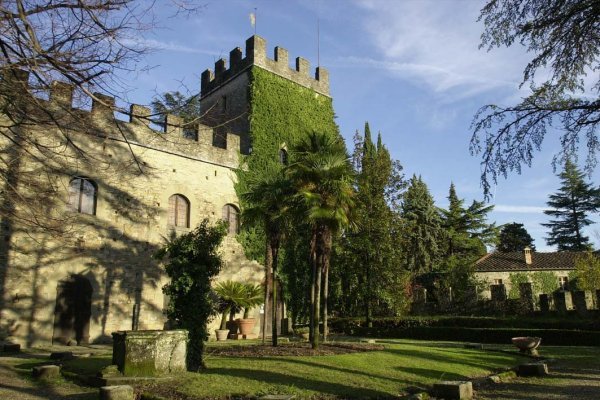 di redazione – Torna dal 4 agosto all’8 settembre a Stia la 4° Edizione della Mostra Nazionale Collettiva di pittura “Falsi D’Autore”, uno degli eventi più interessanti dell’estate in provincia di Arezzo.
Come per la passata edizione, la mostra si terrà nella splendida cornice della “Limonaia” del Palagio Fiorentino, in origine antica scuderia del castello, ora locale adibito a mostre ed eventi.
Per tutto il mese di agosto, 25 tra i migliori artisti provenienti da tutta Italia esporranno le loro opere, un totale di 120 dipinti per emozionare un pubblico attento, critico e ormai sempre in costante aumento edizione dopo edizione, 4200 presenze certificate per la terza edizione.
La mostra ospiterà l’Associazione “Noi per voi” dell’Ospedale Meyer di Firenze e l’Associazione “Nonni Artisti”, che esporranno le proprie opere a scopo di beneficenza.
All’interno della mostra saranno altresì esposti alcuni lavori provenienti dal Museo della Paglia e dell’Intreccio “Domenico Michelacci” di Signa, i mosaici di Lastrucci artigiani in Firenze, le sculture a basso rilievo di Enrico Paolucci.
Nello stesso periodo si terrà inoltre la “XX Biennale Europea d’Arte Fabbrile”, contemporanea al ” Campionato del mondo di forgiatura”, eventi imperdibili, che renderanno in agosto quest’angolo poco noto di Toscana un bellissimo polo d’attrazione.
by redaction – Back from 4 August to 8 what is semenax September in Stia the 4th Edition of the National Exhibition Group exhibition of painting “Falsi d’Autore”, one of the most interesting events of the summer in the province of Arezzo.
As with the previous edition, the exhibition will be held in the beautiful setting of the “Limonaia” of the Florentine palace, originally old stables of the castle, now used as a local exhibitions and events.
For the entire month of August, 25 of the best artists from all over Italy will exhibit their works, a total of 120 paintings to excite an attentive audience, critic and now increasingly steadily increasing year after year, 4200 attendance certificate for the third edition.
The exhibition will host the Association “Noi per Voi,” from Meyer Hospital in Florence and the Association “Grandparents Artists”, which exhibit their works for charity.
In the exhibition will also be displaying some works from the Museum of Paglia and dell’Intreccio “Domenico Michelacci” Signa, the mosaics of Lastrucci artisans in Florence, the sculptures in bas-relief of Enrico Paolucci.
At the same time there will also be the “XX European Biennial of Art Fabbrile”, contemporary of the “World Championship of forging”, unmissable events in August that will make this corner of Tuscany, a beautiful little-known center of attraction.
Giu 20, 2013 | Arte e cultura, Firenze, Montagna Pistoiese, Monte Amiata
 di Donella Zanoboni – Il 24 giugno,quando il sole raggiunge la sua massima declinazione, é considerato il giorno del solstizio d’estate, della Festa di S Giovanni e di tanti miti e leggende che accompagnano quuesto giorno.
Non é facile orientarsi nelle congerie di credenze e usanze che ruotano intorno al 24 giugno perché sono frutto di varie stratificazioni che raccolgono frammenti di tradizioni diverse sia pagane che cristiane.
Rimane da chiarire quale sia stato il motivo per cui fu scelto lo stesso giorno sia per le popolarità pagane che cristiane (quindi la nascita del Battista).
La notte fra il 23 e 24 giugno é ritenuta quindi magica e in quanto a credenze e superstizioni c’erano e ce ne sono tutt’oggi in ogni parte del mondo.
Senza addentrarsi troppo in considerazioni per le quali non abbiamo una particolare preparazione, ci limiteremo a raccontare alcuni dei più curiosi episodi che accadeva e accadono tutt’oggi nella magica notte di S Giovanni.
Iniziamo c’é con la storia dell’acqua che sgorga il 23 giugno e solo quella notte. Un acqua speciale che guarisce tutti i mali, ma però bisogna trovare la sorgente magica…anche se chiaro è il riferimento al Battista che battezzava con l’acqua del Giordano.
É in quella notte che si devono raccogliere le erbe magiche; iperico, ruta, artemisia, agnocasto, lavanda, ginestra, verbena, felce e ribes. Sono le 9 erbe di San Giovanni.
Si raccolgono in mazzetti e si tengono in casa per protezione.
Se poi le poniamo sotto il cuscino in quella notte, si dice che “quel che si sogna si realizzi”.
Alcune delle benefiche erbe, oltre che a scacciare i demoni e le streghe proteggano dal “malocchio”. L’artemisia ad esempio, consacrata anticamente alla sorella lunare del solare Apollo (secondo Apuleio), la verbena simbolo di pace e prosperità e il ribes i cui frutti rossi sono detti “bacche di San Giovanni”.
Molto diffusa anche l’usanza di accendere grandi falò nella notte dedicata al Battista. In questi falò si gettano legni ed erbe secche. Saltare poi su questi fuochi significa che si riuscirà a “saltare” ogni pericolo che si presenti durante l’anno.
Bruciando poi nel fuoco alcune erbe (di quelle raccolte quella notte) e conservandone le ceneri, queste salvaguarderanno anche contro i fulmini durante i temporali.
Un proverbio istriano assicura anche che “San Giovanni col su ‘ fogo brusa le strighe el moro e l’ lovo “, ovvero “San Giovanni con il suo fuoco brucia le streghe, il moro e il lupo”.
In Normandia invece anticamente ci si bagnava nella rugiada la mattina di San Giovanni per far ringiovanire la pelle e preservarla dalle malattie. Rugiada che anche la virtù di proteggere i panni dalle tarme tant’è che, le nostre nonne durante la notte del 23 giugno stendevano alla rugiada i teli dove veniva messo il pane per avere una buona lievitazione!
Anche la preparazione del liquore del nocino veniva effettuata questa notte e l’usanza risale addirittura ai Celti della Bretagna.
Secondo la tradizione le donne devono staccare le noci quando la drupa é ancora verde con una lama di legno, mai di metallo. L’infusione, darà un liquore considerato un’autentica panacea.
Sempre per San Giovanni il giovane regalava alla sua ragazza un mazzetto di fiori e lei restituiva il regalo alla festa dei SS. Pietro e Paolo il 29 di giugno.
A Roma in età medievale c’era l’usanza di mangiare, danzare e cantare sui prati fra la basilica di San Giovanni in Laterano e Santa Croce in Gerusalemme.
Nella notte della vigilia si accendevano grandi fuochi, si beveva e danzava all’aperto o nelle osterie in attesa del sorgere del sole!
Accanto al fuoco che aveva una funzione liberatoria, vi era la rugiada dalle virtù fecondatrici! Le giovani spose che volevano ottenere figli, sollevavano le vesti sedendosi sull’erba umida sul monte Testaccio per un intimo lavacro propiziatorio.
La funzione del Santo come patrono anche dell’amicizia lo ricorda un detto toscano che dice “San Giovanni non vuole inganni ” spiegando che il Battista secondo la leggenda era inflessibile con chi tradiva la fiducia dell’amico!
by Donella Zanoboni – On June 24, when the sun reaches its maximum declination, is considered the day of the summer solstice, the Feast of semenax increase St Giovanni and many myths and legends that accompany quuesto day.
It’s not easy to navigate the patchwork of beliefs and customs that revolve around June 24 because they are the result of various layers that collect fragments of both pagan and Christian traditions.
It remains unclear what was the reason why he was chosen the same day for both the popularity pagan and Christian (thus the birth of Giovanni the Baptist).
On the night of June 23 and 24 is considered magical and then in terms of beliefs and superstitions were there and there are still all over the world.
Without going too much into consideration for which we do not have a particular preparation, we’ll just tell you about some of the most curious episodes that happened and still happen in the magical night of San Giovanni.
Let’s start there with the history of water that flows on June 23 and only that night. A special water that heals all wounds, but, however, we must find the magic spot … even if it is clear that the reference to John the Baptist baptized with water from the Jordan River.
It is on that night that you have to collect the magical herbs, St. John’s wort, rue, mugwort, chaste tree, lavender, broom, verbena, fern and currants. It’s 9 herbs of St. Giovanni. They gather in clusters and are held in the house for protection.
If then we put under the pillow that night, it is said that “what you dream to happen.”
Some of the beneficial herbs, as well as to cast out demons and witches protect against the “evil eye”. The mugwort for example, once consecrated to the sister of the solar lunar Apollo (according to Apuleius), the vervain symbol of peace and prosperity and red currant whose fruits are called “berries of St. John.”
Also the widespread custom of lighting bonfires in the night dedicated to John the Baptist. These bonfires are thrown wood and dried herbs. Then jump on these fires means that you will be able to “jump” any hazards that will come up during the year.
Then burning some herbs into the fire (of those collections that night) and keeping the ashes, these also safeguard it against lightning during thunderstorms.
A proverb Istrian also ensures that “with St. John on ‘fogo brusa the witches el el moro’ lovo”, or “Saint John with his fire burning witches, the dark and the Wolf”.
In Normandy instead once we bathed in the dew on the morning of St. John of Jerusalem to rejuvenate your skin and protect it from disease. Dew that the virtue of protecting the clothes from moths so much so that our grandmothers during the night of June 23, the dew lay the sheets where it was put the bread to get a good rise!
The preparation of the walnut liqueur was done tonight and the custom dates back to the Celts of Brittany.
According to tradition, women must remove the nuts when the drupe is still green with a wooden knife, never metal. The infusion will give a liquor considered a real panacea.
Also for the young St. John gave his girlfriend a bouquet of flowers and she returned the gift to the feast of SS. Peter and Paul on June 29.
In Rome in the Middle Ages it was customary to eat, dance and sing on the lawns between the Basilica of St. John Lateran and Santa Croce in Gerusalemme.
On the night of the eve bonfires were lit, they drank and danced outdoors or in taverns waiting for the sunrise!
Next to the fire that had a feature release, there was the dew from the virtues fertilizing! The young brides who wanted to get children, lifting their robes sitting on the wet grass on Mount Testaccio for an intimate washing propitiatory.
The function of the saint as the patron saint of friendship also remembers a Tuscan saying that says “St. John does not want to deceive” explaining that the Baptist according to legend was relentless with those who betrayed the trust of his friend!
Giu 20, 2013 | Da non perdere, Firenze
 di Nadia Fondelli – Ancora due appuntamenti da non perdere, di cui uno proprio nel giorno del solstizio d’estate con lo gnomone della Cattedrale di Firenze che con i suoi 90 metri è anche il più alto del mondo.
Fra le ore 12.30 e le 13.30 di venerdì 21 e 28 giugno, sarà possibile assistere ad un fenomeno di grande suggestione all’interno della cattedrale fiorentina: i raggi del sole scenderanno attraverso la Cupola del Brunelleschi, formando l’immagine del disco solare che andrà a sovrapporsi perfettamente a quella di marmo posta sul pavimento della cappella della Croce, a sinistra dell’Altare Maggiore.
E’ dal 1475 che questo fenomeno si ripete nel Duomo di Firenze ogni anno, grazie ad uno strumento astronomico, il più antico e diffuso, detto gnomone, dal greco “indicatore”, progettato per misurare la posizione del Sole in cielo e determinare la durata dell’anno solare.
L’iniziativa che si svolgerà anche in caso di cielo coperto è ad ingresso gratuito con accesso dalla porta dei Canonici (davanti a via della Canonica) ed è promossa dall’Opera di Santa Maria del Fiore con il Comitato per la Divulgazione dell’Astronomia.
Fatto installare nella Cattedrale presumibilmente dal matematico fiorentino Paolo Dal Pozzo Toscanelli, come indicherebbero alcuni documenti conservati nell’Archivio dell’Opera di Santa Maria del Fiore, utilizzato a vicende alterne per oltre 300 anni, lo gnomone del Duomo di Firenze, come accennato, con i suoi 90 metri di altezza, è il più grande al mondo.
Uno gnomone e’ di solito un palo, una colonna o un obelisco la cui ombra permette di misurare la posizione del Sole in cielo, ma può essere, come nel caso del Duomo di Firenze, un foro sulla parete di un ambiente oscurato che produce, all’interno, l’immagine del disco solare. L’immagine si muove da ovest verso est, a causa del moto apparente del sole da ovest verso est. La sua posizione, rispetto a opportuni riferimenti posti sul pavimento, consente di eseguire accurate misurazioni astronomiche e di determinarne l’esatta durata di un anno solare.
La conoscenza della durata esatta dell’anno e la conseguente formulazione del calendario sono stati, infatti, un problema per moltissimi secoli, fin dal mondo classico, e lo strumento astronomico dello gnomone fu un valido aiuto fino al XVIII secolo, quando fu sostituito con i telescopi. Il momento scelto per il confronto delle immagini è quello del solstizio estivo, perché è il più opportuno per la misura.
Nella Cattedrale di Firenze il foro gnomonico e’ stato realizzato con una tavoletta di bronzo (la bronzina) recante un’apertura centrale di un paio di centimetri di diametro e posta orizzontalmente all’interno della finestra meridionale del tamburo della Cupola, a 90 metri di altezza dal pavimento.
L’altezza dello gnomone e’ tale che i raggi del Sole, passanti per il foro, colpiscono il pavimento della chiesa solo dalla fine di maggio alla fine di luglio e per pochi minuti prima e dopo mezzogiorno.
In questo periodo l’immagine solare si forma sul pavimento della Cappella della Croce, a sinistra dell’Altare maggiore, dove si trovano, sotto la protezione di lastre di ottone, una linea meridiana finemente graduata e due marmi circolari, uno dentro l’altro, che funzionano da contrassegni solstiziali. Il maggiore, con un diametro di circa 90 centimetri, ha le stesse dimensioni dell’immagine solare al solstizio d’estate.
Già a partire dal XVI secolo si registrano solo sporadiche osservazioni astronomiche nel Duomo di Firenze, talvolta neppure basate su chiari obiettivi scientifici; anzi, prevale la preoccupazione per eventuali cedimenti della Cupola e per quasi 250 anni, ipotizzando la costanza dell’altezza del Sole al solstizio, verrà fatto un uso improprio dello gnomone, e cioè di monitorare la stabilità della chiesa verificando, anno dopo anno, il ritorno dell’immagine solare negli stessi punti sul cerchio di marmo solstiziale.
È solo nel 1754 che si torna a parlare di astronomia in Cattedrale, quando Leonardo Ximenes, matematico granducale e gesuita, ottenne i finanziamenti per calibrare lo gnomone e per corredarlo di un’adeguata linea meridiana. Durante il meticoloso rilievo, ricordato anche nella grande lapide posta presso la cappella della Croce, lo studioso si accorse che il pavimento non era perfettamente orizzontale: così una striscia dovette essere livellata per collocarvi la linea meridiana in bronzo nella posizione in cui la vediamo ancora oggi. Attraverso una serie di misurazioni condotte dal 1755 al 1782, confrontate con le precedenti del 1510, Ximenes riuscì a ottenere un valore della variazione secolare dell’obliquità dell’eclittica vicino a quello attualmente noto.
L’osservazione del 1756 si può considerare come l’inizio delle operazioni astronomiche di Ximenes e a questa data si fa convenzionalmente risalire la fondazione dell’Osservatorio Ximeniano all’interno del complesso di San Giovannino degli Scolopi, all’epoca sede del collegio e dell’università fiorentina dei Gesuiti. Tuttavia dopo la morte di Ximenes (1786) le misurazioni furono scarse e discontinue, e lo strumento cadde nell’oblio. In particolare, durante un restauro, fu rimossa la bronzina. Quando l’allora direttore della Specola, Giovanni Battista Donati ottenne che la bronzina fosse rimontata (1865), fu posta in una posizione leggermente diversa dall’originaria, interrompendo così ogni continuità con le misurazioni di Ximenes. Nel 1927-1928 padre Guido Alfani eseguì altre misurazioni, dimostrando che la Cupola è soggetta a piccole oscillazioni, stagionali e quotidiane, di natura termica. Ma ormai anche l’uso ingegneristico dello gnomone era inadeguato, e lo stesso Alfani impiegò reali sismografi per sorvegliare, in modo diretto e continuo, ogni più piccola oscillazione della costruzione.
Per info: www.operaduomo.fi.it
by Nadia Fondelli – Two more events not to be missed, including one on the day of the summer solstice with the gnomon of the Cathedral of Florence, with its 90 meters is the highest in the world.
Between 12.30 and 13.30 on Friday 21 and 28 June, you can attend a phenomenon of great HGH beauty in the cathedral of Florence: the sun’s rays fall through Brunelleschi’s dome, forming the image of the solar disk that will to overlap perfectly with that of marble placed on the floor of the Chapel of the Cross, to the left of the High Altar.
And ‘since 1475 that this phenomenon is repeated in the Duomo of Florence every year, thanks to an astronomical instrument, the most ancient and widespread, said gnomon, from the greek “indicator”, designed to measure the position of the Sun in the sky and determine the duration the calendar year.
The initiative to be held even if the sky is covered with free entrance with access from the door of the Canons (in front of the rectory away) and is sponsored by the Santa Maria del Fiore with the Committee for the Popularization of Astronomy.
Had installed in the Cathedral presumably by the Florentine mathematician Paolo Dal Pozzo Toscanelli, as suggested some documents kept in the Opera di Santa Maria del Fiore, which is used to ups and downs for over 300 years, the gnomon of the Duomo in Florence, as mentioned, with its 90 meters high, is the largest in the world.
A gnomon and ‘usually a pole, column, or an obelisk whose shadow is used to measure the position of the Sun in the sky, but can be, as in the case of the Duomo of Florence, a hole on the wall of a darkened environment that produces, inside, the image of the solar disk. The image moves from west to east, due to the apparent motion of the sun from west to east. Its position with respect to appropriate references placed on the floor, it allows you to perform precise astronomical measurements and to determine the exact length of a solar year.
Knowledge of the exact duration of the year and the subsequent formulation of the calendar were, in fact, a problem for many centuries, from the classical world, and the instrument astronomical gnomon was a valuable aid until the eighteenth century, when it was replaced with the telescopes. The moment chosen for the comparison of images is that of the summer solstice, because it is the most appropriate for the measurement.
In the Cathedral of Florence and the gnomonic hole ‘was produced by a bronze tablet (the bush) containing a central opening of a few centimeters in diameter and placed horizontally in the south window of the drum of the dome, 90 meters of height from the floor.
The height of the gnomon and ‘that the Sun’s rays, passing through the hole, hit the floor of the church only from late May to late July and for a few minutes before and after noon.
In this period the solar image is formed on the floor of the Chapel of the Cross, to the left of the high altar, where they are, under the protection of brass plates, a meridian line finely graded circular and two marbles, one inside the other , which work by solstice marks. The major, with a diameter of about 90 centimeters, has the same size of the solar image on the summer solstice.
As early as the sixteenth century there has been only sporadic astronomical observations in the Duomo of Florence, sometimes even based on clear scientific objectives, and indeed, the predominant concern for any failure of the dome and for nearly 250 years, assuming the constancy of the height of the Sun to solstice, will be made improper use of the gnomon, and that is to monitor the stability of the church and found, year after year, the return of the solar image at the same points on the rim of marble solstice.
It is only in 1754 that returns to talk about astronomy in the Cathedral, when Leonardo Ximenes, grand-ducal mathematician and Jesuit, he obtained funding to calibrate the gnomon and wrap it with an appropriate meridian line. During the meticulous relief, also mentioned in the large plaque placed in the Chapel of the Cross, the researcher noticed that the floor was not perfectly horizontal so a strip had to be leveled in order to put the meridian line in bronze in the position where we still see it today . Through a series of measurements carried out from 1755 to 1782, compared with earlier in 1510, Ximenes was able to obtain a value of the secular variation of the obliquity of the ecliptic close to the one currently known.
The observation of 1756 can be considered as the beginning of astronomical operations of Ximenes and this date is conventionally traced the founding of the Observatory Ximenian within the complex of St. John Scolopi home at the time of the college and of ‘ Florentine Jesuit universities. However, after the death of Ximenes (1786) measurements were sparse and discontinuous, and the instrument fell into oblivion. In particular, during a restoration, was removed the bushing. When the then director of the Observatory, Giovanni Battista Donati obtained that the bush was reassembled (1865), was placed in a slightly different position from the original, thus interrupting any continuity with the measurements of Ximenes. In 1927-1928 Father Guido Alfani performed other measurements, demonstrating that the Dome is subject to minor fluctuations, seasonal and daily thermal nature. But now even the use of the gnomon was inadequate engineering, and the same Alfani took real seismographs to monitor, in a direct and continuous, even the smallest fluctuation of the building.
For info: www.operaduomo.fi.it
Giu 17, 2013 | Arte e cultura, Firenze
 di redazione – Le sale del Museo Marino Marini ospitano fino al 21 luglio“Preziosa 2013”, settima edizione della mostra dedicata al gioiello di ricerca contemporanea.
Tema del progetto espositivo di quest’anno è lo sguardo dello spettatore, le aspettative e i preconcetti dell’immaginario comune rispetto all’ornamento contemporaneo.
“Un certain regard” – questo il sottotitolo – presenta i gioielli di sei affermati artisti di fama internazionale: Karin Seufert, Philip Sajet, Suska Mackert, David Bielander, Sophie Hanagarth, Sigurd Bronger.
Tre le sezioni tematiche della mostra: “Ornamentorum Lex” che ospita le ricerche di Suska Mackert intorno al gioiello come codice sociale.
Foto, video, libri e istallazioni sono le opere attraverso le quali l’artista riflette sul gioiello come segno dai complessi riferimenti sociali e psicologici, sulla sua capacità di identificare ruoli e condizionare comportamenti.
“Essere o non essere?” presenta opere nelle quali sono rielaborati materiali, tecniche e forme della storia del gioiello.
I gioielli di Philip Sajet attraggono e confortano lo spettatore, ma nello stesso tempo indagano un aspetto sostanziale del mondo della gioielleria: l’attribuzione del valore.
Nelle opere di Karin Seufert si trovano rielaborazioni di forme del passato e marchi identificativi globali, che mostrano la funzione del gioiello come segno di appartenenza ad un gruppo.
Infine, la sezione “Quel che vedo è quello che vedo!”propone tre diversi linguaggi caratterizzati da un forte impatto visivo sullo spettatore. David Bielander, come un abile prestigiatore, stupisce il pubblico rielaborando forme tratte dalla natura e della vita quotidiana creando gioielli ironici e suggestivi. Sophie Hanagarth realizza gioielli potenti e vigorosi, che attingono alla cultura popolare, rielaborandola in proposte assolutamente contemporanee.
Le creazioni dallo spirito surreale e dall’estetica ingegneristica di Sigurd Bronger sorprenderanno il visitatore, catapultandolo in un postmoderno cabinet de curiosités.
Preziosa 2013 – “Un certain regard”
fino al 21 luglio 2013
Museo Marino Marini – Firenze, piazza San Pancrazio
Orario: 10 – 17 (chiuso domenica e martedì)
Info: www.preziosa.org
by redaction – The Museo secretagogue hgh Marino Marini in Florence accommodate up to July 21, “Prziosa 2013,” seventh edition of the exhibition dedicated to the jewel of contemporary research.
The theme of the exhibition this year is the viewer’s gaze, expectations and preconceptions of the imaginary common than contemporary ornamentation.
“Un certain regard” – the subtitle – presents the jewels of six established artists of international fame: Karin Seufert, Philip Sajet, Suska Mackert, David Bielander, Sophie Hanagarth, Sigurd Bronger.
Three thematic sections of the exhibition: “Ornamentorum Lex” which houses the research Suska Mackert around the jewel-like social code.
Photos, videos, books and installations are the works by which the artist reflects on the jewel as a sign from the complex social and psychological references, on its ability to identify roles and influence behavior.
“To be or not to be?” Presents works in which are reprocessed materials, techniques and forms of jewelry history.
The jewels of Philip Sajet attract and comfort the viewer, but at the same time investigating a substantial aspect of the jewelry world: the attribution of value.
In the works of Karin Seufert are reworkings of past forms and marks identifying global, which show the function of jewelery as a sign of belonging to a group.
Finally, the section “What I see is what I see!” Offers three different languages are characterized by a strong visual impact on the viewer. David Bielander, like a skilled magician, he amazed the audience reworking forms drawn from nature and everyday life by creating jewelry ironic and evocative. Sophie Hanagarth creates jewelry powerful and vigorous, that draw on popular culture, recreated in proposals absolutely contemporary.
Creations from the spirit and surreal aesthetic engineering of Sigurd Bronger will surprise the visitor, catapulting him into a postmodern cabinet de curiosités.
Preziosa 2013 – “Un certain regard”
until July 21, 2013
Marino Marini Museum – Florence, Piazza San Pancrazio
Hours: 10-17 (closed Sundays and Tuesdays)
Info: www.preziosa.org
Giu 14, 2013 | Eventi, Firenze
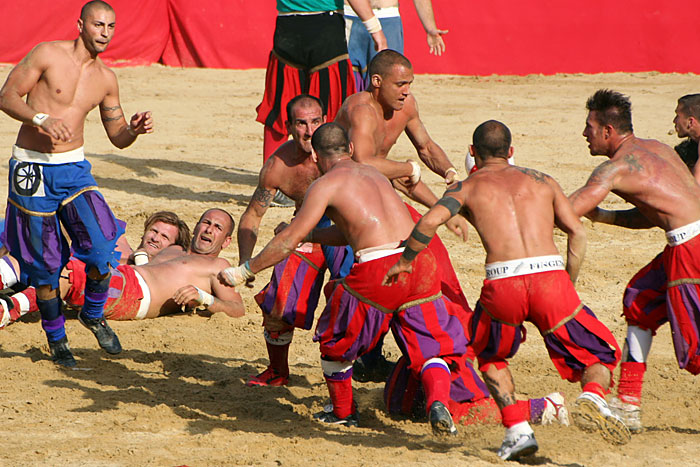 di redazione – A giugno Firenze celebra la tradizione con una tra le più simboliche e sentite manifestazioni “il calcio storico” o “calcio in costume”.
Detto anche “calcio in livrea”, questo gioco veniva praticato frequentemente già nella seconda metà del quattrocento dai giovani fiorentini.
Il Calcio in costume trae origini dall’antico gioco romano dell’Harpastum, il cui significato letterale è “strappare con forza” ed esprime perfettamente il carattere virile della competizione che veniva praticata tra due squadre di legionari su terreni sabbiosi.
Nel cinquecento il calcio in costume assunse importanza rilevante per alcune partite, giocate nelle piazze più importanti della città dai nobili fiorentini che vestivano le sfarzose livree dell’epoca.
Dal 1930, salvo rare interruzioni, ogni anno si svolgono sfide fra i calcianti dei quattro quartieri storici di Firenze, ognuno dei quali, contraddistinto da un colore ed un simbolo, prende il nome dalla chiesa principale situata nella propria zona: i Bianchi di Santo Spirito, gli Azzurri di Santa Croce, i Rossi di Santa Maria Novella, e i Verdi di San Giovanni. Attualmente le partite sono tre, due eliminatorie e la finale, e si svolgono in Piazza Santa Croce. Sabato 15 giugno Bianchi contro Rossi e domenica 16 giugno Verdi contro azzurri; segue la finalissima il 24 giugno. Tutte le partite si giocano alle ore 18.00.
L’affascinante cornice di Piazza Santa Croce fin dalla sua origine fu scenario di feste e cerimonie cittadine, fra le più celebri nel 1469 il festeggiamento del fidanzamento di Lorenzo de’ Medici e nel 1530 la partita del calcio storico durante l’ assedio della città.
Ai lati della Piazza, nella facciata del Palazzo dell’ Antella e in quella del palazzo di fronte, furono murati nel 1565 due dischi di marmo che servivano a segnare la metà del campo di gioco. Particolarmente suggestivo il corteo cinquecentesco che precede le competizioni del calcio fiorentino.
Dal convento di Santa Maria Novella fino al campo di gioco, tra rulli di tamburi e squilli di trombe, sfilano circa 530 figuranti vestiti con le storiche divise dei nobili fiorentini e le livree dei calcianti.
Il 24 giugno, festa di San Giovanni, Patrono di Firenze, si gioca la finale. Alla squadra vincitrice, quella che avrà realizzato il maggior numero di cacce, il “Maestro di Campo” consegnerà in premio una vitella di razza Chianina.
Info:
15 giugno semifinale Bianchi – Rossi, ore 18.00
16 giugno semifinale Verdi – Azzurri, ore 18.00
24 giugno finalissima, ore 18.00
Biglietti: tribuna d’onore centrale 45 euro + 7 euro di prevendita; tribuna d’onore laterale 35 euro (+ 7); tribuna numerata 20 euro (+7); tribune popolari 15 euro (+6).
I tagliandi sono disponibili presso Box Office, via delle Vecchie Carceri 1 (prevendita telefonica 055 210804, on line www.boxol.it – www.boxofficetoscana.it).
by redaction online tramadol pharmacy – In June Florence celebrates tradition with one of its most symbolic and heartfelt events: calcio storico or calcio in costume. Also called calcio in livrea,this sport was often played back in the late 15th century by Florentine youths.
Calcio in costume takes its origin from the ancient Roman game of Harpastum,which literally means “forcibly rip” and perfectly expresses the virile nature of the competition, which takes place between two teams of legionaries on sandy soils.
In the 16th century, calcio in costumetook on considerable importance for some games played in the city’s most important piazzas by Florentine nobles, who wore the opulent liveries of the time.
Since 1930, with the exception of rare interruptions, challenges take place between the footballers of the four historic districts of Florence every year, each of which is distinguished by a colour and symbol, taking their names from the main church situated in their area: the whites of Santo Spirito, the light blues of Santa Croce, the reds of Santa Maria Novella, and the greens of San Giovanni. Saturday June 15 Bianchi vs Rossi and Sunday June 16 against Blu vs Verdi, followed by the finals on June 24. All matches will be played at 18:00.
There are currently three games: two heats and the final, which take place in Piazza Santa Croce.Since its origin, the lovely backdrop of Piazza Santa Croce was the scene of the city’s festivals and ceremonies, including the celebration of the engagement of Lorenzo de’ Medici in 1469 and the calcio storicogame during the city’s siege in 1530.
At the sides of the Piazza, two marble disks were walled in on the facade of Palazzo dell’Antella and the building opposite in 1565, which marked the halfway point of the playing field.
Particularly striking is the 16th-century parade that precedes the Florentine football games: from the monastery of Santa Maria Novella to the playing field, amongst drum rolls and the blowing of trumpets, about 530 players parade dressed in the historic strips of the Florentine nobles and the footballers’ liveries.
The final is played on 24 June, the feast day of San Giovanni, patron saint ofFlorence. The Field Master will hand over a Chianina breed calf as a prize to the winning team, the one that has scored the most goals.
Info:
June 15 semifinal Bianchi – Rossi, hours 6:00 pm
June 16 semifinal Verdi – Blu, 6.00 pm
June 24 final, 6.00 pm
Tickets: Central grandstand 45 + € 7 to € presale; grandstand side 35 euro (+ 7); grandstand numbered 20 € (+7); popular forums € 15 (+6).
Tickets are available at the Box Office, via delle Carceri Vecchie 1 (advance telephone 055 210804, online www.boxol.it – www.boxofficetoscana.it).
Giu 10, 2013 | Eventi, Firenze, Grosseto, Maremma, Val d'Orcia | Val di Chiana
 di Nicoletta Curradi – Un festival nuovo di zecca, ma forse qualcosa di più: cinema, musica ma anche ogni altra forma d’arte, esperienze del Made in Italy ed ospiti eccellenti sono protagonisti di “Trasparenze in Tuscany”, il nuovo concetto di festival che sarà presentato dal 14 al 16 giugno nei comuni di Firenze, San Casciano dei Bagni ed Orbetello.
Una formula innovativa di festival, diretta e ideata da Deborah Young, International Film Editor di The Hollywood Reporter, che si svolgerà in un’atmosfera rilassata nel rispetto dell’ambiente e della natura.
“Dopo aver seguito i festival di tutto il mondo come critico cinematografico, sono convinta che sia arrivato il momento per evolvere il concetto stesso di festival in una formula nuova, ha spiegato Deborah Young alla presentazione dell’evento, dove la gente non deve correre da un evento all’altro ma può fermarsi e gustare uno spettacolo e chiacchierare con i suoi protagonisti. La manifestazione non a caso trova in Toscana, una delle regioni più rinomate e prestigiose nel mondo, il luogo del suo sviluppo ideale”.
Sergio Castellitto e Stefania Sandrelli sono tra i membri del comitato d’onore assieme ad Alessandro Benvenuti, Giovanni Veronesi e Maria Pia Ruspoli. L’evento nella sua valenza internazionale e multiculturale vanta partners d’eccezione come l’Abu Dhabi Environmental Film Fest, il Shanghai Film Festival e il Mumbai Film Festival.
“Da tempo sognavo di realizzare un festival completamente libero, dove invitare i protagonisti della Cultura del nostro tempo, ha aggiunto la Young, già direttrice del Taormina Film Fest dal 2007 al 2011, che ha arricchito di una necessaria identità mediterranea. Un progetto per promuovere e valorizzare il territorio, ma anche un’opportunità per scambiare idee in libertà, in assoluto relax”.
Trasparenze in Tuscany è patrocinato dalle Istituzioni e dagli Enti regionali e locali e si avvale della collaborazione della Fondazione Sistema Toscana e delle Associazioni di categoria.
Tra i films del festival proiettati a Firenze, “You never left” di Y. Nabil e “The congress” di A. Folman.
Info:www.tintuscany.it
by Nicoletta Curradi – A brand Semenax new festival, but perhaps something more: movies, music, but also any other form of art, experiences of Made in Italy and excellent guests are the stars of “Transparency in Tuscany”, the new concept of the festival which will be presented June 14 to 16 in the towns of Florence, San Casciano dei Bagni and Orbetello.
An innovative formula festival, directed and designed by Deborah Young, International Film Editor of The Hollywood Reporter, which will take place in a relaxed atmosphere while respecting the environment and nature.
“After following the festivals around the world as a film critic, I am convinced that the time has come to evolve the concept of the festival in a new formula, explained Deborah Young at the presentation of the event, where people do not have to run from one event to another but can stop and enjoy a show and chatting with his protagonists. The event is not randomly located in Tuscany, one of the most famous and prestigious in the world, the place of his ideal development. ”
Sergio Castellitto and Stefania Sandrelli are among the members of the honorary committee together with Alessandro Benvenuti, Giovanni Veronesi and Maria Pia Ruspoli. The event value in its international and multicultural boasts exceptional partners such as the Abu Dhabi Environmental Film Fest, the Shanghai Film Festival and the Mumbai Film Festival.
“For a long time dreamed to make a completely free festival where invite the protagonists of the Culture of our time, has added the Young, former director of the Taormina Film Fest 2007 to 2011, which added a required Mediterranean identity. A project for promoting and enhancing the area, but also an opportunity to exchange ideas freely, in absolute relaxation. ”
Transparency in Tuscany is sponsored by the institutions and the regional and local authorities and with the collaboration of the Fondazione Sistema Toscana and associations.
Among the films screened at the festival Florence, “You Never Left” by Y. Nabil and “The congress” by A. Folman.
Info: www.tintuscany.it
