Mar 24, 2013 | Arcipelago | Costa degli Etruschi, Argentario, Grosseto, Maremma
 di Simone Focardi – Nella Toscana dei primi del 1700 molti erano i problemi dopo l’estinsione della famiglia Medici che era rimasta senza eredi. La Toscana, venne così assegnata, in un intricato gioco politico ai Lorena, che si ritrovarono così per le mani uno stato in assoluta decadenza… grazie all’inettitudine degli ultimi granduchi di casa Medici.
Il primo Granduca Lorena che prese possesso del nuovo stato, fu Francesco Stefano, sposo dell’Imperatrice d’Austria Maria Teresa, che governò la Toscana attraverso una reggenza. I sudditi toscani dovettero attendere il suo figlio Pietro Leopoldo, per rivedere un inquilino a Palazzo Pitti. Era il 1765.
Ardua fu quindi la situazione che si trovò ad affrontare il giovanissimo Pietro Leopoldo in Toscana. Ma lui da buon austriaco, cresciuto nel rigore non si scoraggio e anzi, si rimboccò le maniche, si mise al fianco un valido gruppo di collaboratori toscani che ben conoscevano i problemi della regione e cominciò a lavorare.
Fra le prime cose che subito capì fosse necessario sistemare per il benessere del suo Granducato, una su tutte era senz’altro la “questione maremmana”.
La provincia agricola più meridionale dello stato che versava in uno stato di autentica rovina e che, come se non bastasse, era infestata dalla mal’aria: Le sue città, alcune un tempo splendide e fiorenti, erano ridotte, specie d’estate, in città fantasma: Sì perché li la gente moriva oppure, era costretta a fuggire per evitare le febbri.
I Lorena presero in mano la situazione. Svolsero vere proprie inchieste sullo stato reale della tragica situazione, si recarono sul campo con esperti di vari settori, si informarono, chiesero agli abitanti come stessero davvero le cose e poi iniziarono ad agire concretamente.
Si doveva risollevare la Maremma! Ma come? Da dove partire? Quali le priorità?
Era più necessario prima permettere la coltivazione e l’abitabilità delle genti o fare opere idrauliche per bonifare l’ambiente? Sicuramente erano necessari anche provvedimenti legislativi ad hoc, che puntualmente arrivarono. I consulti fra esperti si susseguivano freneticamente. Si arrivò alla conclusione che si doveva necessariamente agire simultaneamente in tutte le direzioni. Recuperare l’agricoltura del resto era fondamentale per far ripartire la società perché essa era, per quella provincia, l’unica reale fonte di ricchezza possibile. Il risultato di questo grande fermento messo su dai Lorena ci fu! E fu quello di ridare vita alla Maremma!
Tutt’un insieme di provvedimenti, alcuni di tipo tradizionale, altri invece fortemente innovativi per l’epoca, ma comunque tutti vincenti, riuscirono a ridar vita alla provincia.
Da area depressa ed insalubre e completamente trascurata dai precedenti governi medicei che anzi, l’avevano abbandonata a se stessa con tutti i problemi di spopolamento, di sottoproduzione e di paludismo, la Maremma, divenne una provincia in cui iniziava un lento e faticoso cammino di riavvicinamento al resto dello stato. Il cammino era avviato, il più era stato fatto sia pure con lentezza ma ineluttabile…
Per la Maremma finalmente arrivarono tempi migliori. Furono i Lorena a salvarla anche se molti non lo sanno, furono loro i primi a trasformarla, consegnandola a noi oggi in quello straordinario gioiello che è.
by Simone Focardi – In 1700, after the extinction of the Medici who had no inheritors, many were the problems in Tuscany. In an intricate political game Tuscany was assigned to the Lorraine’s family who inherited a State in absolute decline … thanks to the ineptitude of the last Medici Grand Dukes.
The first Lorraine Grand Duke to take possession of the new State was Francis Stephen, husband of the empress Maria Theresa of Austria, who governed Tuscany through regency.
The Tuscan subjects had to wait his son Peter Leopold to have back a tenant in Palazzo Pitti. It was 1765.
The young Peter Leopold had to face a hard situation in Tuscany. As a good Austrian, grown in the rigour, he didn’t lose heart and, on the contrary, rolled up his sleeves, found a helpful team of Tuscan collaborators who knew well the problems of the region. He started then to work.
Among the first things, he understood immediately it was necessary to work out the “Maremma matter”, for the well-being of his grand dukedom.
The most southern agricultural province was in a state of real ruin and, as it were not enough, was infested by the bad air; local towns, some once beautiful and flourishing, were a sort of ghost towns: people either died or left to avoid the fevers.
The Lorraine’s took matters into their own hands. They carried out inquiries to know concretely the tragic situation; they went over there with experts in several sectors, gathered information, asked the dwellers about the real situation and then started to work actively.
They had to turn around the Maremma! But how? Where to start from? Which priorities?
Was it necessary first to allow people to cultivate and live there, or to carry out water works to drain the area? Certainly an ad hoc legislation was needed and was punctually promulgated. Consultations among experts followed one another frantically. The conclusion was that it was necessary to act in all directions at the same time. Recovering the agriculture was essential to make the society restart again, because in that area it was the only possible resource. This great turmoil set up by the Lorraine gave its result! And it was the new life of Maremma!
This cluster of measures, some traditional and some very innovating for that time, but in any case all successful, managed to make the area revive.
From a depressed and unhealthy area completely neglected by the previous governments of Medici, who leaved it aside with its issues of depopulation, under-production and paludism, the Maremma became a province that slowly and in a laboured way was re-approaching to the rest of the State. The beginning was set, the main thing was done: although slow, it was ineluctable…
Better times came for Maremma. The Lorraine saved it and, although many people don’t know it, they were the first to transform it in the marvellous jewel it is today.
Mar 22, 2013 | Arcipelago | Costa degli Etruschi, Arezzo, Argentario, Arte e cultura, Casentino, Chianti Classico, Città del Tufo | Colline Metallifere, Crete Senesi, Da non perdere, Eventi, Firenze, Garfagnana, Grosseto, Litorale pisano, Livorno, Lucca, Lunigiana, Maremma, Massa Carrara, Montagna Pistoiese, Montalbano, Monte Amiata, Monti Pisani, Mugello | Val di Sieve, Pisa, Pistoia, Prato, San Gimignano, Siena, Val Bisenzio, Val d'Elsa | Empolese, Val d'Elsa | Val di Merse, Val d'Orcia | Val di Chiana, Val di Cecina, Val di Cornia, Val Tiberina, Valdarno, Valdarno | Valdera | Colline Pisane, Valdinievole, Valle del Serchio | Piana Lucchese, Versilia
 di Nadia Fondelli – Con la primavera torna un appuntamento speciale per conoscere luoghi insoliti del nostro paese. Per persone curiose che amano farsi coinvolgere con cuore e mente ecco l’edizione 2013 delle Giornate Fai di Primavera in programma sabato 23 e domenica 24 marzo.
Vita, storie e leggende. Scrigni d’arte preziosi, opere d’arte che si svelano, giardini incantati… Sono oltre 700 i luoghi italiani, spesso inacessibili e per l’occasione eccezionalmente a disposizione del pubblico, con visite a contributo libero: chiese, palazzi, aree archeologiche, ville, borghi, giardini; persino caserme, centrali idroelettriche e un osservatorio astronomico.
Anche in Toscana basta scegliere: a Firenze ad esempio sarà possibile scoprire la Cappella Ruccellai, l’Istituto di scienze militari aereonautiche delle Cascine, il palazzo Portinai Salviati, il giardino di Villa Corsini a Castello e villa La Quiete alle Montalve.
Il Forte delle Rocchette a Castiglion della Pescaia in Maremma solitamente chiuso al pubblico è imperdibile così come i sotterranei delle mura di Lucca e lo splendido teatrino di Vetriano.
In provincia di Pisa toglierà il fiato la visita alla rocca della Verruca e a Pistoia la gipsoteca Libero Andreotti. Infine, in provincia di Siena bellissimo il tuffo nel passato proposto da Poggibonsi con la fortezza del Poggio Imperiale, il cassero, i bastioni e gli scavi archeologici e Staggia senese con la sua rocca.
Tutti i luoghi sono visitabili con viste guidate ed alcuni anche in lingue stranieri. Per l’elenco completo dei luoghi e per sostenere il Fai www.giornatafai.it
by Nadia Fondelli – With the spring valium for dogs back a special event to learn about unusual places of our country. For curious people who like to get involved with heart and mind, here is the 2013 edition of the Days Make Spring on Saturday 23 and Sunday 24 March.
Life, stories and legends. Precious art treasures, works of art that are revealed, enchanted gardens … There are more than 700 places Italians, often inaccessible and for the occasion exceptionally available to the public, with visits to free contribution: churches, palaces, archaeological sites, villas, villages, gardens, even barracks, hydroelectric and an astronomical observatory.
Even in Tuscany Just choose: in Florence, for example, you will discover the Chapel Ruccellai, the Institute of Aeronautical Sciences Military delle Cascine, the palace caretakers Salviati, the garden of Villa Corsini at Castello and Villa La Quiete to Montalve.
The Fort Rocchette in Castiglione della Pescaia in Maremma usually chiuo to the public is a must as well as the basement walls of Lucca and the splendid theater of Vetriano.
In the province of Pisa take your breath away visit to the Verruca Pistoia and the plaster casts Libero Andreotti. Finally, in the province of Siena, the beautiful blast from the past brought to Poggibonsi with the fortress of Poggio Imperiale, the keep, the ramparts and the archaeological excavations and Staggia Siena with its fortress.
All locations can be visited with guided tours and some even in foreign languages. For a full list of the places and to support the Make www.giornatafai.it
Feb 10, 2013 | Arcipelago | Costa degli Etruschi, Arezzo, Eventi, Pistoia, Valdarno, Versilia
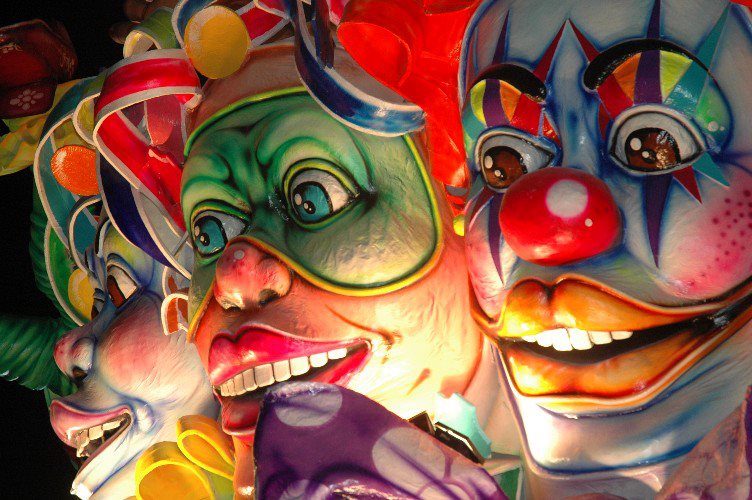 di Stefania Pianigiani – Arriva il Carnevale e Viareggio si trasforma. Anzi i viareggini si trasformano. Non è facile capire cosa succede a Carnevale, per chi non vive in questa città.
Humor sottile e voglia di divertirsi si avvertono a tutte le età e scatta un meccanismo di autoironia che diventa il filo conduttore di maschere e gruppi. I viareggini con maestria e cura, preparano gli abiti e il copione delle loro mascherate, riversandosi in massa in passeggiata e sui viali a mare. Altra particolarità di Viareggio, è che ogni sabato, precedente al corso mascherato della domenica, ogni rione, fa la propria festa: musica, cibo di strada, frittura, tortelli e gnocchetti di pesce accompagnano la lunga notte nei rioni. Il primo rione a cominciare la festa, è “Torre del Lago”, seguito dal rione “Marco Polo”, poi arriva il turno della “Vecchia Viareggio” e conclude il rione “Baccanale Darsena”.
Il Carnevale a Viareggio, comincia con la cerimonia di apertura, dove si consegnano le chiavi della città a Burlamacco, e l’ultimo corso chiude con spettacolari fuochi d’artificio.
Poco distante, troviamo il “Carnevale Pietrasantino”, con la maschera simbolo che si chiama “Sprocco”. E’a partire dai primi anni del novecento, che si svolgono sfilate in maschera a Pietrasanta, e col tempo i corsi mascherati, si sono arricchiti di un altro importante evento “Lo Sprocco d’Argento”: festival che elegge la canzone regina del Carnevale.
Nel Valdarno, precisamente nella ridente cittadina di San Giovanni, i suoi abitanti, oltre a fare uno squisito “stufato alla sangiovannese”, con tanto di ricetta segreta, sono anche unici nel festeggiare il Carnevale. Gli Uffizi di Carnevale, è infatti una manifestazione unica nel suo genere: nell’Oratorio di Santa Maria delle Grazie, le sette compagnie di suffragio, organizzano ricchi pranzi a base di specialità locali, preceduti dalla sfilata del carroccio con i paggetti in costume.
I cinque “Uffizi” che tuttora sopravvivono sono: Sant’Antonio, Santa Lucia, quello “dell’Industria”, quello del “Vicariato” e quello delle “Donne”.
Spostandoci nell’aretino, una nota di merito va al “Carnevale dei “Figli di Bocco”: tutto nasce da un antico documento datato 1174, dove si narra di grandi festeggiamenti prima dell’inizio della quaresima, con balli e libagioni, dove signori e bifolchi, festeggiano insieme.
I figuranti, indossano meravigliosi costumi e bellissime maschere e sfilano per le vie del borgo, accompagnati da musici, sbandieratori e tamburini.
Un altro Carnevale toscano molto famoso è quello di Foiano della Chiana: la sua esistenza è documentata in uno Statuto del 1539, e tale documento fa si che questo Carnevale sia il più antico d’Italia.
Ad aprire le sfilate dei quattro quartieri del paese è “Re Giocondo”, che verrà bruciato durante la cerimonia della “Rificolona” e della lettura del testamento.
Ma la Toscana, si conferma la regione regina dei carnevali fantasiosi sia per il nome che per i costumi: ad Arezzo è rinomato il “Carnevale dell’Orciolaia”, a Ponte a Buggiano (Pistoia) c’è quello dei golosi, a Bibbiena (Arezzo), quello della “Mea”.
E anche la costa organizza sfavillanti corsi in maschera, come il “Carnevale del Mare” a San Vincenzo, “Il Baraonda” a Rosignano Solvay e il “Carnevale di Follonica”.by redaction HGH – Viareggio Carnival arrives and turns. Indeed the Viareggio turn. It is not easy to understand what happens during Carnival, for those who do not live in this city.
Subtle humor and desire to have fun, you will hear all ages and takes a mechanism of self-irony that becomes the theme of masks and groups. The Viareggio with skill and care, prepare clothes and the script of their masked, pouring in mass walk and walks along the sea. Another peculiarity of Viareggio, is that every Saturday, Sunday masked prior to the course, each district makes its festival: music, street food, fry, ravioli and gnocchi fish accompany the long night in the wards. The first district to start the party, is “Torre del Lago”, followed by the district “Marco Polo”, then comes the turn of the “Old Viareggio” and concludes the district “Bacchanal Dock”.
The Carnival in Viareggio, begins with the opening ceremony, where you hand over the keys of the city to Burlamacco, and the last course ends with a spectacular fireworks display.
Nearby, there is the “Carnival Pietrasanta” with the mask symbol called “Sprocco.” E’a since the early years of the twentieth century, taking place in Pietrasanta dress parades, masked and in time, we are enriched by another important event “The Sprocco Silver” festival which elects the song Queen of the Carnival .
In Valdarno, specifically in the small town of St. John, its inhabitants, as well as make a delicious “stew sangiovannese”, complete with a secret recipe, they are also unique in celebrating Carnival. The Uffizi Carnival, is indeed a unique event of its kind: the Oratory of Santa Maria delle Grazie, the seven companies suffrage, lavish meals based on local specialties, preceded by a parade of carroccio with pageboy costume.
The five “Uffizi” that still survive are: Saint Anthony, Saint Lucia, the “Industry”, that of “vicariate” and that of “Women”.
Moving nell’aretino, a note of credit goes to the “Carnival of the” Sons of Bocco “everything comes from an ancient document dated 1174, which tells of a great celebration before the beginning of Lent, with dancing and drinking, where lords and peasants, celebrating together.
The participants, wearing beautiful costumes and beautiful masks and parade through the streets of the village, accompanied by musicians, flag bearers and drummers.
Another very famous Tuscan Carnival is to Foiano della Chiana: its existence is documented in a statute of 1539, and this document makes this Carnival is the oldest in Italy.
To open the parade of four districts of the country is “Re Giocondo,” which will be burned during the ceremony of the “Rificolona” and the reading of the will.
But Tuscany, is still the region queen of carnival fancy Both the name and for the costumes in Arezzo is the famous “Carnival dell’Orciolaia” Bridge to Buggiano (Pistoia) is that of a sweet tooth, in Bibbiena ( Arezzo), that of “Mea”.
And the coast organizes courses in sparkling form, as the “Carnival of the Sea” in San Vincenzo, “The Uproar” Rosignano Solvay and the “Carnival of Follonica”.
Set 4, 2012 | Arcipelago | Costa degli Etruschi, Maremma, Shopping
 In una terra di gole rosse e possenti come la Toscana, l’ansonica rappresenta una delle voci bianche che con sempre maggiori ascolti sanno cantare fuori dal coro, svincolando la Maremma del vino dal suo interprete più celebrato, il Morellino.
Siamo lungo il tratto del grossetano che guarda verso il Monte Argentario, territorio ideale per quest’uva conosciuta ed apprezzata fin dall’antichità dove tener fede alla sua innata vocazione costiera.
L’ansonica si lega infatti per storia e caratteristiche alle zone di mare, con una simpatia tutta particolare per le isole: Isola d’Elba, Isola del Giglio, Sardegna e soprattutto Sicilia, dov’è conosciuta come inzolia, protagonista fra le più rappresentative della viticoltura locale.
Una tradizione che lungo la costa dell’Argentario è portata avanti con incoraggianti risultati da un numero crescente di piccoli produttori.
Vera chicca è quella offerta dell’Isola del Giglio, uno delle più colorite espressioni di quella viticoltura cosiddetta eroica che vede l’uomo impegnato a strappare a Madre Natura lembi di terra coltivabili.
I filari di ansonaco, come viene localmente chiamata l’uva, sorgono su piccoli terrazzamenti a picco sul mare ancora puntellati di curiose costruzioni in muratura, i palmenti, realizzate dagli abitanti dell’isola fra il XVI ed il XVII e destinate alla pigiatura delle uve, che per problemi di trasporto avveniva direttamente sul campo.
Oltre a Giglio e Argentario la produzione interessa anche parte dei territori di Capalbio, Manciano e Orbetello.
Del 1995 è il disciplinare che, riconoscendo storia e tipicità di vino e vitigno, ha istituito la Doc “Ansonica Costa dell’Argentario”, imponendo in produzione l’utilizzo di uve Ansonica in misura non inferiore all’85%.
In tavola l’abbinamento resta legato alla tradizione costiera di quest’angolo di Maremma: vino fresco e dagli aromi delicati che ricordano fiori e agrumi, di corpo leggero, ben accompagna il pesce a tutto pasto, evitando però preparazioni troppo elaborate.
Più strutturata la versione prodotta sul Giglio, dove il clima caldo e soleggiato porta nel bicchiere vini dal corpo più robusto, con gradazione alcolica anche piuttosto sostenuta.
“Fior d’Ansonica” Ansonica Costa dell’Argentario Doc
Cantina Capalbio (Capalbio, GR)
Vino Ansonaco Isola del Giglio
Azienda agricola Altura (Isola del Giglio, GR)
Marco Ghelfi
In a land of mighty red gorges, like Tuscany the ansonica is one of the whites that, with increasing attention, knows how to stand on its own two feet, releasing the Maremma of its most celebrated star in the field of wine, the Morellino.
We are heading along the section of the road for Grosseto that looks towards Monte Argentario, the perfect land for this well-known grape that has been enjoyed since antiquity where it keeps faith in its innate coastal vocation.
The ansonica is in fact linked to seaside areas by its history and properties, with a special liking for the islands: Elba Island, Giglio Island, Sardinia and, especially, Sicily, where it’s known as inzolia, one of the most typical stars of the local wine-making culture.
It is a tradition that is promoted with encouraging results by a growing number of small-scale producers along the Argentario coast.
The real gem is offered by Giglio Island, one of the most colourful expressions of the so-called heroic vineyard cultivation, which sees man hard at work to rob Mother Nature of strips of land that can be cultivated.
The rows of ansonaco, as the grape is called locally, stand on small terraces with a sheer drop down to the sea, still dotted with curious stone wall buildings, the palmenti, built by the islanders between the sixteenth and seventeenth century and intended for grape pressing, which took place on site due to transport problems.
In addition to Giglio and the Argentario, production also involves part of the Capalbio, Manciano and Orbetello areas.
There has been a guideline in place since 1995, which, having recognised the history and uniqueness of the wine and vine, established the DOC Ansonica Costa dell’Argentario, enforcing the use of no less than 80% of Ansonica grapes in production.
It goes wonderfully with the coastal tradition of this corner of the Maremma; a crisp wine with delicate aromas that recall flowers and citrus fruit, with a light body, it is perfect with fish throughout the meal. However, elaborate recipes are best avoided. The version produced on Giglio is more structured, given the hot, sunny climate, providing us with more robust wines with a higher alcohol content.
“Fior d’Ansonica” Ansonica Costa dell’Argentario Doc
Cantina Capalbio (Capalbio, GR)
Vino Ansonaco Isola del Giglio
Azienda agricola Altura (Giglio Island, GR)
Marco Ghelfi
Set 2, 2012 | Arcipelago | Costa degli Etruschi, Arte e cultura
 Rosse scogliere a picco sul mare, piccole spiagge e calette bagnate da un’acqua quasi trasparente, una fresca pineta.
Così si presenta Castiglioncello, antico villaggio etrusco che domina il mare da un piccolo promontorio. L’atmosfera magica, immersa in una natura ricca di profumi e di colori, ha ispirato artisti di ogni genere: pittori, scrittori e poeti.
La storia di Castiglioncello risale alla fine del IV sec. A.C., con un prospero insediamento etrusco. Un forte impulso allo sviluppo fu dato dai Medici: Cosimo I vi fece costruire una torre, integrata in un sistema di fortificazione del litorale contro le frequenti scorrerie dei pirati.
La fortuna turistica di Castiglioncello inizia nella seconda metà dell’800, quando, per la bellezza del paesaggio e il clima mite, diventa meta di un turismo d’elite e di personaggi dello spettacolo, della politica e della cultura, come Pirandello, Mastroianni, Gassman, Zeffirelli, Sordi, Spadolini e molti altri.
Diego Martelli, critico d’arte e mecenate, vi stabilì la residenza, ospitando con assiduità molti pittori – divenuti poi famosi, come “Macchiaioli” – che dettero vita all’importante movimento artistico della “Scuola di Castiglioncello”.
Oggi, la vita culturale ruota intorno al Castello Pasquini, al centro del paese, che ospita manifestazioni, rassegne, premi letterari e convegni di livello internazionale.
Subito sotto, piazza della Vittoria, la “piazzetta”, è, invece, il centro della mondanità e il naturale punto di ritrovo per gli amanti della vita notturna.
Il soggiorno a Castiglioncello offre molte opportunità – davvero per tutti i gusti.
Gli amanti della pesca subacquea trovano fondali incontaminati, tutti da scoprire; inoltre, il clima e i venti sono ideali per il windsurf, lo sci e gli altri sport acquatici; infine, la leggera brezza di maestrale invita i velisti all’esplorazione di calette e baie inattese.
Grandi soddisfazioni anche per chi ama il trekking e la mountain bike con emozionanti itinerari lungo i quali si aprono scorci paesaggistici di rara bellezza.
Consigliamo una visita ai piccoli borghi dell’entroterra per rivivere le atmosfere di un tempo e assaporare le tipiche specialità locali – accompagnati dalla musica e dall’allegria delle sagre paesane.
A breve distanza da Castiglioncello, troviamo molti siti etruschi: Baratti, Populonia, Suvereto, Campiglia, Volterra con i loro musei ricchi di reperti, inoltre, i siti romani di Vada, Cecina, e cittadine medioevali come Massa Marittima – oltre a parchi e oasi faunistiche come quella di Bolgheri.
Soggiorno da sogno anche per gli amanti della buona cucina: i numerosi ristoranti lungo la costa offrono i tipici piatti toscani a base di pesce, come il cacciucco alla livornese o le triglie fragoline. Nell’entroterra, domina la genuina cucina maremmana, con le ricette della tradizione: crostini, taglieri di salumi e di formaggi, grigliate e la pasta, fatta in casa, al sugo di cinghiale. Red rocks jutting out over the sea, small beaches and coves bathed in crystal-clear water, a refreshing pine forest: this is Castiglioncello, the ancient Etruscan village that overlooks the sea from a small promontory.
This magical atmosphere, set amidst a fragrant and colourful natural landscape, has inspired painters, writers and poets for generations.
Castiglioncello’s history dates back to the late fourth century B.C. when the Etruscans settled here.
The town’s development received a strong boost from the Medici family when Duke Cosimo I had a tower built here as part of a coastal fortification system to defend against frequent pirate raids.
In the second half of the nineteenth century, tourists started coming to Castiglioncello for its beautiful scenery and mild climate. It quickly became a holiday destination for the elite and important entertainment, political and cultural figures like Pirandello, Mastroianni, Gassman, Zeffirelli, Sordi, Spadolini and many others.
Art critic and patron Diego Martelli established a residence here and diligently hosted many painters who would later become known collectively as the Macchiaioli. This in turn led to the emergence of an important artistic movement called the Castiglioncello School.
Today, the town’s cultural life revolves around the Castello Pasquini, which is located in the town centre and hosts events, shows, literary award ceremonies and international conferences.
Just below it is Piazza della Vittoria, the “little piazza”, a hub of social activity and an obvious meeting spot for night owls.
A stay in Castiglioncello offers something for everyone.
Deep-sea fishing lovers can explore vast underwater depths; the climate and wind are perfect for windsurfing, waterskiing and other water sports; and light north-westerly breezes invite sailors to discover unexpected nearby coves and bays.
There are plenty of exciting trails for hikers and mountain bikers that provide gorgeous scenic views.
Visitors are also urged to explore nearby inland villages where they can relive the atmosphere of a bygone age and taste local specialties accompanied by music and charming country festivals.
There are several Etruscan sites near Castiglioncello, including Baratti, Populonia, Suvereto, Campiglia and Volterra, which have museums full of artefacts. Also of interest are Roman towns like Vada and Cecina, and medieval towns like Massa Marittima. The Bolgheri nature reserve, among others, is definitely worth a visit as well.
Food lovers will enjoy the many restaurants along the coast offering traditional fish-based Tuscan dishes like the cacciucco alla livornese (fish stew) or the triglie fragoline (mullet). Authentic Maremma cuisine predominates inland with traditional dishes like crostini, sliced cold-cuts and cheeses, grilled meats and homemade pasta with wild boar sauce.
Mag 5, 2012 | Arcipelago | Costa degli Etruschi, Da non perdere
 di Nadia Fondelli – Alessandro Bossini, trentenne gigliese, occhi azzurri come le spiagge della sua isola e ricciolo ribelle è veramente un personaggio fuori da ogni canone quando cerca di convincerti che le sue non sono imprese straordinarie, ma “cosette” quasi normali come se lui non fosse un pluricampione di Triathlon e un uomo dai record estremi!
Ha voluto solo dice “scoprire il mondo e se stesso viaggiando in solitario ed incontrando tanta umanità”. Non un divo strombazzato, ma una persona spontanea che cerca solo di far capire che le barriere, le distanze e le difficoltà sono un grande arricchimento.
Ha iniziato così, quasi per caso, un giorno, inforcando la sua bicicletta a Firenze e ritrovandosi poi, pedalata dopo pedalata a Valencia!
Da lì non ha più smesso e dal 2005 viaggia per il mondo in bici in solitaria. Periplo dell’India e del Nepal, il Giro del Mediterraneo, periplo dell’Australia e giro dell’Italia i suoi viaggi in cui si è impegnato a promuovere valori sociali al tal punto che, la regione Toscana, la provincia di Grosseto e il comune di Isola del Giglio l’hanno battezzato “ambasciatore di pace”.
Alessandro Bossini in silenzio, senza la gran cassa a far risuonare la sua musica ha continuato poi a portare avanti questi valori anche in acqua ricordandosi di essere uomo di mare ed ha così frantumato tutti i record anche in questo settore compiendo imprese ineguagliate di traversate a nuoto in solitaria nei seguenti tratti: Isola di Giannutri – Isola del Giglio, Isola d’Elba – Isola del Giglio, Isola di Montecristo – Isola del Giglio e poi, recentemente la Prima Traversata dell’Arcipelago Toscano a nuoto in cui ha coniuugato le finalità della promozione del territorio, dello sport e dell’impegno sociale.
65 ore di nuotata in cui Alessandro non potrà aver alcun contatto con le barche di supporto pena l’invalidazione del record alla cui regolarità è preposta la FIN.
Ma perché lo fa?
Perché amo il mare ed è normale per un ragazzo che come me, nato su un’isola, provare a sfidare il blu. Cominci fin da ragazzino con gli amici sfidandogli a raggiungere, giorno dopo giorno, lo scoglio più lontano e fu così che un giorno sono arrivato a Giannutri…
Cosa si prova in queste lunghe nuotate in solitario?
Gioia, senso di libertà e contatto vero con i rumori e gli odori della natura incontaminata delle nostre isole che voglio mettere in risalto. 7 isole fra le più belle del Mediterraneo, 7 perle di cultura e di storia ancora poco valorizzate nella loro unicità.
Si fa promotore dell’Arcipelago dunque?
Sì, voglio porre l’accento sul calore speciale delle genti isolane, sulle loro tipicità gastronomiche e sugli scenari selvaggi del mare. 7 isole così vicine, ma così diverse e lontane.
Vorrei che questo mare che divide le isole, simbolicamente con la mia traversata non fosse più un ostacolo, ma un ponte sfatando il mito degli isolani “reclusi del blu” e confinati dalle onde. Il mare non è una prigione, ma una via d’incontro, basta leggersi la storia.
Sappiamo che ci tiene a valorizzare anche le acque costiere e le sue biodiversità?
Bisogna migliorare la gestione e conservare le biodiversità terrestri e marine delle nostre isole. Il mio nuotare senza ausilio di mezzi meccanici significa proprio rivalutare la dimensione umana e porsi di fronte alla natura non come tiranno, ma come fruitore rispettoso del suo equilibrio.
Poi c’è da promuovere il nuoto di fondo?
Sì perché è questa una disciplina che ha scarso appeal mediatico eppure la bellezza e la libertà che si riesce ad esprimere in questa attività raramente si ritrovano altrove.
Questa Traversata strizza l’occhio a tutti gli amanti del mare. Un invito a non temere l’azzurro perché, se rispettato, offre molto: la libertà di un’onda, il sorriso dei delfini, il colore dei tramonti e molto altro ancora…
Infine e non ultimo per importanza il suo impegno forte e deciso nel sociale…
L’impresa che mi prefiggo ha una valenza sociale oltrechè sportiva. Tentare di abbattere una barriera così vasta e apparentemente incolmabile per le forze dell’ uomo, vuole essere di esempio a tutti per superare tutte quelle incertezze che ci immobilizzano nelle nostre paure.
Sono al fianco degli splendidi ragazzi del Gruppo Elba perché vivere insieme a loro dona gioia. Vorrei che nella “Run x you” di fine giugno abbiano voglia di abbattere anche loro alcune barriere buttandosi in mare con me, anche solo per pochi metri, anche solo per provare il brivido di un istante nell’azzurro. Vorrei che tutti possano abbattere le barriere delle diversità e delle difficoltà quotidiane.di Nadia Fondelli – Alessandro Bossini, the Giglio-born 30-year-old with eyes as blue as the waters of his island live sex video chat and curly-haired rebel, is truly an out-of-the-ordinary character when he tries to convince you that his are not extraordinary ventures, but almost normal little things as if he weren’t a many times triathlon champion and a man with extreme records!
He just wanted to say, “discovering the world and oneself travelling alone and meeting lots of humanity.” He isn’t a boastful diva, but a spontaneous person who just tries to get the message across that barriers, distances and difficulties are a real embellishment.
He began one day as if by accident by getting on his bike in Florence and ending up, pedal after pedal in Valencia!
From then on he’s never stopped and he’s been cycling alone around the world since 2005. Cycling around India and Nepal, the Mediterranean, Australia and Italy, his travels whereby he has undertaken to promote social values to such a point that the Tuscan regional government, Grosseto provincial government and the Giglio Island council have conferred upon him the title of “ambassador of peace”.
Alessandro Bossini in silence, without the loud speaker to blast out his music, he has also continued to promote these values in the water, having remembered that he’s a man of the sea, also smashing all the records in this field, fulfilling unparalleled undertakings of lone swimming crossing in the following stretches: Giannutri island – Giglio island, Elba island – Giglio island, Montecristo island – Giglio island and the recently First Tuscan Archipelago Swim Crossing, which will bring together the aims of promoting the area, sport and social commitment.
65 hours of swimming when Alessandro cannot have any contact with the support boats, else the record will be rendered invalid according to FIN, which is in charge of the regulations.
Why are you doing it?
Because I love the sea and it’s normal for a lad who, like me, born on an island, wants to take on the waves. I started when I was a boy with my mates, challenging one another to reach, day after day, the furthest rock and so one day I reached Giannutri…
What goes through your mind during these long lone swims?
Joy, a sense of freedom and real contact with the sounds and smells of the unpolluted nature of our islands, which I want to bring into the spotlight. Seven of the most beautiful islands in the Mediterranean, seven pearls of culture and history still underdeveloped in their uniqueness.
Are you promoting the archipelago then?
Yes, I’d like to emphasise the special warmth of the islanders, their typical cuisine and the wild scenery of the sea. Seven islands so near and yet so different and distant. With my crossing, symbolically, I’d like this sea, which divides the islands, to no longer be seen as an obstacle, but a bridge exploding the myth of the islanders as hermits of the sea and confided by the waves. The sea is not a prison, but a meeting point; just read the history books.
We also know that you care about promoting the coastal waters and their biodiversity.
We need to improve the management and preserve the land and marine biodiversities of our islands. My swim, without the help of mechanical means, means reassessing the human dimension and offering ourselves to nature not as a tyrant but as a respectful user of its equilibrium.
Are you also promoting open sea swimming?
Yes, because this is a discipline that has little media appeal despite the beauty and freedom that this activity offers, which is rarely found elsewhere. This crossing attracts all sea lovers; an invitation to not fear the sea since, if respected, it offers so much: the freedom of the waves, the smile of dolphins, the colours of the sunset and much more…
Last but not least, what do you have to say about your strong and decisive commitment to society?
The enterprise that I’ve set for myself has a social and sporting value. Attempting to break down such a vast and seemingly overwhelming barrier for man’s strengths means being an example for everyone to overcome all the uncertainties that paralyse us with fear.
I’m right by the side of the wonderful youth of Gruppo Elba because being with them gives me joy. I’d also like some of them to break down their own barriers at Run x you at the end of June by diving into the sea with me, if only just for a few metres, just to feel the excitement of a moment in the sea. I’d like everyone to be able to break down the barriers of diversity and everyday problems.
