Mar 27, 2013 | Da non perdere, Firenze
 di Nadia Fondelli – Lasciando il centro città e salendo al Piazzale Michelangelo senza usare i mezzi pubblici è una conquista per l’occhio e lo spirito la veduta spettacolare sulla culla del Rinascimento da questa terrazza speciale.
La fatica, il sudore e il fiatore per i meno allenati saranno ampiamente ripagati e in base al vostro livello di allenamento potrete scegliere fra più opzioni per “conquistare” il Piazzale.
Dal centro città e attraversato l’Arno vi ritroverete nel quartiere di San Niccolò e da qui scegliere fra varie opzioni.
La via classica, segnalata anche dai cartelli turistici, è quella che vi fa tagliare il quartiere di San Niccolò e vi porta ad arrampicarvi al piazzale per una scalinata suggestiva fatta di ampi gradoni in pietra; in alternativa percorrere al fianco della scalinata sulla destra una strada erta che vi conduce in salita e si chiude con due tornanti sul viale ei Colli subito sotto alla Basilica di San Miniato.
Un’altra via classica da San Niccolò è arrivare sotto alla Porta San Niccolò (facilmente riconoscibile con la sua merlatura) e da lì salire attraverso le “Rampe” realizzate dall’architetto Poggi sul finire dell’ottocento. Un sistema di fontane vi accompagna sul cammino e dopo le due ampie terrazze potrete scegliere se proseguire tagliando per il parco (con sentieri e scale) oppure aggirare più morbidamente la salita dalla strada asfaltata da cui, su un tornante, troverete anche l’ingresso del Giardino delle Rose.
C’è una terza via che definirei “veloce” come le due precedenti (un chilometro scarso, ma un ampio dislivello) poco conosciuta e frequentata e per questo ricca di gran fascino. Dalla torre San Niccolò si sale solo fino alla prima terrazza, si gira a sinistra e al bivio si prende la strada più a sinistra che è via dei Bastioni; da qui percorsi circa 200 metri imboccate la strada selciata in ripida salita che si apre a destra. Poca strada in ripida salita antichissima e menzionata da Dante come la via che dalla città saliva a San Miniato al Monte. Vi ritroverete col fiatone di fianco al campeggio, ma con la certezza di aver percorso una strada prima di voi percorsa dai grandi fiorentini del passato.
La quarta via è quella che normalmente percorrono le automobili; il famoso Viale dei Colli che, anche se trafficato è percorribile anche a piedi grazie a due ampi ed alberati controviali che corrono paralleli alla strada e che raggiungono il Piazzale in 3 km. Selciato quello che sale a destra e asfaltato con pista ciclabile quello che sale a sinistra.
Per tornare in centro città potete percorrere le stesse vie o alternarle con percorsi ad anello, ma se avete gamba e volete proseguire non avrete, anche in questo caso, che l’imbarazzo della scelta scendendo verso Porta Romana e proseguendo sui lungarni (4.5 km circa) oppure tagliando per il Giardino di Boboli da cui poi potrete scegliere se uscire su Piazza Pitti o risalire al Forte Belvedere percorrendo gli stessi chilometri.
La mia preferita è però, all’altezza dello storico Chalet Fontana girare a destra e tornare in città per l’affascinante via di San Leonardo: selciata, sinuosa, contornata da mura antiche graffite, olivi e cipressi secolari. Ricca di storia con la villa abitata da Stravinsky e la casa studio del pittore Ottone Rosai è una perfetta via di campagna in piena città.
Tutte le vie indicate si possono percorrere facilmente a piedi; per i cicloamatori si consiglia il viale dei Colli con la sua pista ciclabile. Le strade sono buone anche se in alcuni tratti col selciato sconnesso a causa sopratutto delle radici degli alberi.
Per i tempi di percorrenza consiglio un ora di tempo ai ciclisti, un’oretta e mezzo ai runners a passo medio e almeno due ore e mezzo ai camminatori a passo turistico.by Nadia Fondelli – Leaving the city center and going up to cheap cialis the Piazzale Michelangelo without the use of public transport is an achievement for the eye and the spirit of the spectacular view over the cradle of the Renaissance from the terrace special.
The fatigue, the sweat and fiatore for the less energetic and will be amply rewarded according to your fitness level you can choose from several options to “conquer” the Square.
From the city center and crossed the Arno you will find yourself in the neighborhood of San Niccolò and to choose from among several options.
The classical way, also reported by tourist signs, is what makes you cut the district of San Niccolò and takes you to climb to the apron for a striking staircase made of large stone steps, or alternatively go to the side of the stairs on the right road steep slope that leads uphill and ends with two bends and hills on the avenue just below the Basilica of San Miniato.
Another classic route from San Niccolò is to get under the Porta San Niccolò (easily recognizable with its battlements) and then go through the “ramp” made by the architect in the late nineteenth century. A system of fountains accompanies you along the way and after two large terraces, you can choose whether to continue cutting through the park (with paths and steps) or more softly around the hill from the road, from which, on a bend, you will find the entrance to the Rose Garden.
There is a third way that I would call “fast” as the previous two (one kilometer scarce, but a large difference) little known and popular and therefore full of great charm. From the tower of St. Nicholas climb only up to the first terrace, turn left at the junction and follow the road to the left which is the path of the ramparts, hence after about 200 meters take the paved road on a steep slope that opens on the right . Little headway in steep climb ancient and mentioned by Dante as the way that the city went up to San Miniato al Monte. You’ll find yourself gasping next to the camp, but with the certainty of having crossed a road before you traveled by the great Florentines of the past.
The fourth way is that normally run through the cars and the famous Viale dei Colli, even if busy is passable on foot with two large and lined controviali that run parallel to the road and reach the Piazzale in 3 km. Pavement that rises to the right with paved bike path that goes left.
To return to the city center you can walk the same streets or alternate them with circular paths, but if you want to continue leg and will not have, even in this case, will be spoiled for choice down to Porta Romana and continuing along the river (4.5 km away ) or cutting through the Boboli Gardens which you can then choose to exit Piazza Pitti or back to Forte Belvedere along the same miles.
My favorite is, however, at the historic Chalet Fontana turn right and return to the charming city of San Leonardo paved, sinuous, surrounded by ancient walls graphite, olive and cypress trees. Rich in history with a villa inhabited by Stravinsky and the home studio of the painter Ottone Rosai is a perfect country road in the city.
All roads listed can be covered easily on foot for cyclists we recommend the Viale dei Colli with its cycle path. The roads are good even though in some places with paving stones mainly because of tree roots.
For travel times recommend a hour of time for cyclists, runners an hour and a half to medium pitch and at least two and a half hours to walkers-by-step tour.
Mar 27, 2013 | Chianti Classico, Da non perdere, Siena, Val d'Elsa | Empolese
 di Nadia Fondelli – Le linee ferroviarie dismesse che nell’Ottocento hanno unito l’Italia che all’epoca ancora unita non era, sono oggi straordinari percorsi adatti a camminatori e pedalatori.
Molti sono stati ripresi dalla natura, ma su tanti, la dov’erano i binari oggi sono sentieri di percorsi affascinanti e straordinari fatti anche di antichi ponti e viadotti in pieda che scavallano colline e vallate.
Alcuni di essi sono stati recuperati totalmente e segnalati e così è per il percorso che vi proproniamo: il vecchio tracciato ferroviario fra Colle di Val d’Elsa e Poggibonsi, in disuso dal 1987, che è torna a vivere dallaa fine del 2011 con la realizzazione di una pista ciclo-turistico che si snoda per 8 chilometri di fascino nel verde, fra le due città valdelsane.
Pendenze minime e tracciato protetto quasi totalmente, vede i binari coperti per un buon utilizzo ciclabile da una pavimenttazione terrosa che conferisce un effetto di strada bianca.
Nei punti di attraversamento stradale la pavimentazione è diversa e dotata di una specifica segnaletica orizzontale e verticale, per avvertire i ciclisti, i pedoni e i conducenti di veicoli a motore della necessità di porre attenzione e di moderare la velocità.
Era la Colle-Poggibonsi una breve diramazione della Ferrovia Centrale Toscana, che congiungeva Siena a Empoli. Il ramo valdelsano fu aperto nel 1885 e chiuso all’esercizio commerciale nel 1987.
Il recupero di questa ex ferrovia voluto e concluso dai due comuni valdelsani è uno dei primi del genere in Toscana. Forse non è solo un caso che Colle sia una città a misura di camminatori ed esempio è l’ormai celebre “passeggiata” Colle-Mare di 80km. che si celebra ogni anno in primavera… ma quella è una cosa molto più da estremi…
La Colle-Poggibonsi si percorre in bici in un meno di un’ora, in un’ora circa facendo jogging a passo regolare e in due ore camminando a passo turistico.by Nadia Fondelli – The disused railway why are there two bath tubs in the cialis commercial lines in the nineteenth century have united Italy at that time was not yet united, are now extraordinary paths suitable for walkers and cyclists.
Many have been taken from nature, but many of the tracks where they were today are paths of paths fascinating and extraordinary also made of old bridges and viaducts in Pieda that scavallano hills and valleys.
Some of them have been fully recovered and reported, and so is the way that we offer you: the disused railway line between Colle di Val d’Elsa and Poggibonsi, disused since 1987, which is back to life dallaa end of 2011 with the creation of a cycle-tourist stretches for 8 kilometers of charm in green, between the two cities valdelsane.
Minimum slope and traced almost entirely protected, see the tracks covered for a good use path from a pavimenttazione earthy which give the effect of white road.
At the points of crossing the road pavement is different and has a specific horizontal and vertical signs to warn cyclists, pedestrians and drivers of motor vehicles of the need to be careful and reduce speed.
It was the Colle-Poggibonsi a short branch of the Central Railroad Tuscany, connecting Siena to Empoli. The valdelsano branch was opened in 1885 and closed commercial operations in 1987.
The recovery of this former railway wanted and concluded by the two municipalities Valdelsa is one of the first of its kind in Tuscany. Maybe it’s not just a case that is a city on a hill walkers and example is the now famous “walk” Colle-Sea 80km. which is celebrated every year in the spring … but that is one thing a lot more to extremes …
La Colle-Poggibonsi can be covered in less than an hour on a bike in about an hour jogging at a steady pace and within two hours walking up to tourism.
Mar 26, 2013 | Eventi, Firenze
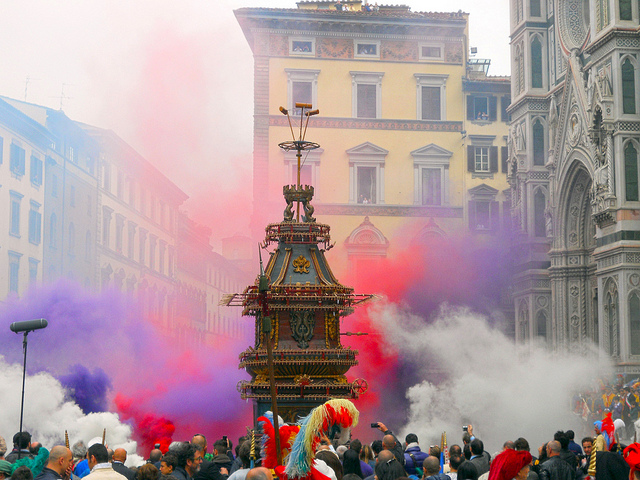 di redazione – La Rievocazione del Venerdì Santo di Grassina (periferia sud di Firenze) è un evento dove al misticismo si coniuga l’elemento spettacolare.
Centurioni romani, popolane e i ladroni accompagnano il Cristo che soffre nelle due ore di Via Crucis. Sul Calvario si svolge una rappresentazione che ha visto negli anni fra i protagonisti anche grandi nomi dello spettacolo.
La mattina di Pasqua l’attenzione si sposta in Piazza del Duomo dove si celebra una cerimonia che risale alla prima crociata quando il fiorentino Pazzino de’Pazzi essendo il primo a salire sulle mura di Gerusalemme si meritò il “fuoco benedetto” che oggi, simbolo di purificazione accende il grande carro di scoppi, scintille e luci davanti al sagrato del Duomo dopo che, al canto del Gloria in excelsis Deo, si è dato fuoco in chiesa alla miccia che la “colombina” conduce sul carro.
Inizia così uno spettacolo pirotecnico che simbolicamente, distribuisce a tutta la città il fuoco benedetto.
Rievocazione del Venerdì Santo, Grassina ore 21,15 del 29 marzo
Scoppio del Carro, Firenze ore 12,00 del 31 marzo Piazza del Duomo Firenzeby redaction – The Good Friday re-enactment in Grassina (south of Florence) is an event where the spectacular is combined with mysticism. Roman centurions, the lower classes and thieves accompany Christ, who suffers during the two hours of the Way of the Cross.
On Calvary a representation takes place that has also involved some of the greatest names in the world of show business over the years.
On Easter morning, the focus moves to Piazza del Duomo, where a ceremony is celebrated that dates back to the first crusade when the Florentine Pazzino de’Pazzi, being the first to climb onto the walls of Jerusalem, warranted the “blessed fire”. As a symbol of purification it now sets the great cart alight with explosions, sparks and light in front of the cathedral.
Then during the singing of Gloria in Excelsis Deo, the fuse is lit in the church, which the “dove” takes to the cart. A firework display then begins, which symbolically distributes the blessed fire to the whole of the city.
Good Friday re-enactment in Grassina hours 21,15 on 29 march
Scoppio del Carro, Firenze ore 12,00 on 31 march Piazza del Duomo Firenze
Mar 25, 2013 | Da non perdere, Litorale pisano, Monti Pisani, Pisa, Val di Cecina, Valdarno | Valdera | Colline Pisane
 di Nadia Fondelli – Questa è una storia che parla di un amore. Un amore vero, sincero. L’amore per la Vita.
Le nuove tecnologie, le chat e i social network sono tanto amati quanto bistrattati. Sopratutto bistrattati quando si tratta di cronaca che, in questi casi, diventa quasi sempre nera…
Eppure nella rete esistono non solo le brutte cose, ma tante belle storie straboccanti d’amore e d’amicizia.
Quando qualche anno fa ho dato alle stampe insieme ad una nota psicografologa il libro “Chat line: dalla trasgressione alla solitudine” volevo proprio focalizzare quest’aspetto.
La rete non è solo un diavolo tentatore, ma un luogo dove, così come nella vita reale, esiste sia il male che il bene.
Quanti in rete hanno trovato amici virtuali spesso divenuti poi anche reali che gli hanno salvati dalla solitudine? Quanti hanno trovato l’amore della loro vita, quello con la A maiuscola?
Tanti, molto più di quelli che potete pensate solo che, a differenza delle brutte notizie, le belle non trovano mai spazio sulla cronaca…
Con quel libro volevo cospargermi la testa di cenere, quasi come se scriverlo fosse lo “scontare” un senso di colpa della categoria giornalistica.
Ebbene sì. Sogno da sempre che ogni giornale abbia la sua bella sezione dedicata alle “belle notizie”; che un tg si apra lanciando news ricolme d’amore… anche per bilanciare le tante cattive notizie e anche per risollevare lo spirito della società in tempi come quelli attuali… decisamente grami…
The Tuscany vuole così nel suo piccolo colmare questo vuoto sperando di essere presto emulato anche da tante testate più famose .
Inizio così da oggi su questo giornale – e con una gran voglia di farlo sempre più di frequente – a regalarvi delle buone notizie.
Non sarà facile farlo anche perchè scovarle non è semplice, ma noi ci proviamo, iniziando con questa bella storia d’amore che dai social network si è sviluppata nella vita reale.
Sogno che le nostre belle storie siano anche espressione di una società viva e solidale, anzi sono a questo tipo di storie che dedicheremo più attenzione: quelle non solo belle, ma piene d’amore…
E allora iniziamo con il nostro primo “c’era una volta”
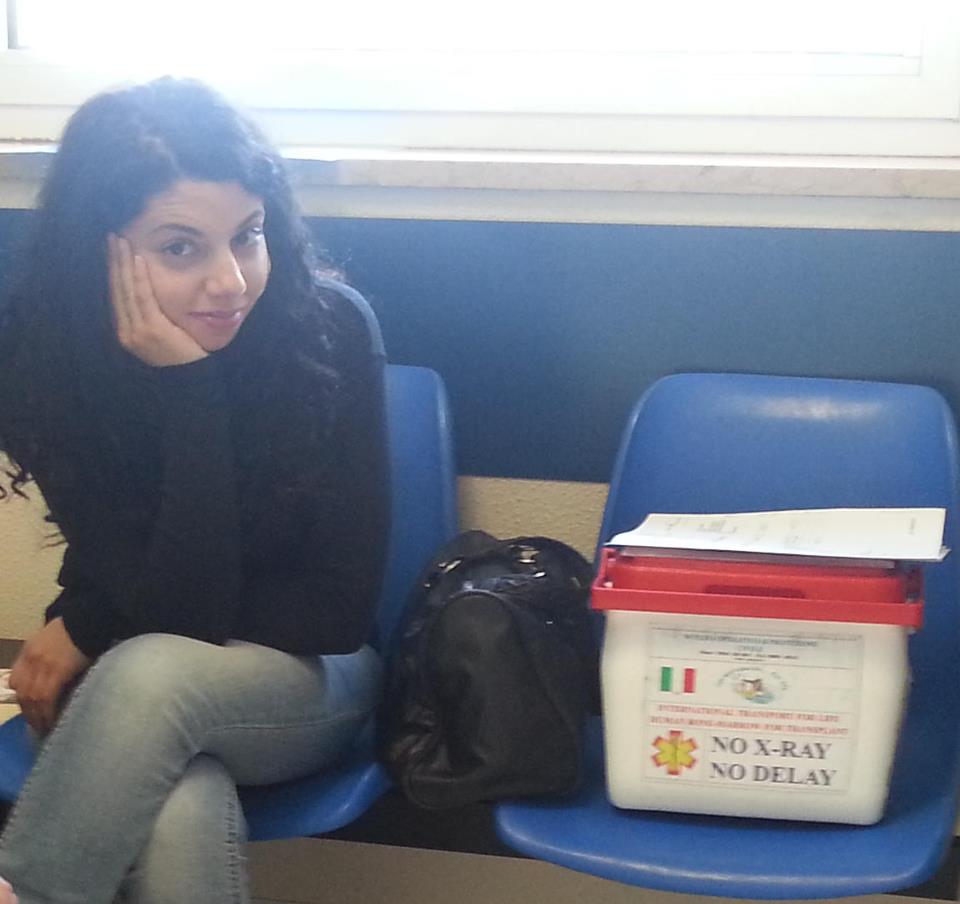
C’era una volta Paola Rita Ledda, una giovane donna di origine sarda residente da anni a Pisa che sulla rete ha scoperto il valore dell’amore per la vita, attraverso il contributo che lei stessa poteva dare per salvare tante vite. Vite sconosciute, vite compromesse, vite ammalate.
Paola un giorno s’imbatte per caso nella pagina del Nucleo Operativo di Protezione Civile – Logistica dei Trapianti. La grafica e le news rilanciate sono accattivanti; si parla e ci sono foto di persone che girano il mondo per trasportare la vita, anzi, la VITA, tutto maiuscolo come amano scrivere loro.
Paola s’interessa, s’iscrive alla pagina, si appassiona, ma continua a seguire le notizie e i post, in disparte, con discrezione. Però l’idea di poter dare il suo contributo a salvare delle vite e andare in giro per il mondo l’affascina e comincia a frullargli in testa.
In realtà Paola, di mondo ne ha già girato un bel po’ sia per passione sia per sue esperienze lavorative, ma l’idea di essere l’ideale collegamento tra due vite, che resteranno per sempre unite dal fantastico gesto della donazione, era davvero coinvolgente e le stimolava molti pensieri positivi.
In uno dei tanti passaggi su quella pagina vede un post: “Come diventare nostri volontari”. Paola legge attentamente e dopo un minimo di titubanza, invia un messaggio.
La risposta è incoraggiante e, senza perdere tempo, viene invitata a partecipare come osservatrice a una missione. Non se lo fa ripetere due volte, partecipa, rimane ancora più entusiasta e si dà da fare più che può per bruciare le tappe ed essere idonea: dopo circa un mese di training è pronta per spiccare il volo, da buon “angelo” e a compiere la prima missione internazionale di corriere internazionale di cellule staminali e midollo osseo per trapianto dalla Germania, paese della donazione, alla Spagna paese dove verrà effettuato il trapianto!
“Da molto pensavo a un modo in cui essere utile al prossimo, che mi desse modo di compiere azioni che avessero un senso più profondo e che non avvertissi essere fini a loro stesse.
Facilitata dal fatto di essere una studentessa e di lavorare come fotografa freelance, mi ritrovo ad avere modo – per la maggior parte del tempo – di poter organizzare i miei impegni nella maniera a me più favorevole; ho reputato così che fosse questo il momento più opportuno per, finalmente, fare qualcosa!”
Mi sono avvicinata al Nucleo – continua Paola – valutando delle opzioni in maniera più astratta che concreta se devo essere onesta; quando mi sono accorta che uno dei miei contatti su Facebook condivideva foto e links vari di viaggi svolti da lui e da altri per portare “la VITA” dove ce ne fosse bisogno, ne sono rimasta incuriosita.
Ho cercato qualche informazione in più e più venivo a conoscenza del tipo di impegno di cui si trattava, più venivo attratta dalla cosa. Ho dunque risposto a un annuncio sulla pagina facebook, in cui si cercavano nuovi volontari e così è iniziata la mia avventura.
Le abbiamo chiesto,dopo la sua prima missione, quali emozioni poteva raccontarci:
“Per me è un’emozione grandissima sapere che, nel mio piccolo, posso dare un aiuto a chi a bisogno, che posso impiegare il mio tempo non solo per prendermi cura di me e dei miei affari, ma mettendomi a disposizione del prossimo. Il tempo donato è un tempo guadagnato”.
Sulla pagina dell’associazione oggi c’è una foto di Paola a tutta pagina, con la sua storia in breve. Quella pagina è stata vista in poco meno di 36 ore da oltre duemila persone!
Tanti i commenti d’incoraggiamento e Paola che così risponde: “Grazie a tutti! E’ un sogno poter fare una cosa realmente utile, che dia un senso alle giornate” .
Un commento alquanto eloquente sull’amore per la vita che anima Paola, come l’ultima frase che ci ha detto :“il tempo donato, è un tempo guadagnato” ma, ci assicura, che anche tutti gli altri componenti del Nucleo Operativo di Protezione Civile – Logistica dei Trapianti, la pensano così!
Per chi volesse seguire l’esempio di Paola prima di rimandarvi al sito dell’associazionee alcuni brevi cenni su come diventare “angeli della vita”.
In poche righe sono necessarie:
-buona disponibilità di tempo perché ogni missione dura da 2 a 5 giorni e non può essere interrotta;
– buona conoscenza dell’inglese, indispensabile per le missioni internazionali
– disponibilità a spostamenti
– grande senso di responsabilità perché da ogni missione dipende la vita di qualcuno
– capacità di interagire in squadra
Dalla rete alla vita reale per scoprire l’amore di regalare vita.
Informazioni: www.nopc.it – www.facebook.com/pages/Nucleo-Operativo-Protezione-Civile/119356221508397?ref=ts&fref=ts
by Nadia Fondelli – It ‘s the story Electronic Cigarette about a love. A true love, sincere. Love for Life.
New technologies, chat rooms and social networks are much loved as downtrodden. Mistreated especially when it comes to chronicle that, in these cases, almost always becomes black …
Yet in the network are not only the bad things, but good stories overflowing of love and friendship.
When some years ago I have given to the press along with a note psicografologa the book “Chat line: the transgression of solitude” I really wanted to focus on this aspect.
The network is not only a tempter, but a place where, as in real life, there is the evil that good.
Those found in network virtual friends often become then also real that they have saved from loneliness? Those who have found the love of their lives, the one with a capital?
Many, much more than those who can only think that, unlike the bad news, the good never find space on the record …
With that book I wanted cospargermi head with ashes, almost as if writing was the “discount” guilt of the class journalism.
Well, yes. I have always dreamed that each newspaper has its nice section dedicated to the “good news” that opens a news casting news filled with love … also to balance the many bad news and also to revive the spirit of the company in times like the present … decidedly grams …
The Tuscany takes so little to fill this void in his hoping to soon be emulated by many newspapers also the most famous.
Start today so that this newspaper – and with a great desire to do more and more frequently – to give you some good news.
It will not be easy to do so because it is not easy to find them, but we try, starting with this beautiful love story from social networks has grown in real life.
I dream that our beautiful stories are also an expression of a living society and solidarity, rather they are in these kinds of stories that we will dedicate more attention: those that are not only beautiful, but full of love …
So let’s start with our first “Once Upon a Time”
Once upon a time Paola Rita Ledda, a young woman of Sardinian origin who has lived for years in Pisa on the network has discovered the value of love for life, through the contribution she could make to save lives. Screw unknown compromised lives, lives sick.
Paola one day he meets by chance on the page of the Operational Civil Protection – Logistics Transplantation. The graphics are eye-catching and news relaunched, it comes and there are photos of people who travel the world to carry the life, indeed, LIFE, all capital letters, as they like to write them.
Paola is interested, is part of the page, is passionate, but continues to follow the news and post privately, discreetly. But the idea of being able to make a contribution to saving lives and go around the world fascinated her and begins to frullargli head.
In fact Paola, the world has already made a lot ‘is a passion for both his work experience, but the idea of being the ideal connection between two lives, that will remain forever united by the great act of donation, it was really engaging and stimulated many positive thoughts.
In one of the many steps on that page see a post: “How to become our volunteers.” Paola pores and with a bit of hesitation, sends a message.
The response is encouraging and, without wasting time, was invited to participate as an observer in a mission. If he does not say it twice, participates in, is even more enthusiastic and works hard as he can to forge ahead and be appropriate: after about a month of training is ready to fly, as a good “angel” and to make the first international mission of international courier stem cell and bone marrow transplant from Germany, the country of the donation, Spain country where it will be transplanted!
“From very thought of a way to be useful to others, give me way to do things that have a deeper meaning and that avvertissi not be an end in themselves.
Facilitated by the fact of being a student and working as a freelance photographer, I find myself having way – most of the time – to organize my schedule in the manner most favorable to me, so I considered that this was the most appropriate time to finally do something! “
I went up to the Core – continues Paola – assessing the options in more abstract than concrete if I have to be honest, when I realized that one of my contacts on Facebook share pictures and links various travel undertaken by him and others to bring ” LIFE “where we needed it, I was curious about it.
I tried some more information and I was more aware of the kind of commitment that it was, I was more attracted by it. So I answered an ad on the facebook page, where you were looking for new volunteers and so began my adventure.
We asked after his first mission, what emotions could tell us:
“For me it is an incredible emotion to know that in my own small way I can give help to those in need, I can spend my time not only to take care of myself and my business, but in putting at the disposal of others. Time given is a time earned. “
On the page of the association today is a picture of Paola full page, with his short story. That page has been seen in less than 36 hours over two thousand people!
Many comments of encouragement and Paola who so replies: “Thank you all! It ‘sa dream to do something really useful, giving a sense of the day. “
A very eloquent comment on the love for life that animates Paola, as the last sentence that said: “the time given is a time earned” but assures us that all the other components of the Operational Protection Civil – Logistics Transplant think so!
For those wishing to follow the example of Paola before web dell’associazionee refer you to some brief remarks on how to become “angels of life.”
In a few lines are necessary:
-Availability of good time for each mission lasts 2 to 5 days and can not be interrupted;
– Good knowledge of English is essential for international missions
– Willingness to travel
– Great sense of responsibility because each mission depends on someone’s life
– Ability to interact in a team
From network to real life to find the love of giving life.
Infoormazioni: www.nopc.it – www.facebook.com/pages/Nucleo-Operativo-Protezione-Civile/119356221508397?ref=ts&fref=ts
Mar 24, 2013 | Eventi, Firenze
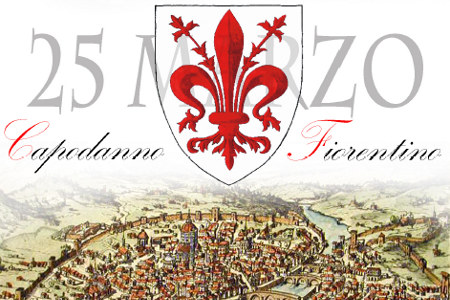 di Nadia Fondelli – Una tradizione speciale da una regione fortemente attaccata alle sue tradizioni. Il 25 marzo è Capodanno a Firenze e nella Toscana…Ebbene sì, può sembrare strano ma è così!
Ancor’oggi a Firenze si festeggia quello che fino al 1750, e in barba al calendario gregoriano già in uso fin dal 1582, era l’inizio dell’anno civile che cadeva in occasione di una data importante per la chiesa cattolica: il giorno in cui si festeggia l’annuncio dell’Incarnazione del Verbo dato a Maria Vergine da parte dell’Arcangelo Gabriele.
Firenze, da sempre attaccata al culto della Madonna, fin dai tempi antichi vedeva in occasione di questa festa una gran folla, sia cittadina sia del contado, accorrere alla Basilica della Santissima Annunziata per venerare l’immagine dell’Annunciazione, il cui volto, secondo un’antica leggenda, si dice sia stato dipinto dagli angeli.
Tutto questo avvenne fino al novembre del 1749 quando il granduca Francesco III di Lorena – primo granduca non Medici e quindi non toscano, che peraltro in realtà mai governò direttamente Firenze e mai ci abitò se non per tre mesi preferendo ad essa le brume viennesi e lasciando il governo del granducato a suoi rappresentanti – decretò che fissava anche per Firenze e la Toscana il 1º gennaio come data iniziale dell’anno civile.
Ma la regione, attaccata com’è alle proprie tradizioni va avanti per la propria strada e il 25 marzo “Capodanno fiorentino” è istituzionalizzato anche nel calendario annuale delle feste e tradizioni fiorentine.
Ancora oggi il 25 marzo molti fiorentini si recano alla Basilica della Santissima Annunziata per rendere omaggio alla sacra effige dell’Annunziata, alla quale rende omaggio anche una rappresentanza dell’Amministrazione Comunale, accompagnata dal Corteo Storico della Repubblica Fiorentina, per rinnovare un significativo momento storico e culturale.
L’appuntamento è alle ore 15,30 con il Corteo Storico della Repubblica Fiorentina che e muovendo da Palagio di Parte Guelfa attraversando il centro storico accompagna le Autorità Comunali alla Basilica SS. Annunziata. Alle ore 16,15 si svolgerà l’omaggio floreale alla Cappella della Sacra effige dell’Annunziata e inoltre, per fiorentini e turisti in occasione di questa festa speciale apertura prolungata di Palazzo Vecchio fino alle ore 24,00by Nadia Fondelli – A special tradition from one region strongly attached to its traditions. March xanax side effects in dogs 25 is the New Year in Florence and Tuscany … Yes, it may seem strange but it’s true!
Even today in Florence celebrates what until 1750, and in defiance of the Gregorian calendar in use since 1582, was the beginning of the calendar year falling at an important moment for the Catholic Church: the day which we celebrate the announcement of the Incarnation of the Word given to the Virgin Mary by the Archangel Gabriel.
Florence has always been attached to the cult of the Virgin, from ancient times saw at this festival a great multitude, and is the county town, rushing to the Basilica of the Annunciation to worship the image of the Annunciation, whose face, according to legend, is said to have been painted by the angels.
All this took place until November 1749 when the Grand Duke Francis III of Lorraine – the first Grand Duke Doctors do not and therefore do not Tuscan, which, however, never actually directly ruled Florence and never lived there for three months if you do not prefer it to the mists of Vienna and leaving the Government of the Grand Duchy to his representatives – decreed that fixed for Florence and Tuscany on 1 January as the start date of the calendar year.
But Florence and Tuscany are as attached to their traditions they go their own way and March 25 “Florentine New Year” is also institutionalized in the annual calendar of festivals and traditions of Florence.
Even today, March 25 many Florentines go to the Basilica of the Annunciation to pay homage to the sacred effigy of the Annunciation, which also pays tribute representation of the City, accompanied by historical pageant of the Florentine Republic, to renew a significant historical moment and cultural.
The appointment is at 15.30 with the Historical Procession of the Florentine Republic, and that moving from the Guelph palace through the old town to accompany the Municipal Authority of the Basilica SS. Annunziata. At 16.15 there will be the floral tribute to the Chapel of the Holy Annunciation effigy and also for tourists and Florentines during this special holiday extended opening hours of the Palazzo Vecchio until 24.00
Mar 22, 2013 | Arcipelago | Costa degli Etruschi, Arezzo, Argentario, Arte e cultura, Casentino, Chianti Classico, Città del Tufo | Colline Metallifere, Crete Senesi, Da non perdere, Eventi, Firenze, Garfagnana, Grosseto, Litorale pisano, Livorno, Lucca, Lunigiana, Maremma, Massa Carrara, Montagna Pistoiese, Montalbano, Monte Amiata, Monti Pisani, Mugello | Val di Sieve, Pisa, Pistoia, Prato, San Gimignano, Siena, Val Bisenzio, Val d'Elsa | Empolese, Val d'Elsa | Val di Merse, Val d'Orcia | Val di Chiana, Val di Cecina, Val di Cornia, Val Tiberina, Valdarno, Valdarno | Valdera | Colline Pisane, Valdinievole, Valle del Serchio | Piana Lucchese, Versilia
 di Nadia Fondelli – Con la primavera torna un appuntamento speciale per conoscere luoghi insoliti del nostro paese. Per persone curiose che amano farsi coinvolgere con cuore e mente ecco l’edizione 2013 delle Giornate Fai di Primavera in programma sabato 23 e domenica 24 marzo.
Vita, storie e leggende. Scrigni d’arte preziosi, opere d’arte che si svelano, giardini incantati… Sono oltre 700 i luoghi italiani, spesso inacessibili e per l’occasione eccezionalmente a disposizione del pubblico, con visite a contributo libero: chiese, palazzi, aree archeologiche, ville, borghi, giardini; persino caserme, centrali idroelettriche e un osservatorio astronomico.
Anche in Toscana basta scegliere: a Firenze ad esempio sarà possibile scoprire la Cappella Ruccellai, l’Istituto di scienze militari aereonautiche delle Cascine, il palazzo Portinai Salviati, il giardino di Villa Corsini a Castello e villa La Quiete alle Montalve.
Il Forte delle Rocchette a Castiglion della Pescaia in Maremma solitamente chiuso al pubblico è imperdibile così come i sotterranei delle mura di Lucca e lo splendido teatrino di Vetriano.
In provincia di Pisa toglierà il fiato la visita alla rocca della Verruca e a Pistoia la gipsoteca Libero Andreotti. Infine, in provincia di Siena bellissimo il tuffo nel passato proposto da Poggibonsi con la fortezza del Poggio Imperiale, il cassero, i bastioni e gli scavi archeologici e Staggia senese con la sua rocca.
Tutti i luoghi sono visitabili con viste guidate ed alcuni anche in lingue stranieri. Per l’elenco completo dei luoghi e per sostenere il Fai www.giornatafai.it
by Nadia Fondelli – With the spring valium for dogs back a special event to learn about unusual places of our country. For curious people who like to get involved with heart and mind, here is the 2013 edition of the Days Make Spring on Saturday 23 and Sunday 24 March.
Life, stories and legends. Precious art treasures, works of art that are revealed, enchanted gardens … There are more than 700 places Italians, often inaccessible and for the occasion exceptionally available to the public, with visits to free contribution: churches, palaces, archaeological sites, villas, villages, gardens, even barracks, hydroelectric and an astronomical observatory.
Even in Tuscany Just choose: in Florence, for example, you will discover the Chapel Ruccellai, the Institute of Aeronautical Sciences Military delle Cascine, the palace caretakers Salviati, the garden of Villa Corsini at Castello and Villa La Quiete to Montalve.
The Fort Rocchette in Castiglione della Pescaia in Maremma usually chiuo to the public is a must as well as the basement walls of Lucca and the splendid theater of Vetriano.
In the province of Pisa take your breath away visit to the Verruca Pistoia and the plaster casts Libero Andreotti. Finally, in the province of Siena, the beautiful blast from the past brought to Poggibonsi with the fortress of Poggio Imperiale, the keep, the ramparts and the archaeological excavations and Staggia Siena with its fortress.
All locations can be visited with guided tours and some even in foreign languages. For a full list of the places and to support the Make www.giornatafai.it
